Loading…
← All schools
Miami Barber Institute
Miami, FLprivate forprofitmiamibarberinstitute.edu
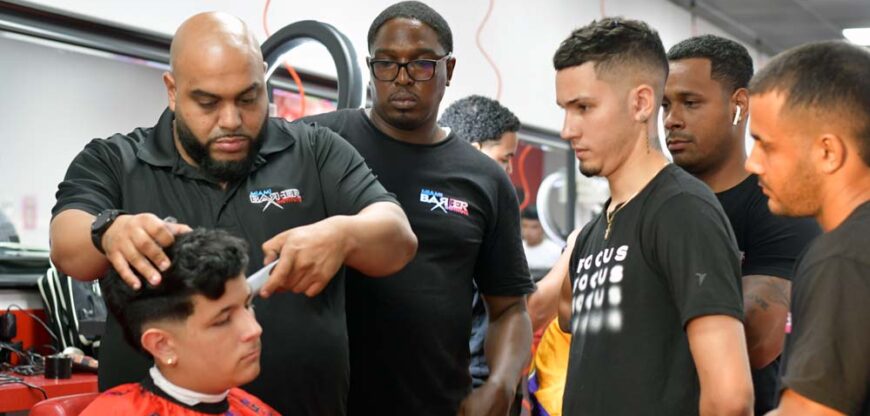
Miami Barber Institute is a tightly focused, for-profit vocational school in Miami that operates with the intensity of a trade apprenticeship. It exists for one purpose: to train students to pass the Florida Barber Licensure Exam and launch them directly into a career. The culture is built on professionalism, hands-on practice, and a pragmatic approach to education, offering flexible schedules and a suite of financial aid options aimed at making barbering accessible.
More details
- Undergrad enrollment
- 150
- Facility Size
- 3,000 sq ft
- Graduation Rate
- 34%
- Programs Offered
- Barber Program, Restricted Barber Program
- Financial Aid Options
- Five Funding Pillars (Federal Aid, FL Prepaid, Veterans, Scholarships, Private Loans)
- Annual Degrees Awarded
- ~53
- Median Earnings (10yr)
- $32,600
Outcomes & value
Outcomes & value
- Pell (lower-income) share
- —
Earnings = median of students working ~10 years after entry; debt = median of graduates. Value divides 10-yr earnings by one year’s net price — read it as earnings per dollar of annual cost, not a full lifetime ROI; it favors lower-cost schools. Source: U.S. Dept. of Education College Scorecard. Figures lag ~2 years and reflect all students, not your intended major.
Campus & location
Climate
- Pleasant days / yr
- 101
- Summer high
- 88°F
- Winter low
- 63°F
- Annual rain
- 54.1"
- Natural-hazard risk
- Very High
Pleasant days counts days per year with a mean temperature of 55–75°F, a high at or below 90°F, a low at or above 45°F, and little precipitation — a transparent comfort measure, not a weighting we invented. Computed from Open-Meteo ERA5 daily history (2019–2023). Natural-hazard risk is the county’s composite rating from the FEMA National Risk Index.
Quick answers
- How many undergraduates attend Miami Barber Institute?
- Miami Barber Institute enrolls approximately 150 undergraduate students.
- Where is Miami Barber Institute located?
- Miami Barber Institute is located in Miami, FL.
Admissions
Admissions at Miami Barber Institute are geared toward career-changers and those seeking a direct path to a skilled trade, not traditional undergraduates. The process is more about practical readiness than academic pedigree. One external comparison site lists its at 59%, suggesting a moderately selective process for a vocational school, though official figures are not provided by the institute itself. The institute encourages prospective students to thoroughly research barber schools before enrolling, indicating they value informed, committed applicants. There is no mention of Early Decision or Early Action policies, which are typical of four-year colleges but not standard for vocational programs. Demonstrated interest, a factor at many traditional universities, is not discussed in the context of MBI's admissions; the focus appears to be on an applicant's motivation and fit for the trade.
Compare Miami Barber Institute
vs Livingstone Collegevs Hampden-Sydney Collegevs Emory University-Oxford Collegevs Huston-Tillotson University
See colleges similar to Miami Barber Institute →Sources
- 2025-2026 COMMON DATA SET
- Common Data Set | Institutional Data | STAIR
- Common Data Set: Home
- How To Use a Common Data Set
- Common Data Set
- Common Data Set 2021-2022
- How to pay for College?
- Livingstone College vs Miami Barber Institute: acceptance rate, SAT & cost
- Premier Barber Institute Admissions - BigFuture College Search
- Everything You Need to Know Before Enrolling In A Barber School
- Durante Women's History Month, celebramos a las mujeres que están ...