Admit rate has ranged 58%–80% over the last 5 years — notably volatile. Source: IPEDS via Urban Institute.
Acceptance & SAT from Common Data Set / IPEDS; net price, earnings & graduation from the U.S. Dept. of Education College Scorecard. Figures lag ~1–2 years — verify with the school.
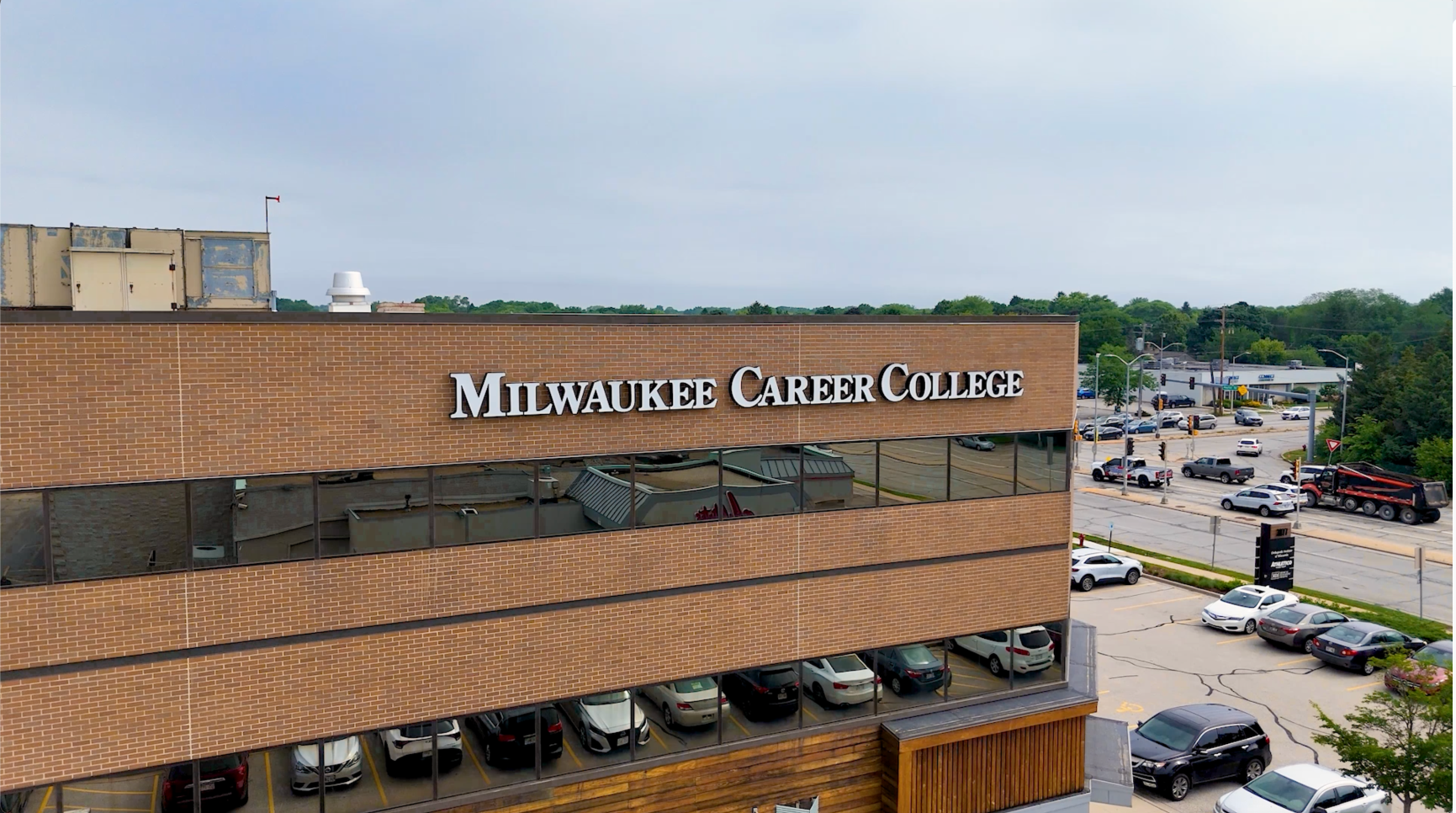
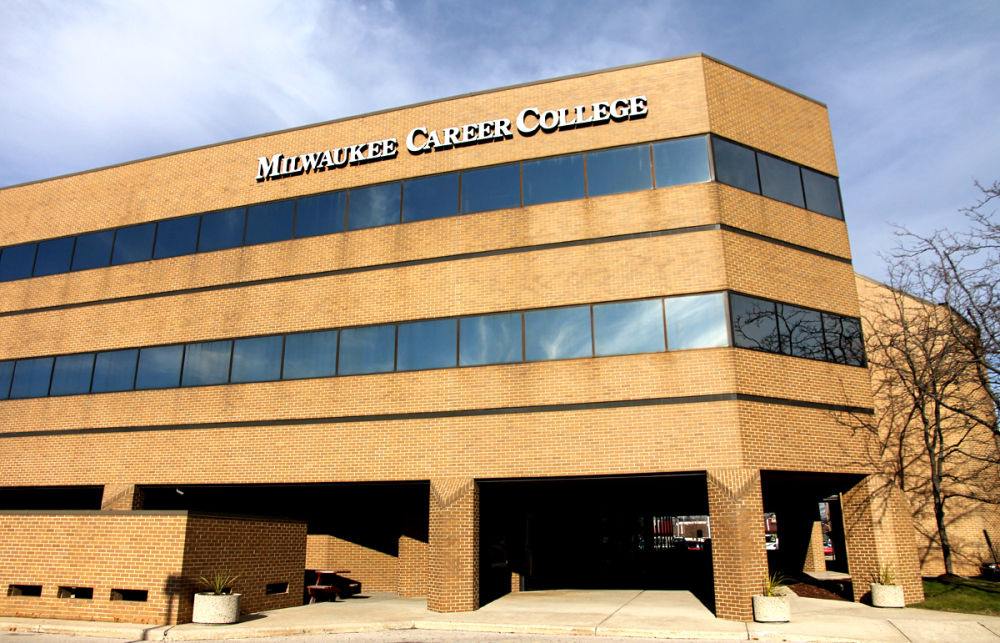
Milwaukee Career College is a small, private non-profit institution laser-focused on hands-on career training in medical, dental, and veterinary fields. With acceptance rates hovering around 70%, it offers an accessible but structured path to entry-level healthcare roles, emphasizing personalized attention through its 19:1 student-faculty ratio. The college’s pragmatic approach—short programs, strong industry connections, and a no-frills campus vibe—caters to students eager to quickly enter the workforce.
More details
Undergrad enrollment
67
Location
Milwaukee, WI
Focus Areas
Dental, Medical, Veterinary Assisting
Application Fee
$20
Degrees Offered
Associate, Certificates
Institution Type
Private Non-Profit
Student-Faculty Ratio
19:1
Median Earnings Post-Grad
$36,427
Outcomes & value
Outcomes & value
Median earnings (10 yr)
$28,355
Value (earnings ÷ net price)
1.0×
Median debt at graduation
$7,046
Reducing loan balance (3 yr)
24%
Pell (lower-income) share
92%
First-gen share (among federal-aid recipients)
52%
Earnings = median of students working ~10 years after entry; debt = median of graduates. Value divides 10-yr earnings by one year’s net price — read it as earnings per dollar of annual cost, not a full lifetime ROI; it favors lower-cost schools. Source: U.S. Dept. of Education College Scorecard. Figures lag ~2 years and reflect all students, not your intended major.
Financial health
0.1 / 3.0Below the federal standard — financial stress
U.S. Dept. of Education Financial Responsibility Composite Score (FY2022-23). Scale −1.0 to 3.0; ≥1.5 meets the standard. Reported for private nonprofit & for-profit institutions only — public universities are state-backed and not scored, so this is a stability signal, not a ranking.
Campus & location
Campus safety
On-campus violent crimes (2024)
0
On-campus criminal offenses classed as violent (murder/non-negligent manslaughter, rape, robbery, aggravated assault) for the most recent reported year. Source: U.S. Dept. of Education Campus Safety and Security (Clery Act). Counts reflect what’s reported to the school, and urban campuses often report more partly due to non-student incidents nearby — read alongside campus size and setting, not as a standalone safety verdict.
Climate
Pleasant days / yr
92
Summer high
79°F
Winter low
20°F
Annual rain
38.3"
Annual snow
38.1"
Natural-hazard risk
Relatively High
Pleasant days counts days per year with a mean temperature of 55–75°F, a high at or below 90°F, a low at or above 45°F, and little precipitation — a transparent comfort measure, not a weighting we invented. Computed from Open-Meteo ERA5 daily history (2019–2023). Natural-hazard risk is the county’s composite rating from the FEMA National Risk Index.
Quick answers
What is the acceptance rate at Milwaukee Career College?
Milwaukee Career College's acceptance rate is approximately 73% (Milwaukee, WI), based on the most recent figures we compiled from public and primary sources.
How much does Milwaukee Career College cost?
At Milwaukee Career College, the average net price (after aid) is about $27,038 per year. Actual cost varies with financial aid and residency.
How many undergraduates attend Milwaukee Career College?
Milwaukee Career College enrolls approximately 67 undergraduate students.
Where is Milwaukee Career College located?
Milwaukee Career College is located in Milwaukee, WI.
Admissions
Milwaukee Career College maintains a moderately selective admissions process with ranging from 58% to 73%, depending on the source. Applicants must provide proof of high school graduation (or equivalent) and valid U.S. government identification. The college doesn’t emphasize standardized test scores, focusing instead on foundational eligibility. Notably, the application fee is $20, and the process is streamlined for career-focused candidates—no mention of essays or recommendation letters in available materials.
Acceptance Rate: Varies between 58% (Testbook) and 73% (Niche, College Factual)
Gender Breakdown: One source notes a 67% acceptance rate for male applicants (Peterson’s)
Key Requirement: Proof of high school completion or GED (MCC Admissions page)
The college specializes in accelerated, career-oriented programs—primarily associate degrees and certificates—in dental assisting, medical assisting, and veterinary technology. With a 19:1 student-faculty ratio, classes are small and hands-on, emphasizing practical skills over theoretical breadth. The veterinary program, in particular, draws local interest, though Reddit discussions suggest mixed opinions on its rigor. No liberal arts or general education distractions here: the curriculum is tightly focused on industry standards and immediate job readiness.
Programs: Dental Assistant, Medical Assistant, Veterinary Assistant/Vet Tech
Student-Faculty Ratio: 19:1 (U.S. News)
Highest Degree Offered: Associate (U.S. News)
Vibe: 'Not just a number'—marketing emphasizes personalized attention (MCC About Us)
This isn’t a traditional college experience: there’s no mention of dorms, Greek life, or Division sports. Instead, MCC promotes a 'supportive campus culture' with tight-knit cohorts and instructors who know students by name. Yelp reviews praise the well-maintained facilities, while Niche’s sparse campus life section hints at a commuter-school vibe. The focus is squarely on career prep—think scrubs and stethoscopes over football games and frat parties.
Culture: 'Small class sizes, personalized instruction' (MCC About Us)
Facilities: Described as 'well maintained' and 'beautiful' (Yelp)
Clubs/Activities: No significant mentions in sources; likely minimal
MCC’s value proposition hinges on employment: graduates report a median earnings of $36,427 one year post-graduation (Niche). In 2024, the college awarded 98 degrees, with 91.8% going to women—reflecting the gender skew in healthcare support roles. While comprehensive graduation rates aren’t cited, the institution highlights job placement in local clinics and vet offices. The June 2025 graduation ceremony touted 'incredible achievements,' though specifics on licensure exam pass rates or employer partnerships are absent from available data.
Median Earnings: $36,427 one year post-graduation (Niche)
Degrees Awarded (2024): 98 total, 91.8% to women (Data USA)
Graduation Focus: Ceremonies emphasize career readiness (MCC News)
Tuition sits at $22,881 after aid (BigFuture), with a averaging $27,673 for aided students (Niche). Nearly all full-time students receive grants or scholarships—averaging $4,027—and the college promotes payment plans to ease the burden. The Net Price Calculator is pushed heavily, suggesting transparency about costs. For context, MCC’s pricing is typical of private career colleges but steeper than local community options.
Net Price: $27,673 (Niche), $22,881 after aid (BigFuture)
Aid Availability: 100% of full-time students receive grants/scholarships (College Raptor)
MCC’s singularity lies in its hyper-focused, no-nonsense approach to healthcare career training. Unlike community colleges with broader curricula, it zeroes in on three fields—dental, medical, and veterinary assisting—with a pragmatic, 'get-the-job-done' ethos. The 19:1 student-faculty ratio ensures hands-on training, while the 70% makes it accessible without being a diploma mill. For Milwaukee-area residents seeking a fast track into allied health roles, it’s a straightforward option—though those wanting a traditional college experience or academic prestige should look elsewhere.
Milwaukee Career College logo · sourceContact Us - Milwaukee Career College · sourceWatch Videos of Student Testimonials - Milwaukee Career College · sourceLearn about MCC's History and Mission - Milwaukee Career College · source