Admit rate has ranged 62%–68% over the last 5 years, though the latest figure above (61%) falls outside that window. Source: IPEDS via Urban Institute.
Acceptance & SAT from Common Data Set / IPEDS; net price, earnings & graduation from the U.S. Dept. of Education College Scorecard. Figures lag ~1–2 years — verify with the school.
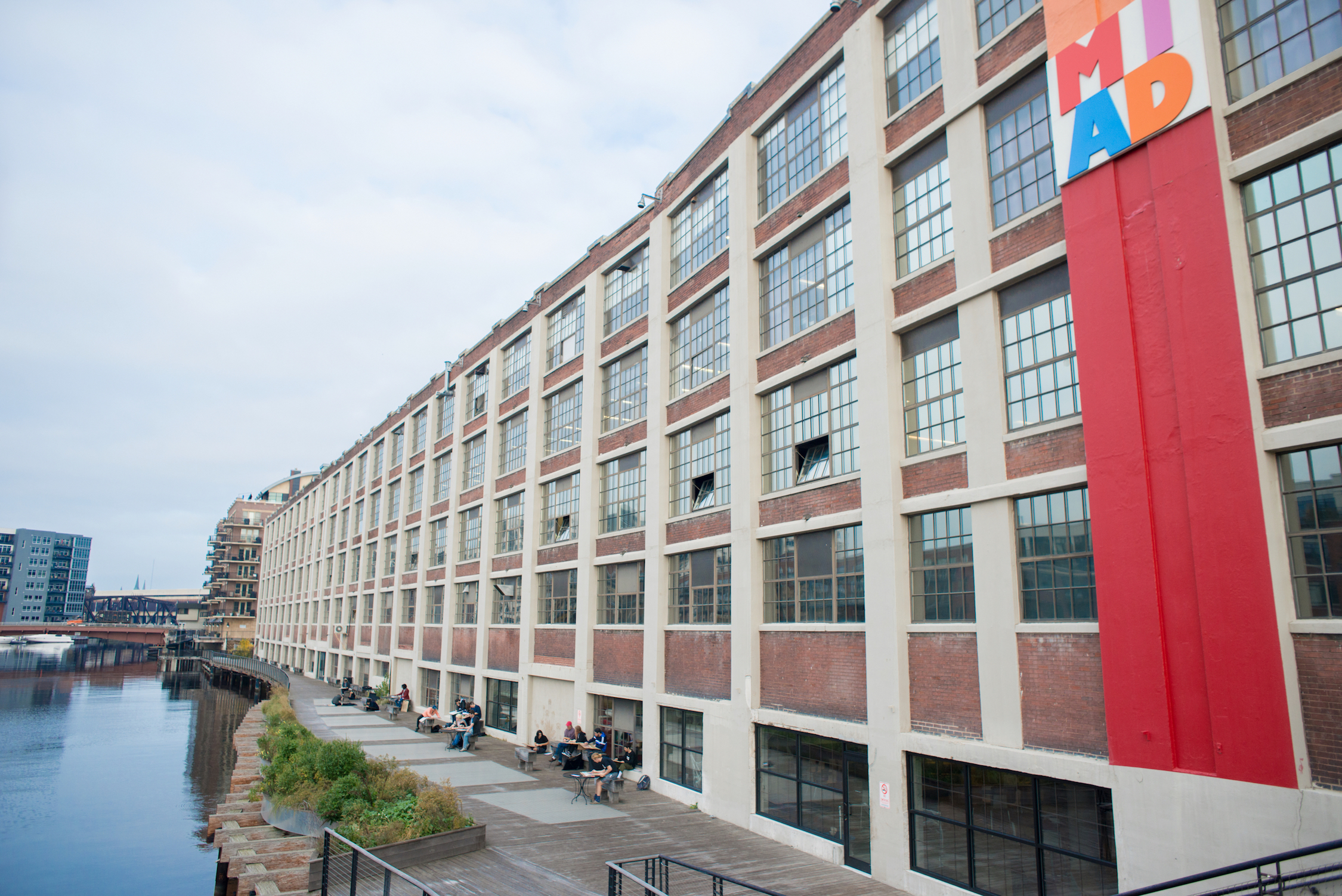
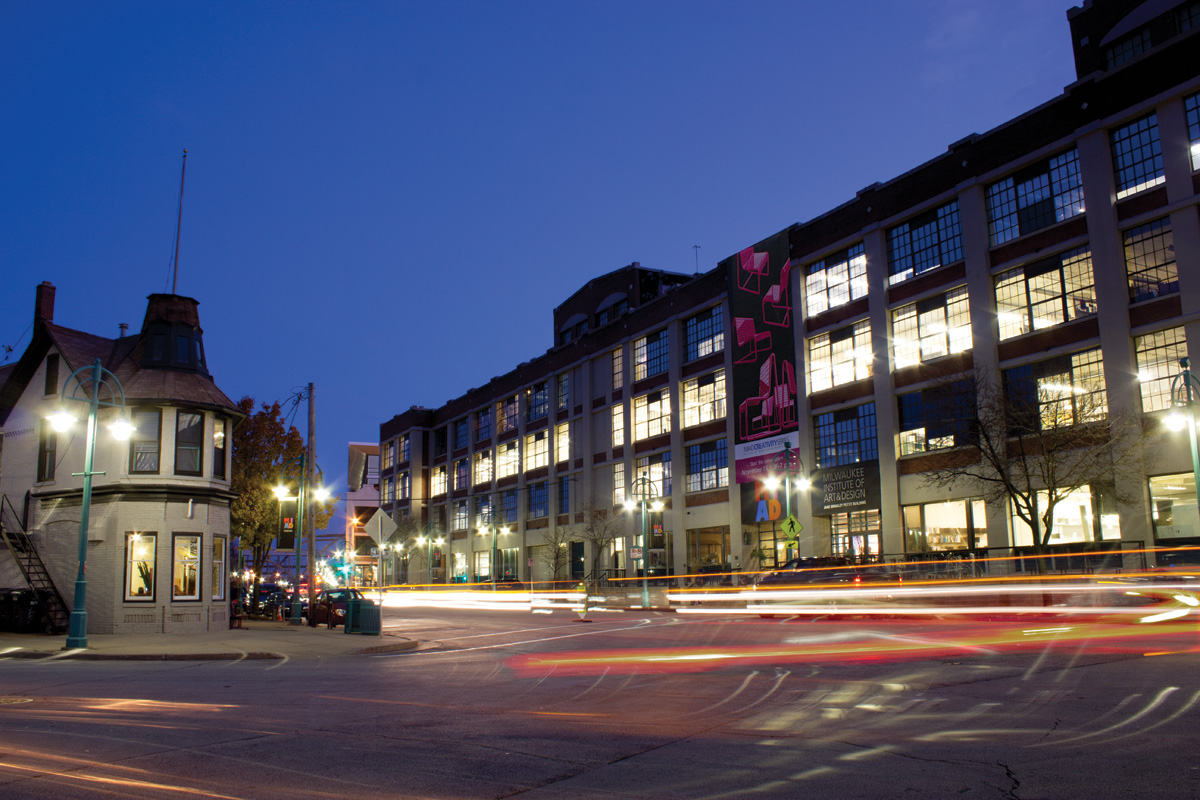
The Milwaukee Institute of Art & Design (MIAD) is a scrappy, project-driven art school where students grind through rigorous studio work while tapping into Milwaukee's industrial creative scene. With a 60% acceptance rate and a focus on illustration, graphic design, and studio arts, MIAD delivers a no-frills, career-focused education—though its 56% graduation rate suggests it's not for the faint of heart.
Admission requirements
Test-optional — scores considered if submitted
Required
High school transcript
Grade point average
Demonstrated competencies
TOEFL (non-native English)
Considered (not required)
Class rank
Letters of recommendation
Test scores (SAT/ACT)
College-prep program
Source: IPEDS Admissions survey (2022) via Urban Institute. Covers formal factors only — it does not reflect essays, extracurriculars, or other holistic criteria.
More details
Undergrad enrollment
837
In-state tuition
$43,743
Out-of-state tuition
$43,743
Popular Majors
Illustration, Graphic Design, Studio Arts
4-Year Grad Rate
53%
Financial Aid Recipients
83.65%
Median Earnings After 1 Year
$36,427
Outcomes & value
Outcomes & value
Median earnings (10 yr)
$41,174
Value (earnings ÷ net price)
1.6×
Median debt at graduation
$27,000
Graduation rate
67%
First-year retention
80%
Reducing loan balance (3 yr)
57%
Pell (lower-income) share
37%
First-gen share (among federal-aid recipients)
30%
Earnings = median of students working ~10 years after entry; debt = median of graduates. divides 10-yr earnings by net price — read it as earnings per dollar of annual cost, not a full lifetime ROI; it favors lower-cost schools. Source: U.S. Dept. of Education College Scorecard. Figures lag ~2 years and reflect all students, not your intended major.
Financial health
2.6 / 3.0Meets the federal financial-responsibility standard
U.S. Dept. of Education Financial Responsibility Composite Score (FY2022-23). Scale −1.0 to 3.0; ≥1.5 meets the standard. Reported for private nonprofit & for-profit institutions only — public universities are state-backed and not scored, so this is a stability signal, not a ranking.
Top-earning majors
Median earnings by field of study (highest credential), ~2 years after completion.
Design and Applied Arts$37,363
Fine and Studio Arts$20,140
Source: U.S. Dept. of Education College Scorecard (field-of-study earnings). Figures cover graduates who received federal aid and lag ~2 years; not all programs report data.
Campus & location
Campus safety
On-campus violent crimes (2024)
0
On-campus criminal offenses classed as violent (murder/non-negligent manslaughter, rape, robbery, aggravated assault) for the most recent reported year. Source: U.S. Dept. of Education Campus Safety and Security (Clery Act). Counts reflect what’s reported to the school, and urban campuses often report more partly due to non-student incidents nearby — read alongside campus size and setting, not as a standalone safety verdict.
Climate
Pleasant days / yr
92
Summer high
79°F
Winter low
20°F
Annual rain
38.3"
Annual snow
38.1"
Natural-hazard risk
Relatively High
Pleasant days counts days per year with a mean temperature of 55–75°F, a high at or below 90°F, a low at or above 45°F, and little precipitation — a transparent comfort measure, not a weighting we invented. Computed from Open-Meteo ERA5 daily history (2019–2023). Natural-hazard risk is the county’s composite rating from the FEMA National Risk Index.
Deep dive — research, future-scholar output & economic mobility▾
Research output
Institutional h-index
9
Scholarly works
36
Institutional research volume and impact from OpenAlex. The h-index reflects large research universities and will be low for teaching-focused liberal-arts colleges — not a measure of undergraduate quality.
Economic mobility
Mobility rate
1.5%
Bottom → top quintile
38%
From bottom quintile
4%
Mobility rate = the share of students who both start in the bottom household-income quintile and reach the top quintile; bottom → top is that chance conditional on starting at the bottom. Source: Opportunity Insights Mobility Report Cards (Chetty, Friedman, Saez, Turner & Yagan). Reflects 1980–82 birth cohorts, so it’s directional, not current.
Quick answers
What is the acceptance rate at Milwaukee Institute of Art & Design?
Milwaukee Institute of Art & Design's acceptance rate is approximately 61% (Milwaukee, WI), based on the most recent figures we compiled from public and primary sources.
How much does Milwaukee Institute of Art & Design cost?
At Milwaukee Institute of Art & Design, the average net price (after aid) is about $26,541 per year. Actual cost varies with financial aid and residency.
How many undergraduates attend Milwaukee Institute of Art & Design?
Milwaukee Institute of Art & Design enrolls approximately 837 undergraduate students.
Where is Milwaukee Institute of Art & Design located?
Milwaukee Institute of Art & Design is located in Milwaukee, WI.
Admissions
MIAD is moderately selective, with a 60.5% acceptance rate (629 admits from 1,039 applicants in 2024). The middle 50% of admitted students score between 19-27 on the ACT or 1020-1270 on the SAT, though the school accepts TOEFL scores in lieu of standardized tests for international applicants. Portfolio reviews weigh heavily, and the admissions process emphasizes creative potential over raw academic metrics.
MIAD’s project-based curriculum leans heavily on studio time, with illustration, graphic design, and studio arts as the most popular majors. The school touts top-20 national rankings for small art colleges and top-10 placements for illustration programs in the Great Lakes region. With a 53% four-year graduation rate, the workload is notoriously demanding—alumni describe it as transformative but grueling, with one Reddit user noting it 'helped me grow personally and professionally' despite perceived declines in quality.
Life at MIAD revolves around the studio, with little emphasis on traditional campus perks—there’s no Greek life, and athletics are nonexistent. The school promotes a tight-knit, safety-focused community, with mandatory safety training during orientation. Social media glimpses show students engaged in activism (e.g., 'NO HUMAN BEING IS ILLEGAL' campaigns) and collaborative projects, reflecting Milwaukee’s blue-collar ethos.
Graduates earn a median salary of $36,427 one year post-graduation, though the school’s 56.5% six-year graduation rate (for fall 2020 entrants) hints at attrition challenges. Nationally, MIAD ranks in the bottom 41% of colleges overall, per College Factual—a reflection of its niche focus rather than broad academic reach.
The average net price after aid is $25,472, with 83.65% of students receiving financial aid. Scholarships and grants reduce the sticker price significantly—College Board reports an average post-aid cost of $28,024, though the school’s calculator helps families estimate personalized packages.
MIAD’s unapologetically gritty, Milwaukee-rooted identity sets it apart from more polished art schools. It’s a place where students trade dorm luxuries for industrial studio spaces, and where the curriculum’s intensity—evidenced by that 53% four-year graduation rate—filters out those not fully committed. For illustrators and designers willing to endure the grind, it offers a pragmatic path into creative careers without the debt load of higher-profile programs.
Milwaukee Institute of Art & Design logo · sourceMilwaukee Institute of Art and Design - Encyclopedia of Milwaukee · sourceWELCOME - Milwaukee Institute of Art and Design · sourceMIAD: where passion finds purpose. - Milwaukee Institute of Art and Design · source
.jpg?width=1600)