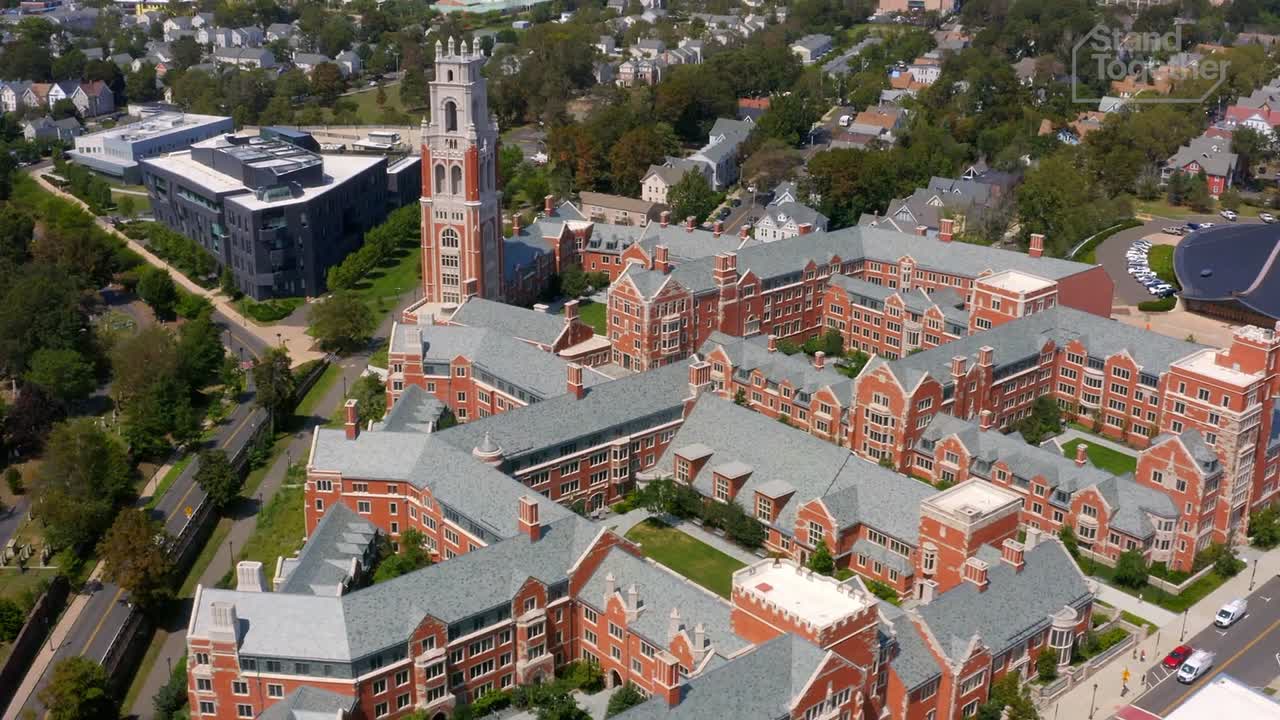
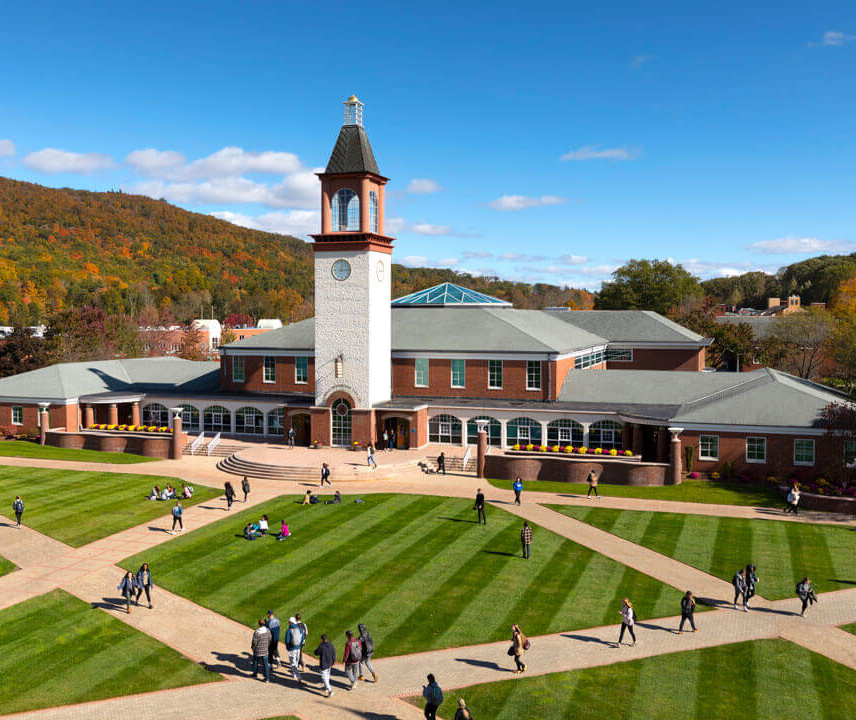
Minerva University is a radical, nomadic liberal arts experiment headquartered in San Francisco that redefines the very concept of a campus. Its students spend four years rotating through seven global cities, learning via a proprietary online platform in small, seminar-style classes, creating a fiercely intellectual and itinerant community. With an admissions process that is famously cryptic and a selectivity rate that rivals the Ivy League, it attracts self-directed, globally-minded students who are less interested in football games and frat houses than in building a unique, borderless education.
Admission requirements
Test-blind — scores not considered
Required
High school transcript
Grade point average
Considered (not required)
Class rank
Source: IPEDS Admissions survey (2022) via Urban Institute. Covers formal factors only — it does not reflect essays, extracurriculars, or other holistic criteria.
Mathematics & Computer Science, Business Administration
Graduation Rate
89% (Niche), 83% (College Scorecard)
Students Receiving Aid
80-83%
Outcomes & value
Outcomes & value
First-year retention
98%
Pell (lower-income) share
—
Earnings = median of students working ~10 years after entry; debt = median of graduates. Value divides 10-yr earnings by one year’s net price — read it as earnings per dollar of annual cost, not a full lifetime ROI; it favors lower-cost schools. Source: U.S. Dept. of Education College Scorecard. Figures lag ~2 years and reflect all students, not your intended major.
Campus & location
Climate
Pleasant days / yr
198
Summer high
66°F
Winter low
46°F
Annual rain
23.6"
Natural-hazard risk
Very High
Pleasant days counts days per year with a mean temperature of 55–75°F, a high at or below 90°F, a low at or above 45°F, and little precipitation — a transparent comfort measure, not a weighting we invented. Computed from Open-Meteo ERA5 daily history (2019–2023). Natural-hazard risk is the county’s composite rating from the FEMA National Risk Index.
Quick answers
What is the acceptance rate at Minerva University?
Minerva University's acceptance rate is approximately 3% (San Francisco, CA), based on the most recent figures we compiled from public and primary sources.
How many undergraduates attend Minerva University?
Minerva University enrolls approximately 637 undergraduate students.
Where is Minerva University located?
Minerva University is located in San Francisco, CA.
Admissions
Gaining admission to Minerva is a feat of self-selection as much as academic prowess. The university is extremely selective, with sources citing as low as 0.99% and 3% [https://bigfuture.collegeboard.org/colleges/minerva-university/admissions, https://www.niche.com/colleges/minerva-university/admissions/]. Per our canonical figures, we publish an acceptance rate of 3%. The process is notably unconventional; applicants report receiving "the most cryptic college mail" [https://www.reddit.com/r/ApplyingToCollege/comments/q246or/what_the_hell_is_minerva_university/], and the university itself advises applicants not to be daunted by low admissions rates [https://www.minerva.edu/blog/4-things-you-shouldnt-worry-about-when-applying-to-minerva-university/].
Crucially, SAT and ACT scores are not required nor considered during the [https://testbook.com/en-us/college/minerva-university-admissions]. This policy leads to a wide range of test scores among admits, with some sources noting students with scores as low as 1190 gaining entry [https://www.quora.com/Minerva-is-tougher-to-get-into-than-Harvard-I-got-1190-in-my-SAT-but-I-still-got-into-Minerva-this-year-in-the-Early-Action-Cycle-How-is-this-possible-With-this-score-there-is-no-way-I-could-have-made-my-way-to-Harvard], while others suggest competitive applicants target scores above 1500 [https://www.academicjobs.com/employers/minerva-university/4789/sat-scores]. Applicants can apply via the Common Application or directly through Minerva's website, which the university recommends for a more seamless experience [https://www.minerva.edu/undergraduate/admissions/]. The yield rate—the percentage of admitted students who enroll—is reported at 43.6% [https://datausa.io/profile/university/minerva-university?redirect=true]. Historical data from Wikipedia shows a similar pattern, with a 2.8% acceptance rate and a 42% from an earlier cohort [https://en.wikipedia.org/wiki/Minerva_University]. The is a standard resource for admissions data [https://commondataset.org/], and while specific Minerva CDS data isn't provided in the sources, general guidance indicates that demonstrated interest is a factor some colleges track in section C7 [https://www.gradgpt.com/common-data-set, https://www.instagram.com/p/DSHtSAVD6iJ/]. Other resources list colleges where demonstrated interest is explicitly "not considered" [https://orieladmissions.com/demonstrated-interest-which-colleges-track-it/].
Minerva's academic model is its core innovation, built around a global rotation and an active learning platform. The curriculum is explicitly designed to develop "critical thinking, communication, collaboration, creative problem-solving, and decision for a lifetime of learning" [https://www.minerva.edu/undergraduate/]. This interdisciplinary approach has earned the university recognition in rankings like Niche's "America's Best Colleges" for 2026 [https://www.minerva.edu/announcements/minerva-university-named-one-of-americas-best-colleges-in-2026-niche-rankings/].
Students choose a major that defines their core academic focus, which is then enriched by electives and hands-on experiences [https://www.minerva.edu/undergraduate/majors-concentrations/]. The most popular majors, according to one source, are Mathematics and Computer Science, Business Administration and Management, and an unspecified third [https://www.collegeraptor.com/colleges/majors/Minerva-University-CA--484844]. All learning happens in small seminars via the university's proprietary online platform, which facilitates real-time, participatory classes. While this system is praised for functioning well, some student reviews note the curriculum "can be limiting, especially for students" seeking a more traditional or expansive course catalog [https://www.niche.com/colleges/minerva-university/academics/]. The entire model is predicated on applied, experiential education rather than passive lecture-based learning.
To call Minerva's student life "unconventional" is an understatement. The campus is the world. Students travel to seven countries over four years, living and studying in rotation cities like San Francisco, Berlin, and others [https://www.minerva.edu/blog/on-campus-means-the-world-to-me/]. The university describes its "bespoke campus" as being made up of local libraries, gyms, and cafes rather than a traditional quad [https://www.minerva.edu/blog/on-campus-means-the-world-to-me/]. This global immersion is a central part of the experience, as highlighted in the "Meridians" section of their website [https://www.minerva.edu/meridians/].
Community is forged through student-led clubs, community activities, and cultural exploration facilitated by a dedicated Student Life team that is present in every city, offering 24/7 emergency support [https://www.minerva.edu/student-experience/]. Niche reviews list clubs offered, including Dance, and give campus life an overall grade of B+ [https://www.niche.com/colleges/minerva-university/campus-life/]. The experience is documented by the students themselves, as seen in projects like "ONE DAY," a video series created by the Class of 2025 to showcase a day in the life in each rotation city [https://www.youtube.com/watch?v=6Q_IzNZDZuo]. This model prompts intense discussion among prospective students, with some expressing skepticism about the lack of a physical campus and the nature of the community [https://www.reddit.com/r/ApplyingToCollege/comments/1b5pjxy/what_is_minerva_university_and_is_it_worth_the/]. Life at Minerva is for the highly adaptable, curious, and independent student who sees the entire world as their classroom and social sphere.
Minerva boasts strong student persistence and graduation outcomes. The graduation rate is reported variously as 89% by Niche and College Ranker, and 83% by the Department of Education's College Scorecard [https://www.niche.com/colleges/minerva-university/after-college/, https://www.collegeranker.com/colleges/minerva-university, https://collegescorecard.ed.gov/school?484844]. The university itself publishes annual statistics on student retention and completion [https://www.minerva.edu/resources/student-retention-and-graduation-rates/].
Early career earnings data shows a trajectory of growth. According to Niche, the median earnings one year after graduation are $36,427, which rise to $45,519 after five years [https://www.niche.com/colleges/minerva-university/after-college/]. The College Scorecard reports typical median earnings at $36,976 [https://collegescorecard.ed.gov/school?484844]. Other sources provide earnings ranges showing the 25th, median, and 75th percentiles for graduates six years after enrollment [https://www.edsmart.org/schools/minerva-university/]. These outcomes suggest that Minerva graduates are successfully launching into the workforce, with salaries increasing significantly in the years immediately following graduation.
Minerva's published annual tuition is $45,200 [https://waf.collegedata.com/college-search/minerva-university/money-matters]. However, the university is generous with financial aid, significantly reducing the for most students. A high percentage of enrolled students receive grants or scholarships—figures range from 80% to 83.09% [https://www.collegetuitioncompare.com/amp/edu/484844/minerva-university/tuition/, https://bigfuture.collegeboard.org/colleges/minerva-university/tuition-and-costs]. The average financial aid package is reported as $25,502 by the College Board and $19,277 by another source [https://bigfuture.collegeboard.org/colleges/minerva-university/tuition-and-costs, https://www.collegetuitioncompare.com/amp/edu/484844/minerva-university/tuition/].
This aid brings the average net price—what families actually pay after grants and scholarships—down to between $15,215 and $16,556 per year [https://www.meetyourclass.com/minerva/cost, https://bigfuture.collegeboard.org/colleges/minerva-university/tuition-and-costs]. The university states clearly that aid decisions are based on each student's demonstrated financial need, available funds, and timely submission of requirements [https://beyondthestates.com/scholarships/minerva-university-need-based-financial-aid-program/]. It also explicitly notes that "there are no full-ride financial aid packages, and each student will have an annual expected contribution amount" based on their financial circumstances [https://www.minerva.edu/undergraduate/financial-aid/]. Prospective students are directed to use the Net Price Calculator for an estimate [https://www.collegeraptor.com/Shopping/Sheet/Minerva-University-CA--484844]. Videos created by the community explain the financial aid process, covering scholarships, grants, loans, and work-study [https://www.youtube.com/watch?v=4EgntWvfQvI]. General articles discuss 'no-loan' policies at some colleges, where 100% of need is met with grants [https://www.usnews.com/education/best-colleges/paying-for-college/articles/schools-that-meet-full-financial-need-with-no-loans, https://www.collegeessayguy.com/blog/colleges-that-offer-complete-financial-aid], but the provided Minerva sources do not confirm such a policy exists here.
Minerva University stands out not for tweaking the traditional model, but for dismantling it entirely and building something alien and ambitious in its place. It is defined by a series of radical negations: no permanent campus, no lecture halls, no required standardized tests, and no conventional college social scene. In their place, it offers a globally nomadic existence, a pedagogy obsessed with active, interdisciplinary problem-solving, and a community self-selected for extreme adaptability and intellectual intensity. Its selectivity—on par with the world's most elite institutions—is a filter for a very specific type of student: one who is less interested in "going to college" than in embarking on a four-year, worldwide intellectual expedition. The skepticism it generates among some is a feature, not a bug; Minerva is designed for those who find the very questions it raises—"What is a campus? What is a class?"—to be the most compelling part of the offer. It is arguably the most distinctive educational experiment in American higher education today, a bet that the future belongs to the agile, globally fluent, and self-directed learner.
Gallery
Minerva University seal · sourceMinerva University | Interstride · sourceMinerva University · sourceDay in the Life of a Minerva Student in Seoul - Hyoeun · source