Loading…
← All schools
Mitsu Sato Hair Academy
Overland Park, KSprivate forprofitwww.mitsusatohairacademy.com/
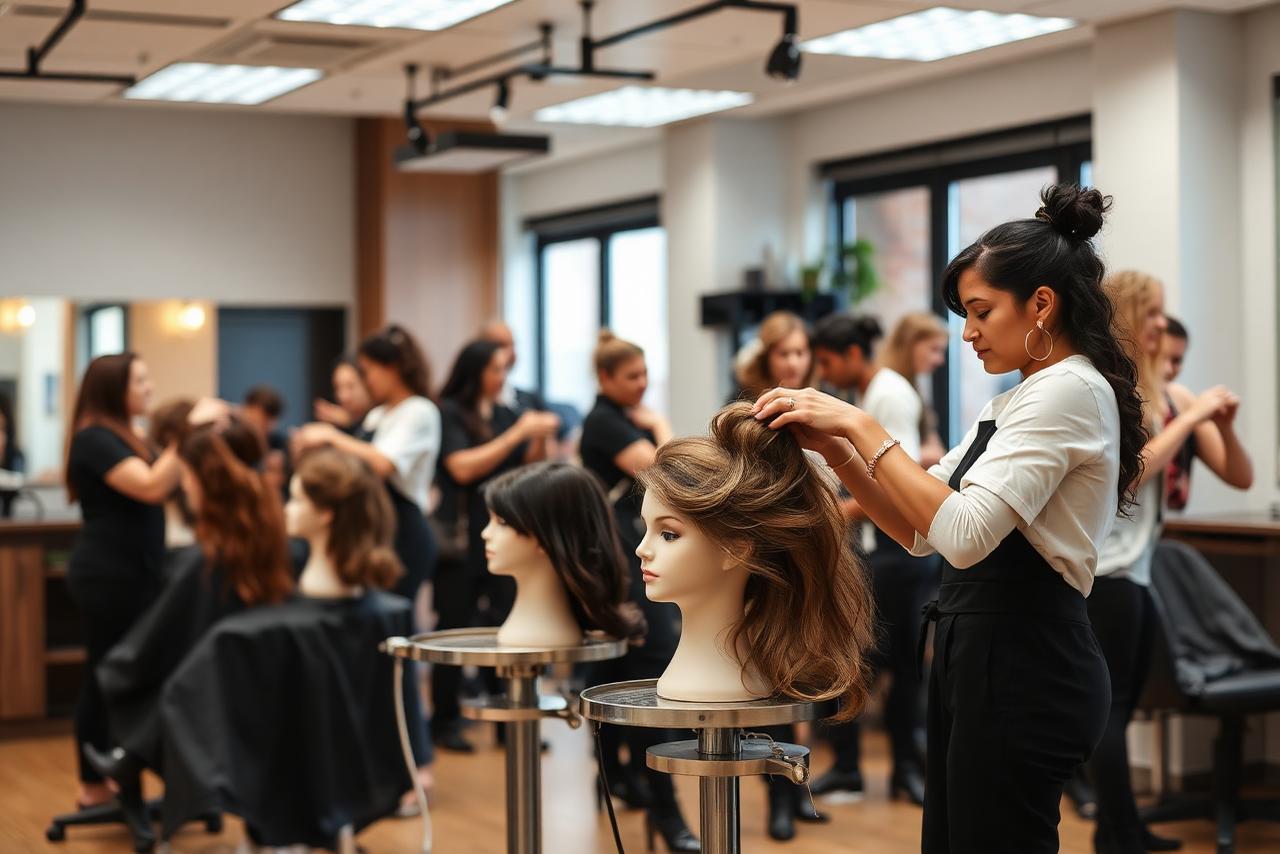
Mitsu Sato Hair Academy isn't a traditional college; it's a tightly focused, career-launching trade school for the beauty industry in Overland Park, Kansas. The culture is hands-on, supportive, and intensely practical, with a student body that reflects a diverse cross-section of the region. This is a place where you go to learn a craft, not to ponder philosophy—a direct pipeline to licensure and a job in cosmetology or esthetics.
More details
- Undergrad enrollment
- 85
- Top Majors
- Cosmetology, Esthetics
- Average Grant Aid
- $6,304
- Student-Faculty Ratio
- 12:1
- % Students Receiving Grant Aid
- 62%
Outcomes & value
Outcomes & value
- Median debt at graduation
- $9,500
- Reducing loan balance (3 yr)
- 46%
- Pell (lower-income) share
- 65%
Earnings = median of students working ~10 years after entry; debt = median of graduates. Value divides 10-yr earnings by one year’s net price — read it as earnings per dollar of annual cost, not a full lifetime ROI; it favors lower-cost schools. Source: U.S. Dept. of Education College Scorecard. Figures lag ~2 years and reflect all students, not your intended major.
Campus & location
Campus safety
- On-campus violent crimes (2024)
- 0
On-campus criminal offenses classed as violent (murder/non-negligent manslaughter, rape, robbery, aggravated assault) for the most recent reported year. Source: U.S. Dept. of Education Campus Safety and Security (Clery Act). Counts reflect what’s reported to the school, and urban campuses often report more partly due to non-student incidents nearby — read alongside campus size and setting, not as a standalone safety verdict.
Climate
- Pleasant days / yr
- 83
- Summer high
- 87°F
- Winter low
- 26°F
- Annual rain
- 39.6"
- Annual snow
- 19.4"
- Natural-hazard risk
- Relatively High
Pleasant days counts days per year with a mean temperature of 55–75°F, a high at or below 90°F, a low at or above 45°F, and little precipitation — a transparent comfort measure, not a weighting we invented. Computed from Open-Meteo ERA5 daily history (2019–2023). Natural-hazard risk is the county’s composite rating from the FEMA National Risk Index.
Quick answers
- How much does Mitsu Sato Hair Academy cost?
- At Mitsu Sato Hair Academy, the average net price (after aid) is about $14,330 per year. Actual cost varies with financial aid and residency.
- How many undergraduates attend Mitsu Sato Hair Academy?
- Mitsu Sato Hair Academy enrolls approximately 85 undergraduate students.
- Where is Mitsu Sato Hair Academy located?
- Mitsu Sato Hair Academy is located in Overland Park, KS.
Admissions
Admissions at Mitsu Sato Hair Academy operate on a model distinct from traditional four-year colleges. The school does not appear to have an open admissions policy, but its selectivity is framed differently, focusing on readiness for a hands-on trade program rather than standardized test scores or high school GPAs. The process is direct and personal: prospective students are encouraged to call, text, or email admissions directly to save a spot in an upcoming class. The enrolled student population is notably diverse: 34.1% Black or African American, 30.6% White, 16.5% Hispanic or Latino, and 9.41% Two or More Races. There is no available for the academy, indicating its processes and criteria are not benchmarked against the standardized metrics used by liberal arts colleges and universities.
Academics
The academic offering is singular and career-specific. Mitsu Sato Hair Academy offers a concentrated curriculum in personal and culinary services, with only two major program areas: Cosmetology/Cosmetologist, and Aesthetician/Esthetician and Skin Care Specialist. Some sources note a third program, rounding out a total of three offerings. The academy graduates approximately 66 students per year. Instruction is described as hands-on and supported by instructors, emphasizing the practical skills needed for a career in beauty. The student-faculty ratio is reported as 12:1, suggesting a focus on individual attention in a trade-school setting. The academic calendar runs on a continuous basis, aligning with the cohort-based, intensive training model common in career education.
Compare Mitsu Sato Hair Academy
vs William Jewell Collegevs Manchester Universityvs Dickinson State Universityvs University of Minnesota-Morris
See colleges similar to Mitsu Sato Hair Academy →Sources
- Mitsu Sato Hair Academy
- Common Data Set: Home
- Mitsu Sato Hair Academy - DFR Report HTML
- CDS-2024-2025-TEMPLATE.pdf
- Common Data Set Repository
- Common Data Set (2025-26)
- Mitsu Sato Hair Academy
- Mitsu Sato Hair Academy - Sallie
- Cosmetology School in Overland Park, KS
- Mitsu Sato Hair Academy Enrollment Details
- Mitsu Sato Hair Academy | Overland Park KS