Loading…
← All schools
Montana State University-Northern
Havre, MTpublicwww.msun.edu/
Avg net price
$12,664
Earnings (10 yr)
$49,505
Graduation rate
41%
Acceptance & SAT from Common Data Set / IPEDS; net price, earnings & graduation from the U.S. Dept. of Education College Scorecard. Figures lag ~1–2 years — verify with the school.
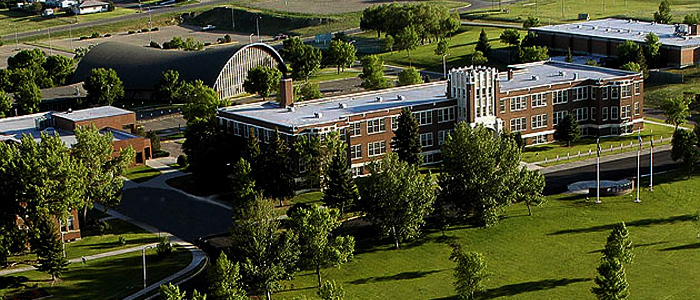
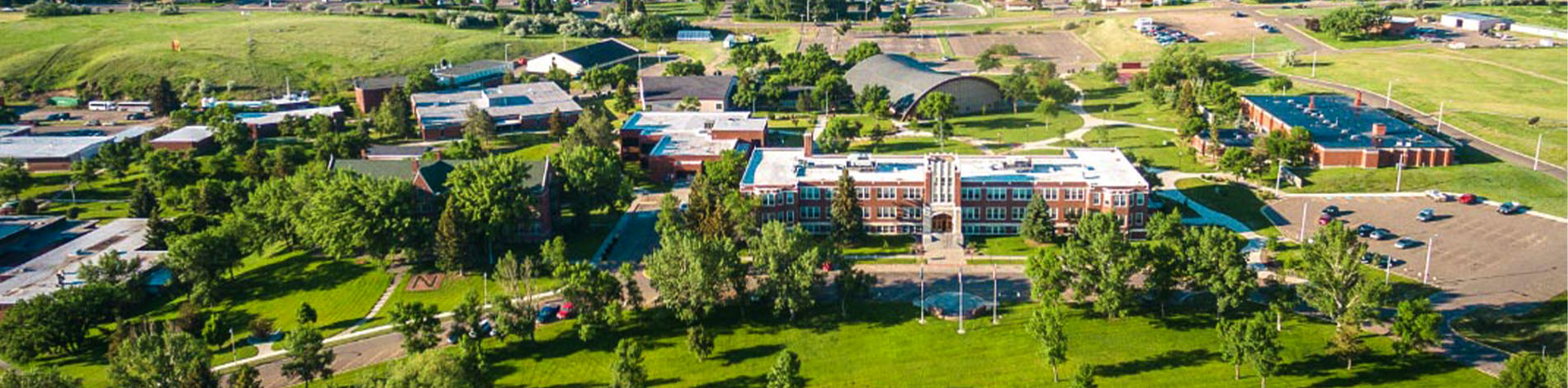
Montana State University-Northern is a pragmatic, blue-collar public university in Havre, Montana, where the academic identity is forged in diesel shops, welding labs, and nursing clinicals rather than ivory towers. It’s the most affordable university in the state, serving a small, predominantly male student body with a straightforward mission: deliver hands-on, career-ready education in technical and professional fields to those who might otherwise be priced out of a degree. While retention and graduation rates are challenges, its value proposition is crystal clear—low debt and solid earning potential for graduates who stick it out.
More details
- Undergrad enrollment
- 761
- In-state tuition
- $6,982
- Out-of-state tuition
- $21,875
- Top Majors
- Diesel Mechanics, Nursing, Welding, Elementary Education, Business
- Graduation Rate
- 41%
- Financial Aid SAP
- Must complete 67% of credits attempted
- Gender Distribution
- 60.7% male / 39.3% female
- First-Year Retention
- 64%
- Median Earnings (10yr)
- $49,505
Outcomes & value
Outcomes & value
- Median earnings (10 yr)
- $49,505
- Value (earnings ÷ net price)
- 3.9×
- Median debt at graduation
- $18,500
- Graduation rate
- 41%
- First-year retention
- 64%
- Reducing loan balance (3 yr)
- 64%
- Pell (lower-income) share
- 33%
- First-gen share (among federal-aid recipients)
- 34%
Top-earning majors
Median earnings by field of study (highest credential), ~2 years after completion.
- Registered Nursing, Nursing Administration, Nursing Research and Clinical Nursing$66,461
- Vehicle Maintenance and Repair Technologies/Technicians$55,286
- Business Administration, Management and Operations$39,369
- Criminal Justice and Corrections$36,134
- Teacher Education and Professional Development, Specific Levels and Methods$32,925
Source: U.S. Dept. of Education College Scorecard (field-of-study earnings). Figures cover graduates who received federal aid and lag ~2 years; not all programs report data.
Campus & location
Campus safety
- On-campus violent crimes (2024)
- 0
- Per 1,000 students
- 0.00
On-campus criminal offenses classed as violent (murder/non-negligent manslaughter, rape, robbery, aggravated assault) for the most recent reported year. Source: U.S. Dept. of Education Campus Safety and Security (Clery Act). Counts reflect what’s reported to the school, and urban campuses often report more partly due to non-student incidents nearby — read alongside campus size and setting, not as a standalone safety verdict.
Climate
- Pleasant days / yr
- 91
- Summer high
- 81°F
- Winter low
- 16°F
- Annual rain
- 14.3"
- Annual snow
- 35.7"
- Natural-hazard risk
- Relatively Low
Pleasant days counts days per year with a mean temperature of 55–75°F, a high at or below 90°F, a low at or above 45°F, and little precipitation — a transparent comfort measure, not a weighting we invented. Computed from Open-Meteo ERA5 daily history (2019–2023). Natural-hazard risk is the county’s composite rating from the FEMA National Risk Index.
Deep dive — research, future-scholar output & economic mobility
Research output
- Institutional h-index
- 48
- Scholarly works
- 454
Institutional research volume and impact from OpenAlex. The h-index reflects large research universities and will be low for teaching-focused liberal-arts colleges — not a measure of undergraduate quality.
Economic mobility
- Mobility rate
- 3.6%
- Bottom → top quintile
- 24%
- From bottom quintile
- 15%
Mobility rate = the share of students who both start in the bottom household-income quintile and reach the top quintile; bottom → top is that chance conditional on starting at the bottom. Source: Opportunity Insights Mobility Report Cards (Chetty, Friedman, Saez, Turner & Yagan). Reflects 1980–82 birth cohorts, so it’s directional, not current.
Quick answers
- How much does Montana State University-Northern cost?
- At Montana State University-Northern, the average net price (after aid) is about $12,664 per year. Actual cost varies with financial aid and residency.
- How many undergraduates attend Montana State University-Northern?
- Montana State University-Northern enrolls approximately 761 undergraduate students.
- Where is Montana State University-Northern located?
- Montana State University-Northern is located in Havre, MT.
Admissions
Admission to MSU-Northern is broadly accessible, designed to be a gateway rather than a gate. The university is not selective, with reported of 95.6% and even 100% according to some sources. The Montana Board of Regents has eliminated the requirement for ACT or SAT scores for admission to its campuses, though MSU-Northern provides benchmark criteria for those who do submit them: an enhanced ACT composite score of 20 or higher, or a combined SAT score of 1440 or higher, or a high school GPA of 2.50 or higher. The admissions office can be reached at (406) 265-3704 or a toll-free number, (800) 662-6132. There is no indication from the provided sources that the university employs an Early Decision program; the term 'Early Admission' at MSU refers to a concurrent enrollment program for high-ability local high school students, not a binding early decision round for traditional applicants. Demonstrated interest is not addressed in the available MSU-Northern data snippets.
Compare Montana State University-Northern
vs University of Alaska Southeastvs Oregon State University-Cascades Campusvs SUNY College at Potsdamvs West Virginia University Institute of Technology
See colleges similar to Montana State University-Northern →Sources
- Common Data Set - University Data & Analytics
- Common Data Set 2025-2026
- Common Data Set: Home
- Common Data Set 2023-2024 - GENERAL INFORMATION A1. ...
- Common Data Set Explorer 2026: Compare 100 Colleges
- Common Data Set 2011-2012
- Montana State University - Northern SAT Scores and GPA
- Freshman Admissions
- Montana State University Northern (MSU Northern Montana)
- Montana State University - Northern Admissions
- Admissions - Montana State University - BigFuture