Admit rate has ranged 63%–74% over the last 5 years — notably volatile. Source: IPEDS via Urban Institute.
Acceptance & SAT from Common Data Set / IPEDS; net price, earnings & graduation from the U.S. Dept. of Education College Scorecard. Figures lag ~1–2 years — verify with the school.
Morningside University is a small, moderately selective private university in Sioux City, Iowa, where personalized education meets Midwestern practicality. With a 71% acceptance rate and a 12:1 student-faculty ratio, it offers close-knit academics (notably in business, education, and pre-med) and a no-frills campus life heavy on clubs but light on Greek life. Its 54% graduation rate reflects its regional-commuter roots, though its 99% post-grad employment claim suggests strong local career pipelines.
Admission requirements
Test-blind — scores not considered
Required
High school transcript
Grade point average
TOEFL (non-native English)
Considered (not required)
Class rank
Source: IPEDS Admissions survey (2022) via Urban Institute. Covers formal factors only — it does not reflect essays, extracurriculars, or other holistic criteria.
More details
Undergrad enrollment
1,163
In-state tuition
$39,660
Out-of-state tuition
$39,660
Most Popular Majors
Business, Elementary Education, Biology
Student-Faculty Ratio
12:1
6-Year Graduation Rate
54%
Post-Grad Placement Rate
99%
Outcomes & value
Outcomes & value
Median earnings (10 yr)
$55,494
Value (earnings ÷ net price)
1.8×
Median debt at graduation
$26,028
Graduation rate
50%
First-year retention
74%
Reducing loan balance (3 yr)
74%
Pell (lower-income) share
34%
First-gen share (among federal-aid recipients)
23%
Financial health
2.5 / 3.0Meets the federal financial-responsibility standard
U.S. Dept. of Education Financial Responsibility Composite Score (FY2022-23). Scale −1.0 to 3.0; ≥1.5 meets the standard. Reported for private nonprofit & for-profit institutions only — public universities are state-backed and not scored, so this is a stability signal, not a ranking.
Top-earning majors
Median earnings by field of study (highest credential), ~2 years after completion.
Registered Nursing, Nursing Administration, Nursing Research and Clinical Nursing$58,479
Teacher Education and Professional Development, Specific Levels and Methods$40,728
Teacher Education and Professional Development, Specific Subject Areas$40,179
Business Administration, Management and Operations$39,523
Biology, General$38,906
Campus & location
Campus safety
On-campus violent crimes (2024)
0
Per 1,000 students
0.00
On-campus criminal offenses classed as violent (murder/non-negligent manslaughter, rape, robbery, aggravated assault) for the most recent reported year. Source: U.S. Dept. of Education Campus Safety and Security (Clery Act). Counts reflect what’s reported to the school, and urban campuses often report more partly due to non-student incidents nearby — read alongside campus size and setting, not as a standalone safety verdict.
Climate
Pleasant days / yr
81
Summer high
85°F
Winter low
16°F
Annual rain
26.3"
Annual snow
24.8"
Natural-hazard risk
Relatively Moderate
Pleasant days counts days per year with a mean temperature of 55–75°F, a high at or below 90°F, a low at or above 45°F, and little precipitation — a transparent comfort measure, not a weighting we invented. Computed from Open-Meteo ERA5 daily history (2019–2023). Natural-hazard risk is the county’s composite rating from the FEMA National Risk Index.
Quick answers
What is the acceptance rate at Morningside University?
Morningside University's acceptance rate is approximately 71% (Sioux City, IA), based on the most recent figures we compiled from public and primary sources.
How much does Morningside University cost?
At Morningside University, the average net price (after aid) is about $31,320 per year. Actual cost varies with financial aid and residency.
How many undergraduates attend Morningside University?
Morningside University enrolls approximately 1,163 undergraduate students.
Where is Morningside University located?
Morningside University is located in Sioux City, IA.
Admissions
Morningside’s admissions process leans accessible, with a 71% acceptance rate (1,945 of 2,756 applicants in 2023) and middle-of-the-road academic benchmarks: admitted students typically have ACT scores between 12-22 or SAT scores of 710-1,110. The university doesn’t publish an average GPA, but its selectivity is squarely in 'likely to get in' territory—Niche calls it 'somewhat competitive,' though that’s largely by default in a state with few private colleges. No open-admission policy exists, but the bar is low enough that it functions as a safety school for many Iowans.
The academic vibe is 'small-town practical': with a , heavy on career-ready majors like , , and . The pre-med program pushes critical thinking alongside core sciences, but this isn’t a research powerhouse—the hints at academic fit issues. Still, Morningside leans hard on its (likely inflated by local internships and Sioux City’s modest job market). Don’t expect Ivy-level rigor; the trails national averages, though the 13:1 ratio means professors know students by name.
Earnings = median of students working ~10 years after entry; debt = median of graduates. Value divides 10-yr earnings by one year’s net price — read it as earnings per dollar of annual cost, not a full lifetime ROI; it favors lower-cost schools. Source: U.S. Dept. of Education College Scorecard. Figures lag ~2 years and reflect all students, not your intended major.
Multi/Interdisciplinary Studies, Other
$28,019
Design and Applied Arts$27,669
Communication and Media Studies$25,194
Source: U.S. Dept. of Education College Scorecard (field-of-study earnings). Figures cover graduates who received federal aid and lag ~2 years; not all programs report data.
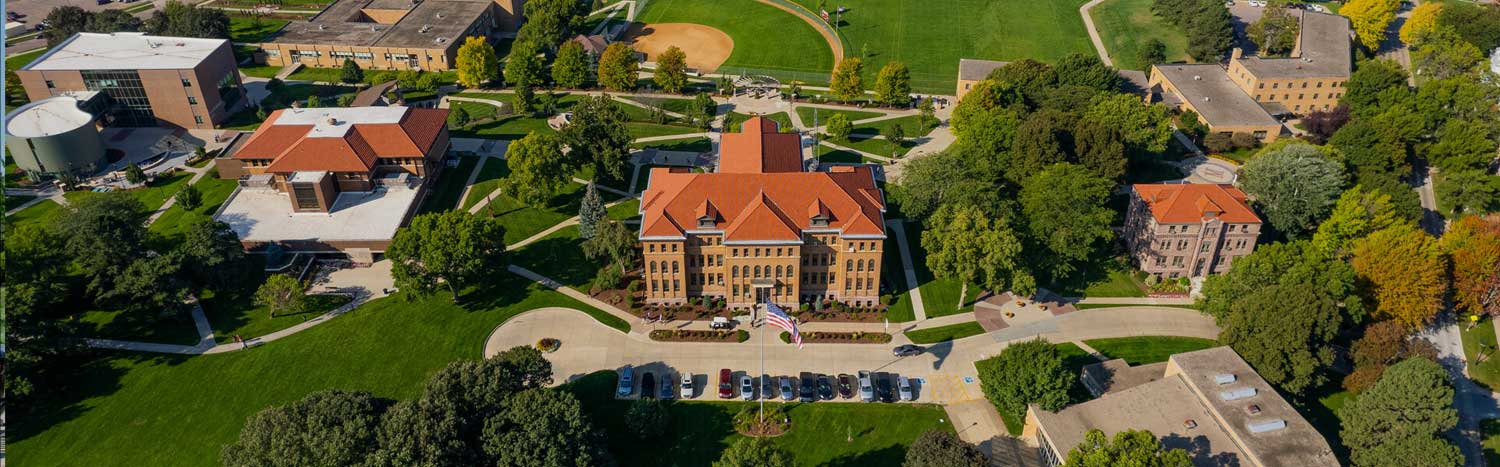
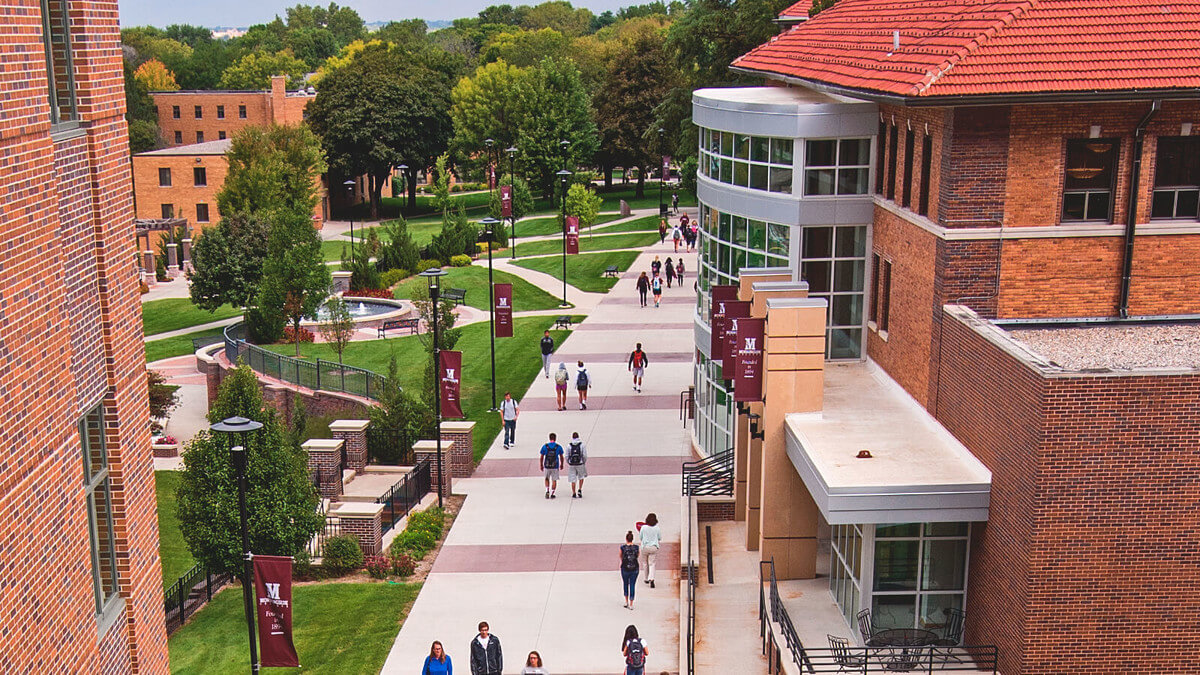
Campus life skews wholesome and low-key. With 1,177 undergrads (near-even gender split), the vibe is 'commuter-meets-residential'—think study rooms doubling as social hubs and 50+ clubs (from choir to niche interest groups) compensating for minimal Greek life. An Instagram post captures the ethos: American Culture students spent May Term dissecting baseball through 'films, music, literature, museums, and live games.' Facilities are functional, not flashy, with communal spaces designed for 'projects, studying, and gathering with friends.' This isn’t a party school; it’s where you join the Psychology Club or attend a museum trip because there’s not much else to do in Sioux City.
Post-grad stats are a mixed bag. The 54% six-year graduation rate (per U.S. News) lags behind national averages, and only 47% finish 'on time' in four years. But the university touts a 99% placement rate for grads—likely buoyed by Sioux City’s demand for teachers and business grads. Earnings data is scarce, suggesting most alumni stay regional. For pre-professional students, Morningside works as a stepping stone; for others, it’s a gamble. The Class of 2026’s 'remarkable achievements' (per a press release) probably mean 'got jobs in Iowa,' not 'landed at Goldman Sachs.'
At $23,482 net price (after average aid of $26,117), Morningside is pricey for a regional school—its sticker price likely shocks families expecting 'Iowa affordable.' The financial aid office offers the usual mix of scholarships, grants, work-study, and loans, but the $31,320 average net cost (per Kolly AI) suggests many pay near-full freight. Aid applications are due June 30, though the calculator warns estimates vary by income. For local students, it’s a trade-off: pay up for small classes or save at a public school.
Morningside’s appeal is its hyper-local practicality. Unlike flashier Midwestern liberal arts colleges, it doesn’t pretend to be something it’s not—this is where you go to become a Sioux City teacher, nurse, or small-business owner, with faculty who’ll learn your name and a career office plugged into the community. The 99% job claim feels inflated, but for students who want to stay in Iowa, it delivers. Just don’t expect prestige or a vibrant campus; the real selling point is 'no surprises' education.
Morningside University logo · sourceAbout Morningside | Morningside University · sourceMaps & Parking | Morningside University · sourceMorningside University - Sioux City, IA | Appily · source