Admit rate has ranged 62%–68% over the last 5 years, though the latest figure above (72%) falls outside that window. Source: IPEDS via Urban Institute.
Acceptance & SAT from Common Data Set / IPEDS; net price, earnings & graduation from the U.S. Dept. of Education College Scorecard. Figures lag ~1–2 years — verify with the school.
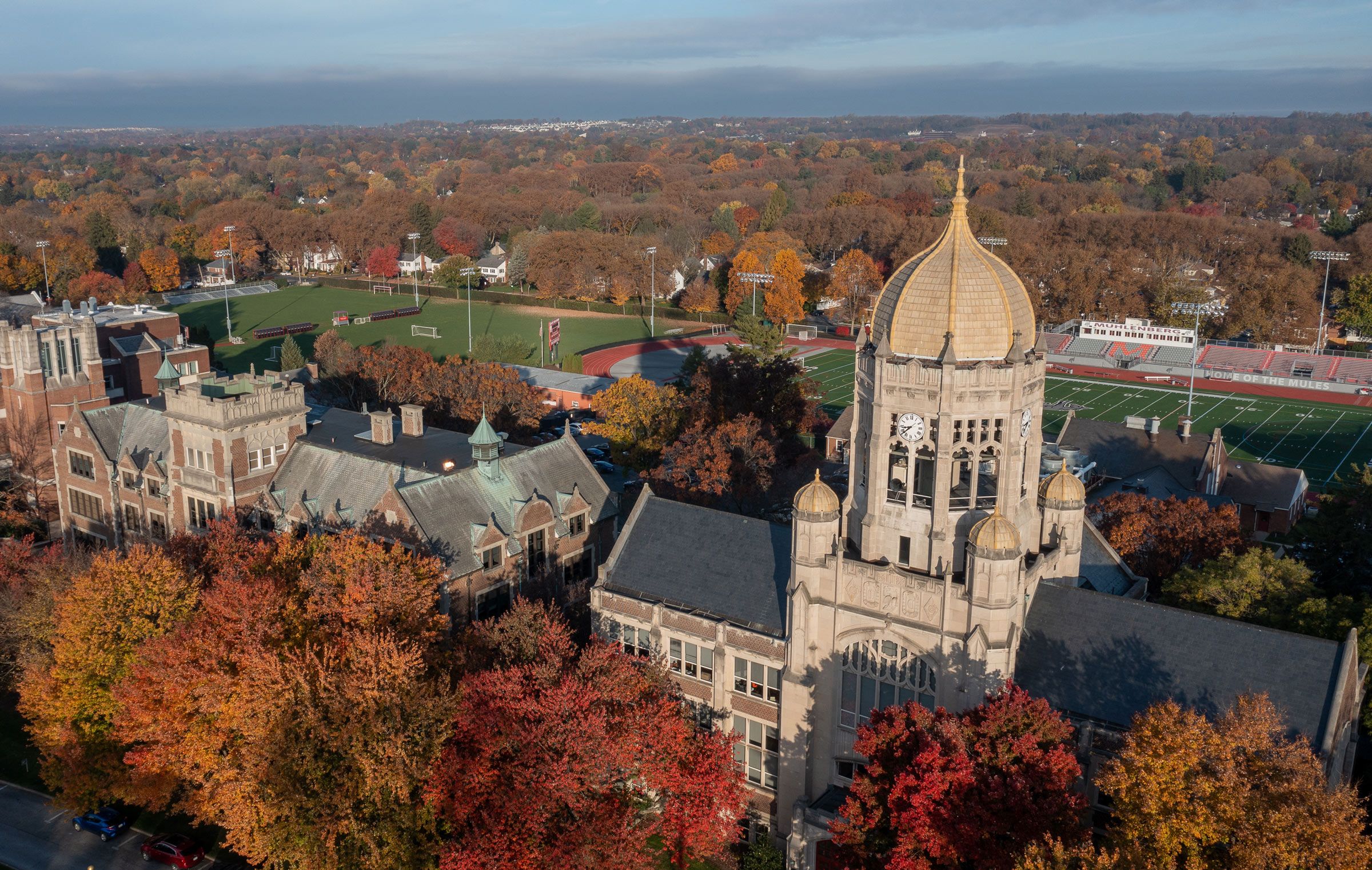
Muhlenberg College is a small, Lutheran-affiliated liberal arts school in Allentown, PA, with a surprisingly robust theater program and a knack for blending career-focused majors with classic liberal arts rigor. Known for its tight-knit residential community (90% retention rate) and strong outcomes (82% graduation rate), it punches above its weight in business and the arts while offering an intimate 8:1 student-faculty ratio.
Admission requirements
Test-optional — scores considered if submitted
Required
High school transcript
Grade point average
Letters of recommendation
College-prep program
Considered (not required)
Class rank
Test scores (SAT/ACT)
TOEFL (non-native English)
Source: IPEDS Admissions survey (2022) via Urban Institute. Covers formal factors only — it does not reflect essays, extracurriculars, or other holistic criteria.
More details
Undergrad enrollment
1,727
In-state tuition
$62,805
Out-of-state tuition
$62,805
Top Majors
Business (21%), Visual/Performing Arts (20%), Psychology (12%)
Campus Safety
86% feel 'extremely safe'
Retention Rate
90%
Graduation Rate
82%
Student-Faculty Ratio
8:1
Avg Financial Aid Package
$52,062
Outcomes & value
Outcomes & value
Median earnings (10 yr)
$69,107
Value (earnings ÷ net price)
2.4×
Median debt at graduation
$25,455
Graduation rate
82%
First-year retention
90%
Reducing loan balance (3 yr)
80%
Pell (lower-income) share
21%
First-gen share (among federal-aid recipients)
16%
Financial health
2.8 / 3.0Meets the federal financial-responsibility standard
U.S. Dept. of Education Financial Responsibility Composite Score (FY2022-23). Scale −1.0 to 3.0; ≥1.5 meets the standard. Reported for private nonprofit & for-profit institutions only — public universities are state-backed and not scored, so this is a stability signal, not a ranking.
Top-earning majors
Median earnings by field of study (highest credential), ~2 years after completion.
Finance and Financial Management Services$65,387
Accounting and Related Services$63,430
Economics$54,644
Mathematics$52,941
Business Administration, Management and Operations$50,105
English Language and Literature, General$36,848
Campus & location
Campus safety
On-campus violent crimes (2024)
1
Per 1,000 students
0.56
On-campus criminal offenses classed as violent (murder/non-negligent manslaughter, rape, robbery, aggravated assault) for the most recent reported year. Source: U.S. Dept. of Education Campus Safety and Security (Clery Act). Counts reflect what’s reported to the school, and urban campuses often report more partly due to non-student incidents nearby — read alongside campus size and setting, not as a standalone safety verdict.
Climate
Pleasant days / yr
90
Summer high
83°F
Winter low
27°F
Annual rain
49.4"
Annual snow
19.9"
Natural-hazard risk
Relatively Moderate
Pleasant days counts days per year with a mean temperature of 55–75°F, a high at or below 90°F, a low at or above 45°F, and little precipitation — a transparent comfort measure, not a weighting we invented. Computed from Open-Meteo ERA5 daily history (2019–2023). Natural-hazard risk is the county’s composite rating from the FEMA National Risk Index.
Deep dive — research, future-scholar output & economic mobility▾
Research output
Institutional h-index
109
Scholarly works
2,122
Institutional research volume and impact from OpenAlex. The h-index reflects large research universities and will be low for teaching-focused liberal-arts colleges — not a measure of undergraduate quality.
Economic mobility
Mobility rate
1.0%
Bottom → top quintile
47%
From bottom quintile
2%
Mobility rate = the share of students who both start in the bottom household-income quintile and reach the top quintile; bottom → top is that chance conditional on starting at the bottom. Source: Opportunity Insights Mobility Report Cards (Chetty, Friedman, Saez, Turner & Yagan). Reflects 1980–82 birth cohorts, so it’s directional, not current.
Quick answers
What is the acceptance rate at Muhlenberg College?
Muhlenberg College's acceptance rate is approximately 72% (Allentown, PA), based on the most recent figures we compiled from public and primary sources.
What SAT score do you need for Muhlenberg College?
Admitted students at Muhlenberg College typically score 1250–1410 on the SAT (the middle-50% range). Scores outside this band are still admitted, especially with strong applications.
How much does Muhlenberg College cost?
At Muhlenberg College, the average net price (after aid) is about $28,905 per year. Actual cost varies with financial aid and residency.
How many undergraduates attend Muhlenberg College?
Muhlenberg College enrolls approximately 1,727 undergraduate students.
Where is Muhlenberg College located?
Muhlenberg College is located in Allentown, PA.
Admissions
Muhlenberg's hovers between 64-72%, making it 'somewhat selective'—more so than the national average (57%) but not cutthroat. Middle 50% SAT scores range from 1230-1410, with admitted students typically boasting a 3.5 GPA. The college weighs 'Very Important' factors like rigor of secondary school record, GPA, and class rank, while treating recommendations and extracurriculars as 'Considered.' Notably, it offers an Early Scholarship and Aid Review to estimate financial aid pre-application—a rarity among peers.
With 50+ majors, Muhlenberg strikes a balance between traditional liberal arts (psychology, biology) and pragmatic programs like business administration (21% of students) and media/communication. Its theater department is legendary, drawing students nationwide, while the 8:1 student-faculty ratio ensures close mentorship. The curriculum leans interdisciplinary, with popular minors complementing majors—think business students taking theater courses. Notably, 20% of students major in visual/performing arts, a staggering proportion for a non-conservatory.
Earnings = median of students working ~10 years after entry; debt = median of graduates. Value divides 10-yr earnings by one year’s net price — read it as earnings per dollar of annual cost, not a full lifetime ROI; it favors lower-cost schools. Source: U.S. Dept. of Education College Scorecard. Figures lag ~2 years and reflect all students, not your intended major.
Dance$35,420
Communication and Media Studies$34,298
Source: U.S. Dept. of Education College Scorecard (field-of-study earnings). Figures cover graduates who received federal aid and lag ~2 years; not all programs report data.
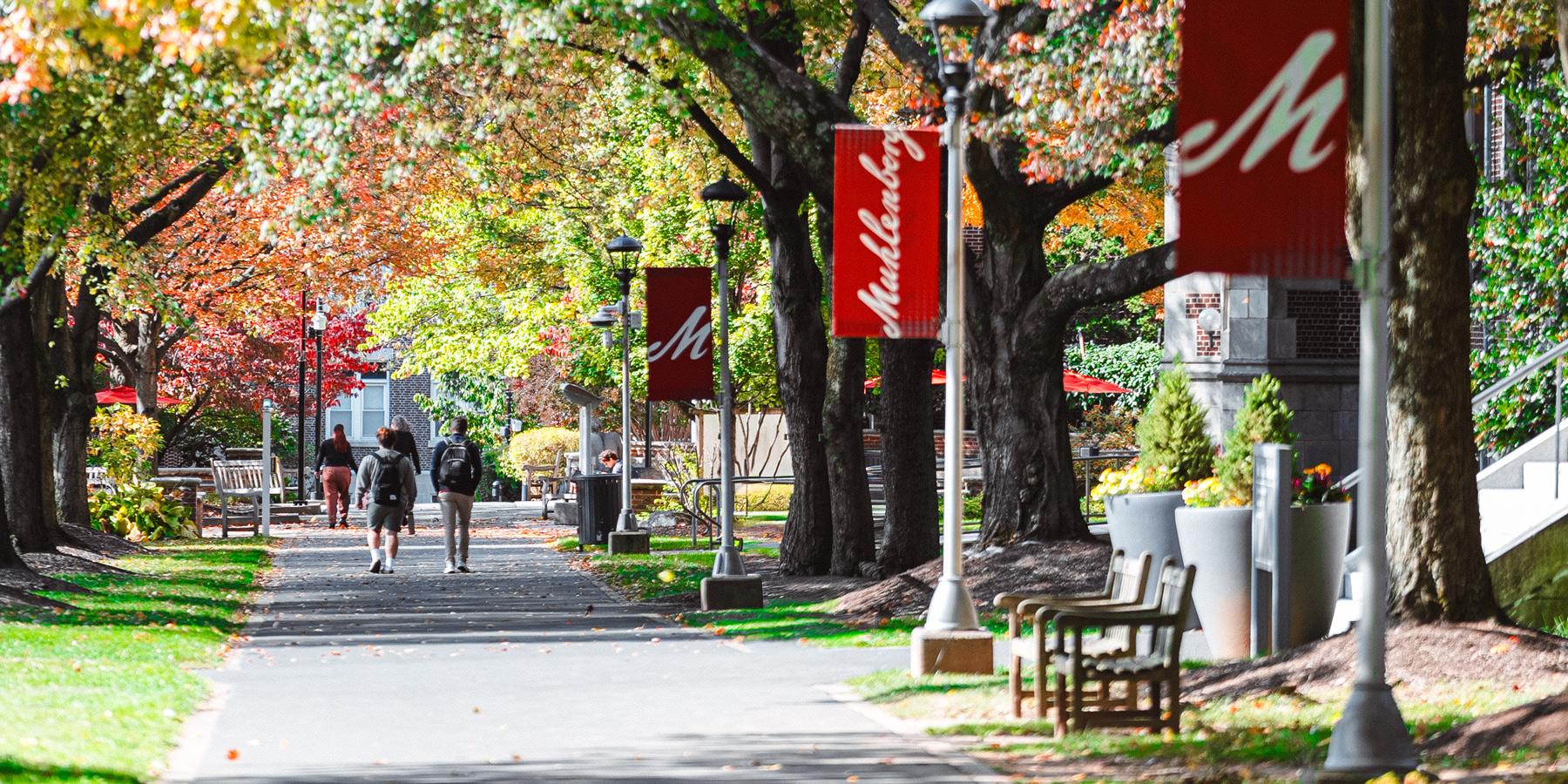
This is a residential campus—guaranteed housing all four years—where 86% of students report feeling 'extremely safe.' With 120+ clubs and a 58% female/42% male split, weekends buzz with student-organized activities (few leave campus). The vibe is collaborative, not cutthroat: 'smart, innovative, passionate' per the college’s own tagline, but also socially engaged. Greek life exists but doesn’t dominate; theater productions and business club networking events draw equal crowds. Allentown provides internships, though most social life orbits campus.
Muhlenberg’s 90% first-year retention and 82% six-year graduation rates crush national averages (both 58%). Forbes and U.S. News consistently rank it a top college, citing these metrics. Alumni networks are tight, especially in theater and business—graduates often help newcomers break into competitive fields. Early-career earnings hover around $28K (modest for liberal arts), but the college emphasizes long-term ROI, noting advanced degree attainment. Pell Grant recipients graduate at nearly the same rate (83%) as non-Pell peers (82%), a mark of equitable support.
At $31,814 (after aid), Muhlenberg isn’t cheap, but it’s aggressive with support: 100% of first-years get aid, averaging $52K (mix of grants/scholarships). The 'Early Scholarship and Aid Review' lets families estimate costs before applying—a transparency win. 88% receive grants ($17K average), while 48% take loans. Merit scholarships stack with , and the college touts $19.9M in annual institutional grants. Still, the sticker price demands scrutiny; some alumni earnings data suggests ROI may lag peers.
Muhlenberg defies easy labels: a Lutheran school with secular vibes, a liberal arts college where 1 in 5 students study theater, and a small Pennsylvania campus that sends grads to NYC stages and Fortune 500s alike. Its superpower is blending intimacy (8:1 ratio, guaranteed housing) with unexpected breadth (business programs rivaling larger universities). The 90% retention rate signals students feel at home, while the alumni network’s loyalty—especially in the arts—speaks to transformative experiences. For those seeking a close community with strong professional pipelines, it’s a dark horse worth betting on.
Muhlenberg College logo · sourceMuhlenberg College | Visit Muhlenberg College · sourceMuhlenberg College | Visit Muhlenberg College · sourceMuhlenberg College - She Can · source