Admit rate has ranged 80%–86% over the last 5 years. Source: IPEDS via Urban Institute.
Acceptance & SAT from Common Data Set / IPEDS; net price, earnings & graduation from the U.S. Dept. of Education College Scorecard. Figures lag ~1–2 years — verify with the school.
Muskingum University is a small, private liberal arts college in rural Ohio that operates on a straightforward, accessible premise: provide a hands-on, experiential education at a price point that doesn't require a lifetime of debt. Founded in 1837, it's a place where the admissions process is rolling and pragmatic, the campus community is tight-knit, and the curriculum is heavily tilted toward practical, career-oriented majors in education, health professions, and business. This isn't a high-pressure, high-selectivity institution; it's a regional workhorse focused on upward mobility for a largely in-state student body.
Admission requirements
Test-optional — scores considered if submitted
Required
High school transcript
Grade point average
College-prep program
TOEFL (non-native English)
Considered (not required)
Class rank
Letters of recommendation
Test scores (SAT/ACT)
Source: IPEDS Admissions survey (2022) via Urban Institute. Covers formal factors only — it does not reflect essays, extracurriculars, or other holistic criteria.
More details
Undergrad enrollment
1,376
In-state tuition
$32,665
Out-of-state tuition
$32,665
Top Majors
Education (21%), Health Professions (20%)
Early Decision
Not offered
Graduation Rate
56%
Median Earnings (10yr)
$48,440
Financial Aid FAFSA Code
003084
Outcomes & value
Outcomes & value
Median earnings (10 yr)
$48,440
Value (earnings ÷ net price)
2.5×
Median debt at graduation
$25,369
Graduation rate
56%
First-year retention
73%
Reducing loan balance (3 yr)
66%
Pell (lower-income) share
39%
First-gen share (among federal-aid recipients)
36%
Financial health
3.0 / 3.0Meets the federal financial-responsibility standard
U.S. Dept. of Education Financial Responsibility Composite Score (FY2022-23). Scale −1.0 to 3.0; ≥1.5 meets the standard. Reported for private nonprofit & for-profit institutions only — public universities are state-backed and not scored, so this is a stability signal, not a ranking.
Top-earning majors
Median earnings by field of study (highest credential), ~2 years after completion.
Registered Nursing, Nursing Administration, Nursing Research and Clinical Nursing$55,286
Accounting and Related Services$46,790
Business Administration, Management and Operations$42,363
Business/Commerce, General$41,937
Marketing$41,342
Teacher Education and Professional Development, Specific Subject Areas
Campus & location
Campus safety
On-campus violent crimes (2024)
2
Per 1,000 students
1.25
On-campus criminal offenses classed as violent (murder/non-negligent manslaughter, rape, robbery, aggravated assault) for the most recent reported year. Source: U.S. Dept. of Education Campus Safety and Security (Clery Act). Counts reflect what’s reported to the school, and urban campuses often report more partly due to non-student incidents nearby — read alongside campus size and setting, not as a standalone safety verdict.
Climate
Pleasant days / yr
91
Summer high
83°F
Winter low
27°F
Annual rain
47.1"
Annual snow
19.9"
Natural-hazard risk
Relatively Low
Pleasant days counts days per year with a mean temperature of 55–75°F, a high at or below 90°F, a low at or above 45°F, and little precipitation — a transparent comfort measure, not a weighting we invented. Computed from Open-Meteo ERA5 daily history (2019–2023). Natural-hazard risk is the county’s composite rating from the FEMA National Risk Index.
Deep dive — research, future-scholar output & economic mobility▾
Research output
Institutional h-index
34
Scholarly works
580
Institutional research volume and impact from OpenAlex. The h-index reflects large research universities and will be low for teaching-focused liberal-arts colleges — not a measure of undergraduate quality.
Economic mobility
Mobility rate
0.9%
Bottom → top quintile
20%
From bottom quintile
5%
Mobility rate = the share of students who both start in the bottom household-income quintile and reach the top quintile; bottom → top is that chance conditional on starting at the bottom. Source: Opportunity Insights Mobility Report Cards (Chetty, Friedman, Saez, Turner & Yagan). Reflects 1980–82 birth cohorts, so it’s directional, not current.
Quick answers
What is the acceptance rate at Muskingum University?
Muskingum University's acceptance rate is approximately 82% (New Concord, OH), based on the most recent figures we compiled from public and primary sources.
What SAT score do you need for Muskingum University?
Admitted students at Muskingum University typically score 910–1105 on the SAT (the middle-50% range). Scores outside this band are still admitted, especially with strong applications.
How much does Muskingum University cost?
At Muskingum University, the average net price (after aid) is about $19,532 per year. Actual cost varies with financial aid and residency.
How many undergraduates attend Muskingum University?
Muskingum University enrolls approximately 1,376 undergraduate students.
Where is Muskingum University located?
Muskingum University is located in New Concord, OH.
Admissions
Muskingum's admissions process is defined by accessibility and rolling review. With an of 82%, the university is lightly selective, reviewing applications individually as they are completed. The process is test-flexible, with the middle 50% of enrolled students scoring between 910 and 1110 on the SAT or between 17 and 22 on the ACT. The university does not offer an Early Decision plan, and admission is made on a rolling basis. For the 2025-2026 academic year, total enrollment was 1,670 students, comprising 1,214 traditional undergraduates and 214 non-traditional undergraduates. The —the percentage of admitted students who enroll—is modest, with one source estimating roughly 355 students enrolled from a pool of 2,078 admitted. The university's admissions criteria, as suggested by resources, likely consider factors like academic rigor and GPA, but the specifics of how demonstrated interest is weighted are not detailed in the provided sources.
Earnings = median of students working ~10 years after entry; debt = median of graduates. Value divides 10-yr earnings by one year’s net price — read it as earnings per dollar of annual cost, not a full lifetime ROI; it favors lower-cost schools. Source: U.S. Dept. of Education College Scorecard. Figures lag ~2 years and reflect all students, not your intended major.
$33,993
Special Education and Teaching$33,281
Criminal Justice and Corrections$32,772
Source: U.S. Dept. of Education College Scorecard (field-of-study earnings). Figures cover graduates who received federal aid and lag ~2 years; not all programs report data.
The academic experience at Muskingum is built on a liberal arts foundation but is sharply focused on career preparation through experiential learning. The university offers over 60 majors and minors, with a clear emphasis on fields that lead directly to employment. For the 2024 graduating class, the most popular majors were Education (21%) and Health Professions and Related Programs (20%), followed by Business, Management, Marketing, and Related Support Services. Other notable programs include Accounting, Biology, Biochemistry, and Applied Mathematics. The university's stated mission is to provide "the breadth of knowledge and experience that further informs... specialized studies," aiming for an engaging, hands-on education. The graduation timeline reflects the profile of its student body: while 41% graduate within 5 years, the 6-year graduation rate rises to 51-55%. This suggests a significant population of students who may balance academics with work or other commitments, taking slightly longer to complete their degrees.
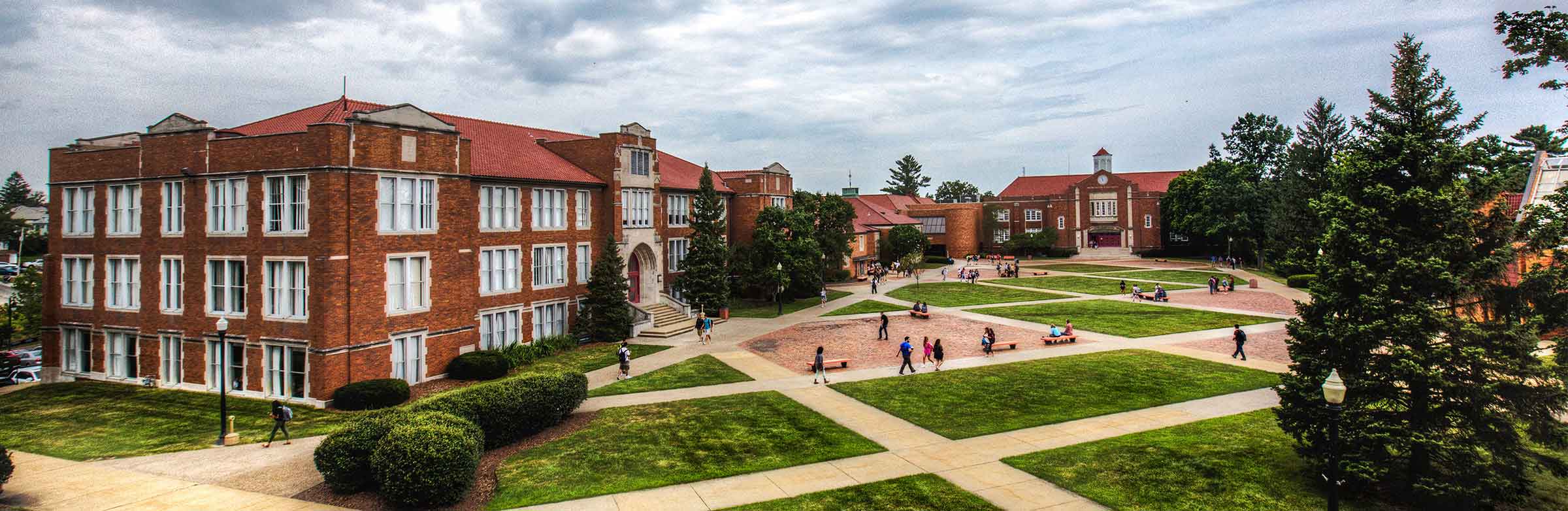
Life on Muskingum's campus in New Concord, Ohio, revolves around a close-knit, supportive community. The university prides itself on creating an environment that "both challenges and supports students to strive for personal success." Campus is described as "alive with energy, activities, and a welcoming community spirit." A key hub for this community is the Cultural Engagement and Inclusion (CEI) Office, which provides support services and cultural programming. Its Gooding Lounge serves as a vital space for students to connect, celebrate cultural events, and socialize. While specific details on the number of clubs or athletic divisions are not provided in the sources, the overall picture is of a residential campus where student affairs are geared toward fostering involvement and personal development. Reviews highlight campus life factors like housing, food, and athletics, indicating these are active components of the student experience.
Muskingum's outcomes reflect its mission as an engine of regional mobility. The 6-year graduation rate is reported between 54% and 59%. The median earnings for graduates ten years after entry is $48,440. An analysis of post-graduation earnings ranks Muskingum 840 out of 1,715 colleges nationwide, placing it around the middle of the pack. The average time to degree is 4.2 years. These metrics paint a picture of a university serving a student population where a significant portion graduates and enters the workforce, often in the high-demand fields of education and healthcare that dominate its majors. The outcomes are solid for its sector, emphasizing employability and earning potential over prestigious graduate school placements.
Affordability is a central pillar of Muskingum's value proposition. The university states that its "low tuition combined with our scholarships and need-based financial aid" brings the average tuition cost after aid to $8,900. The average annual (a broader measure of cost including room, board, etc.) is $19,532. A very high percentage of students receive financial aid, with one source stating 100% of students receive aid and the average aid package is $32,675. Muskingum offers a range of merit-based scholarships for first-year, transfer, and returning students. is also available through Muskingum Grants, awarded primarily based on financial need, though academic performance can be a factor. It's important to note that annual institutional scholarship aid is capped at 75% of tuition for most students (with an exception for the John Glenn Scholarship). The university encourages all students to file the FAFSA (using school code 003084) to determine eligibility. The provided sources do not indicate that Muskingum has a "no-loan" policy or that it meets 100% of demonstrated financial need for all admitted students.
Muskingum University stands out as a deliberate and unpretentious alternative in the small-college landscape. It doesn't chase national rankings or ultra-low . Instead, it carves a clear niche: providing a practical, experiential liberal arts education at a truly manageable cost for students from Ohio and the surrounding region. Its identity is cemented by a few key traits:
Practicality First: The curriculum is overwhelmingly geared toward direct-to-career pathways, with Education and Health Professions accounting for over 40% of its graduates. This isn't a school for abstract theory; it's for building skills.
The Affordability Promise: The aggressive combination of low sticker price, generous merit scholarships, and need-based grants is its core marketing message and operational reality. The capped scholarship policy (75% of tuition) ensures aid is sustainable and widespread.
A Rolling, Accessible Gateway: The rolling admissions process and test-flexible policy lower barriers to entry, creating an on-ramp for a broad range of students, including non-traditional undergraduates who make up a notable part of the community.
Community as a Feature: In rural New Concord, the campus isn't just a place to study; it's the center of the student's world. The intentional focus on community spirit, support services, and spaces like the CEI's Gooding Lounge fosters the close-knit environment that defines the residential experience.
Muskingum is for the student who wants a classic small-college feel without the cutthroat competition or crippling debt, and who sees a bachelor's degree as a direct investment in a stable, professional career.
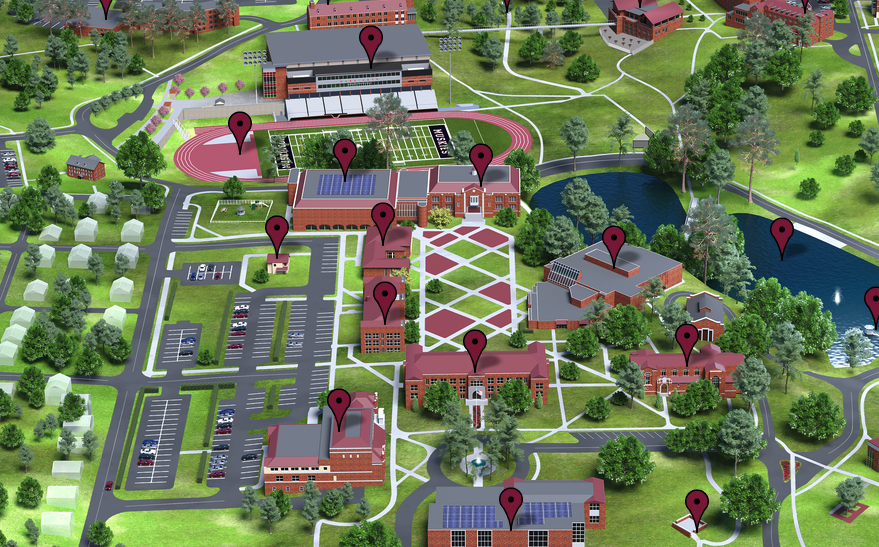
Muskingum University seal · sourceMap & Directions | Muskingum University · sourceAbout | Muskingum University · sourceMuskingum University Campus Tour · source