Loading…
← All schools
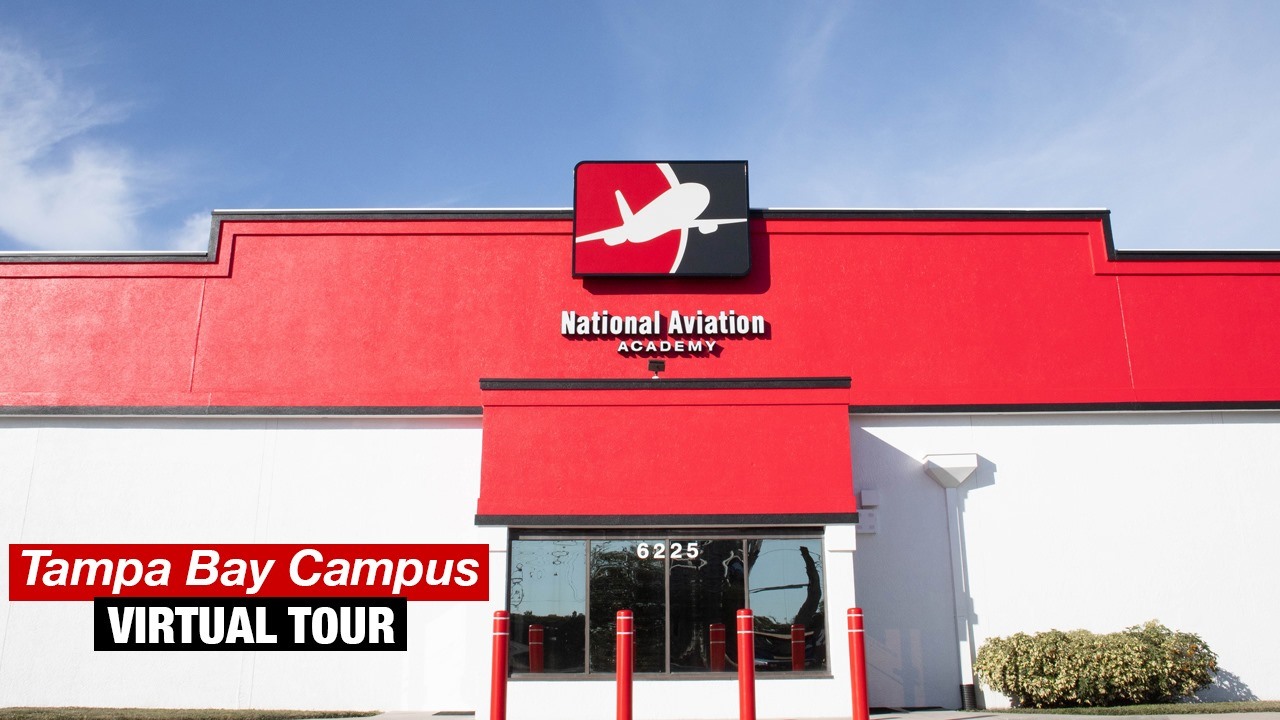
National Aviation Academy of Tampa Bay
Clearwater, FLprivate forprofitwww.naa.edu/
Avg net price
$27,476
Earnings (10 yr)
$59,029
Acceptance & SAT from Common Data Set / IPEDS; net price, earnings & graduation from the U.S. Dept. of Education College Scorecard. Figures lag ~1–2 years — verify with the school.
The National Aviation Academy of Tampa Bay is not a traditional university; it's a hyper-focused, single-purpose trade school that has been turning wrenches and training aviation mechanics since 1932. Located in Clearwater, Florida, its entire existence is dedicated to a singular, high-demand credential: the FAA Airframe and Powerplant (A&P) license, delivered in an intensive, hands-on 14-month program. This is a place for students who want to bypass the liberal arts and go directly into a technical career, with a culture and campus built entirely around hangars, engines, and the promise of a well-paid job in aviation.
More details
- Undergrad enrollment
- 713
- Graduation Rate
- 77.5%
- Program Duration
- 14 months
- Primary Credential
- FAA A&P License
- Financial Aid: Loans
- 72% of students
- Median Earnings (10yr)
- $59,029
- Financial Aid: Avg Federal Grant
- $6,335
Outcomes & value
Outcomes & value
- Median earnings (10 yr)
- $59,029
- Value (earnings ÷ net price)
- 2.1×
- Median debt at graduation
- $22,000
- Reducing loan balance (3 yr)
- 38%
- Pell (lower-income) share
- 54%
- First-gen share (among federal-aid recipients)
- 44%
Earnings = median of students working ~10 years after entry; debt = median of graduates. Value divides 10-yr earnings by one year’s net price — read it as earnings per dollar of annual cost, not a full lifetime ROI; it favors lower-cost schools. Source: U.S. Dept. of Education College Scorecard. Figures lag ~2 years and reflect all students, not your intended major.
Campus & location
Campus safety
- On-campus violent crimes (2024)
- 0
On-campus criminal offenses classed as violent (murder/non-negligent manslaughter, rape, robbery, aggravated assault) for the most recent reported year. Source: U.S. Dept. of Education Campus Safety and Security (Clery Act). Counts reflect what’s reported to the school, and urban campuses often report more partly due to non-student incidents nearby — read alongside campus size and setting, not as a standalone safety verdict.
Climate
- Pleasant days / yr
- 142
- Summer high
- 88°F
- Winter low
- 58°F
- Annual rain
- 38.3"
- Natural-hazard risk
- Relatively High
Pleasant days counts days per year with a mean temperature of 55–75°F, a high at or below 90°F, a low at or above 45°F, and little precipitation — a transparent comfort measure, not a weighting we invented. Computed from Open-Meteo ERA5 daily history (2019–2023). Natural-hazard risk is the county’s composite rating from the FEMA National Risk Index.
Quick answers
- How much does National Aviation Academy of Tampa Bay cost?
- At National Aviation Academy of Tampa Bay, the average net price (after aid) is about $27,476 per year. Actual cost varies with financial aid and residency.
- How many undergraduates attend National Aviation Academy of Tampa Bay?
- National Aviation Academy of Tampa Bay enrolls approximately 713 undergraduate students.
- Where is National Aviation Academy of Tampa Bay located?
- National Aviation Academy of Tampa Bay is located in Clearwater, FL.
Admissions
Admissions at NAA is a straightforward, open-access process focused on basic eligibility rather than competitive selection. The academy reports a 100% , reflecting its mission to provide vocational training to all who meet the foundational requirements. The primary gatekeeper is a high school diploma or an equivalent credential like a GED; acceptance is contingent upon graduation. There is no mention of SAT or ACT requirements, and the process appears devoid of the common at four-year colleges. The student body is relatively small, with total enrollment reported at 713 students as of 2024. The admissions philosophy is purely functional: if you have the baseline qualification and the desire to work in aviation maintenance, you're in. This creates a student cohort united by a clear, practical career goal from day one.
Academics
Academic life at NAA is synonymous with the Aviation Maintenance Technology (AMT) program. This is a school with absolute curricular focus: it offers only two related majors—Airframe Mechanics and Aircraft Maintenance Technology/Technician, and Avionics. The entire educational model is built around earning the Federal Aviation Administration (FAA) Airframe and Powerplant (A&P) certification, the essential license for aviation mechanics. The program is intensive, designed to be completed in as little as 14 months of full-time study. Training is overwhelmingly hands-on and practical, taking place in hangars and workshops filled with actual aircraft, engines, and systems. There are no general education requirements, humanities electives, or research seminars; every class and lab is directly tied to the technical knowledge and skills required to pass the FAA exams and perform maintenance on real aircraft. The school's identity is captured in its tagline: 'an aviation maintenance training school that focuses exclusively on Airframe and Powerplant (A&P) and Avionics education.'
Compare National Aviation Academy of Tampa Bay
vs Queens University of Charlottevs Hendrix Collegevs Southwestern Universityvs LeTourneau University
See colleges similar to National Aviation Academy of Tampa Bay →Sources
- [PDF] 2025-2026 School Catalog – Tampa Bay - National Aviation Academy
- Prospective Student Faq - National Aviation Academy
- Reported Data - National Center for Education Statistics (NCES)
- National Aviation Academy of Tampa Bay | Data USA
- National Aviation Academy of Tampa Bay Statistics | Overgrad
- Common Data Set: Home
- National Aviation Academy - Tampa Bay
- High School Students - Admissions
- National Aviation Academy of Tampa Bay
- National Aviation Academy of Tampa Bay - Sallie