Loading…
← All schools
New England Tractor Trailer Training School of CT-Bridgeport
Bridgeport, CTprivate forprofitnettts.com/
Avg net price
$16,191
Earnings (10 yr)
$44,444
Acceptance & SAT from Common Data Set / IPEDS; net price, earnings & graduation from the U.S. Dept. of Education College Scorecard. Figures lag ~1–2 years — verify with the school.
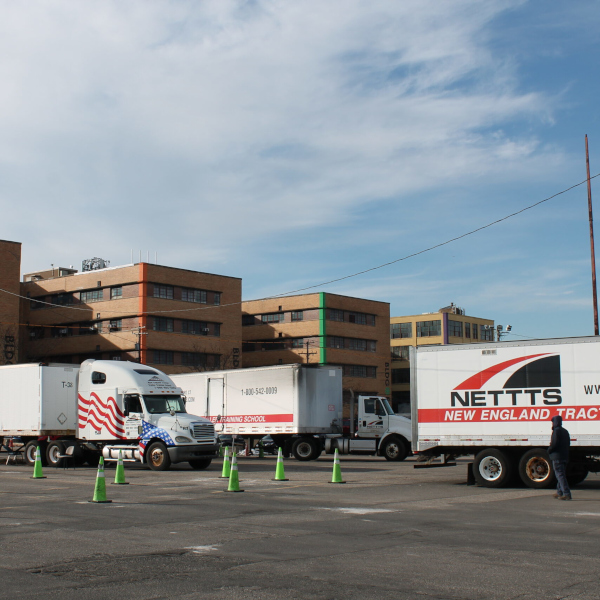
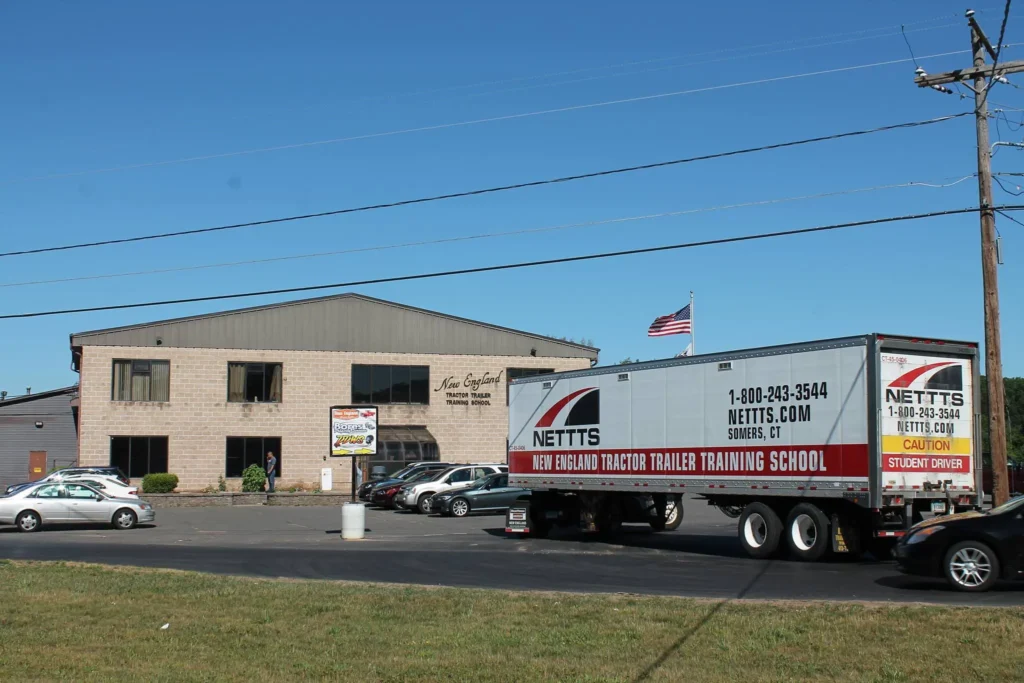
New England Tractor Trailer Training School of CT-Bridgeport (NETTTS) is a no-frills, high-impact vocational powerhouse where the only prerequisite for admission is a desire to get behind the wheel. Founded in 1965, this institution operates with the singular focus of turning out commercial drivers, boasting a graduation rate that would be the envy of many liberal arts colleges and a direct pipeline to the trucking industry. This isn't a place for dorms or football games; it's a working-class launchpad where students trade classroom time for cab time and emerge with a license and a likely job offer in hand.
More details
- Undergrad enrollment
- 428
- Focus
- CDL & Vocational Training
- Founded
- 1965
- Graduation Rate
- ~75%
- Median Earnings (10yr)
- $44,444
Outcomes & value
Outcomes & value
- Median earnings (10 yr)
- $44,444
- Value (earnings ÷ net price)
- 2.7×
- Median debt at graduation
- $6,333
- Reducing loan balance (3 yr)
- 38%
- Pell (lower-income) share
- 79%
- First-gen share (among federal-aid recipients)
- 67%
Earnings = median of students working ~10 years after entry; debt = median of graduates. Value divides 10-yr earnings by one year’s net price — read it as earnings per dollar of annual cost, not a full lifetime ROI; it favors lower-cost schools. Source: U.S. Dept. of Education College Scorecard. Figures lag ~2 years and reflect all students, not your intended major.
Campus & location
Campus safety
- On-campus violent crimes (2024)
- 0
On-campus criminal offenses classed as violent (murder/non-negligent manslaughter, rape, robbery, aggravated assault) for the most recent reported year. Source: U.S. Dept. of Education Campus Safety and Security (Clery Act). Counts reflect what’s reported to the school, and urban campuses often report more partly due to non-student incidents nearby — read alongside campus size and setting, not as a standalone safety verdict.
Climate
- Pleasant days / yr
- 104
- Summer high
- 80°F
- Winter low
- 29°F
- Annual rain
- 45.3"
- Annual snow
- 21.2"
Pleasant days counts days per year with a mean temperature of 55–75°F, a high at or below 90°F, a low at or above 45°F, and little precipitation — a transparent comfort measure, not a weighting we invented. Computed from Open-Meteo ERA5 daily history (2019–2023).
Quick answers
- How much does New England Tractor Trailer Training School of CT-Bridgeport cost?
- At New England Tractor Trailer Training School of CT-Bridgeport, the average net price (after aid) is about $16,191 per year. Actual cost varies with financial aid and residency.
- How many undergraduates attend New England Tractor Trailer Training School of CT-Bridgeport?
- New England Tractor Trailer Training School of CT-Bridgeport enrolls approximately 428 undergraduate students.
- Where is New England Tractor Trailer Training School of CT-Bridgeport located?
- New England Tractor Trailer Training School of CT-Bridgeport is located in Bridgeport, CT.
Admissions
NETTTS operates on an open admission policy, meaning the school accepts all applicants who apply. There is no selective gatekeeping based on test scores or prior academic performance; the barrier to entry is intentionally low to provide access to career training. The student body is predominantly full-time, with one source reporting 91.3% of students enrolled full-time. Enrollment figures vary across sources, indicating a fluid population typical of short-term training programs: reports list full-time enrollment as high as 374 and as low as 264, with additional part-time students. The process is straightforward, with the admissions team reviewing applications that may include transcripts, though the defining characteristic is universal acceptance.
Academics
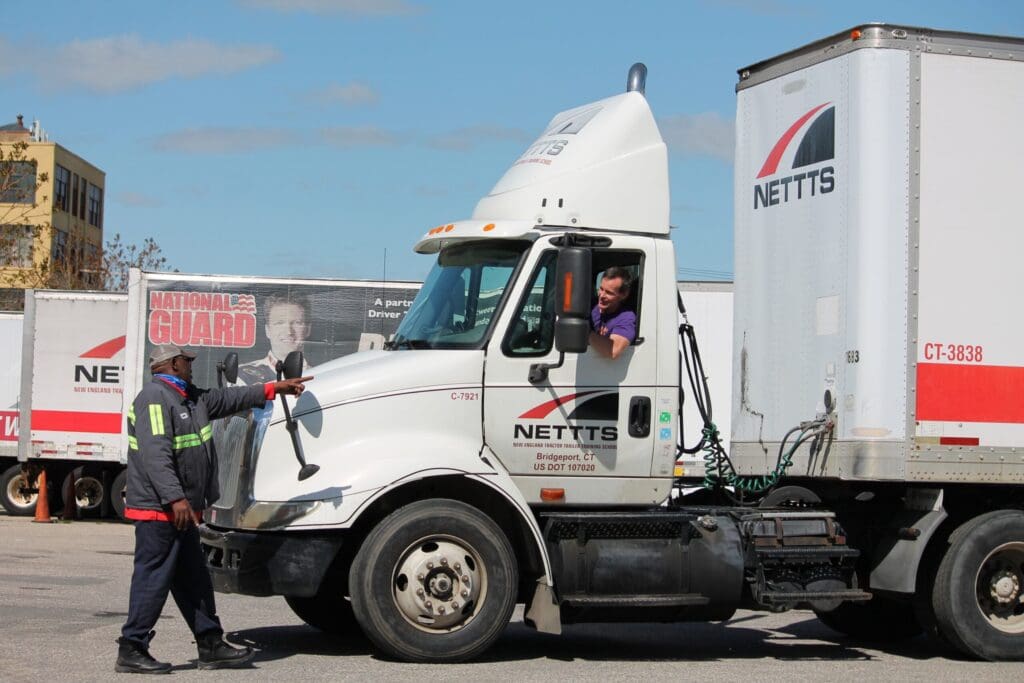
The academic model is pure vocational immersion. NETTTS specializes in ground transportation, specifically Commercial Driver's License (CDL) training for Class A and B licenses, with a curriculum built entirely around hands-on, practical instruction. The school has earned recognition for its programs, ranking as the #2 most popular ground transportation school in New England. The focus is intensely specialized, with the most common industries for graduates directly correlating to the training provided. While a student-faculty ratio is not explicitly detailed in the provided sources, the structure is that of a trade school: students are there to master a specific, licensable skill set as efficiently as possible. The graduation rate is a notable strength, reported at 74% in one source and 75.5% in another, a high mark that speaks to the program's focused design and student commitment.
Compare New England Tractor Trailer Training School of CT-Bridgeport
See colleges similar to New England Tractor Trailer Training School of CT-Bridgeport →Sources
- Consumer Information | New England Tractor Trailer Training School
- New England Tractor Trailer Training School of CT-Bridgeport
- New England Tractor Trailer Training School of CT-Bridgeport
- New England Tractor Trailer Training School - Bridgeport - Niche
- New England Tractor Trailer Training School of Connecticut
- New England Tractor Trailer Training School of CT-Bridgeport
- NETTTS: CDL & HVAC School - Career Training in MA, RI & CT
- NEW ENGLAND TRACTOR TRAILER TRAINING SCHOOL
- New England Tractor Trailer Training School (NETTTS)