Admit rate has ranged 54%–97% over the last 5 years — notably volatile, though the latest figure above (44%) falls outside that window. Source: IPEDS via Urban Institute.
Acceptance & SAT from Common Data Set / IPEDS; net price, earnings & graduation from the U.S. Dept. of Education College Scorecard. Figures lag ~1–2 years — verify with the school.
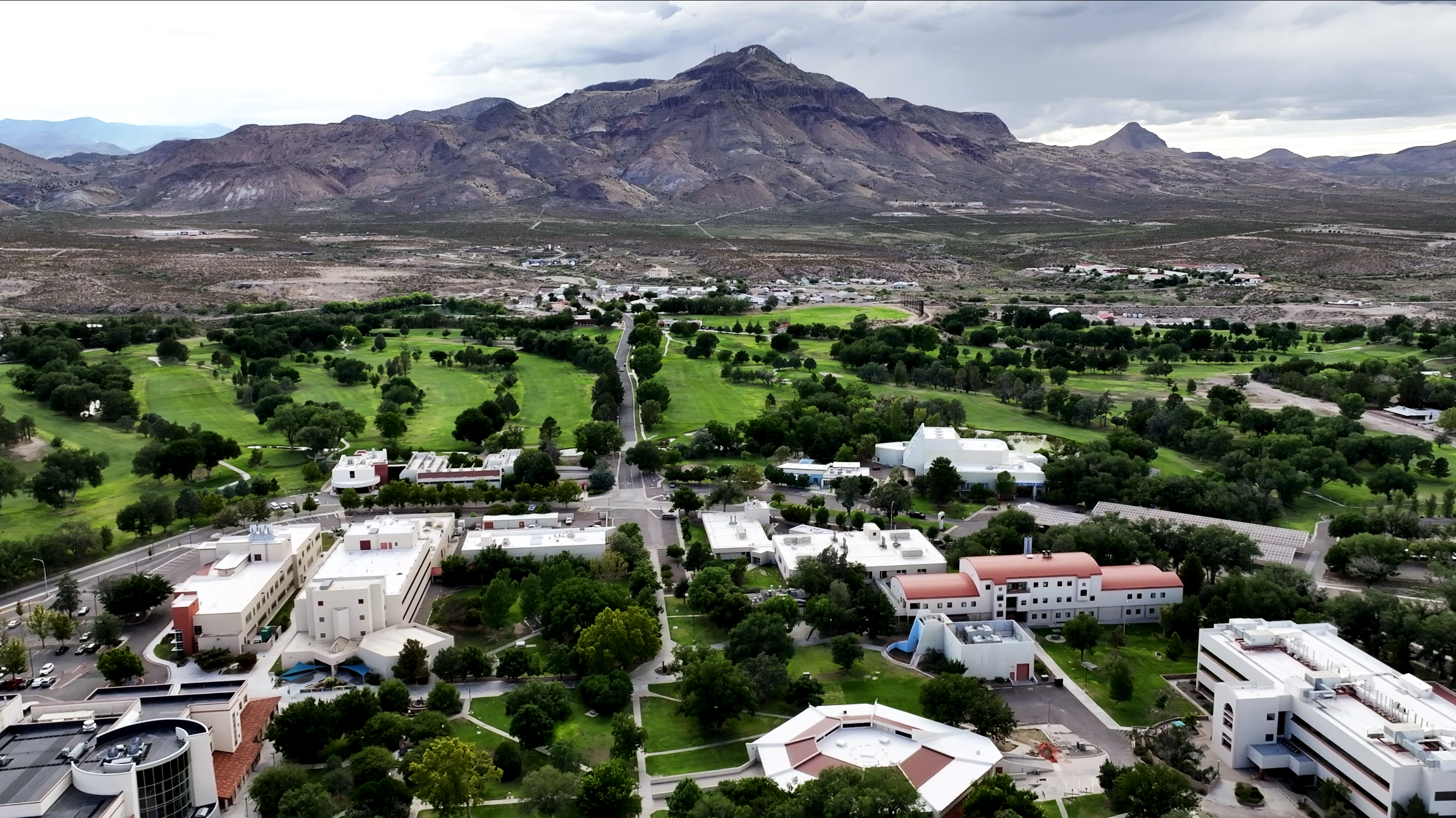
New Mexico Tech is not your typical state university. It’s a fiercely focused, no-frills public institution in the high desert of Socorro, where the mission is singular: producing top-tier scientists, engineers, and technologists. The vibe is intensely academic and collaborative, built on a foundation of rigorous, hands-on STEM education that yields surprisingly high career earnings for its graduates. Think of it as a public version of a STEM-focused polytechnic—a place where geek culture thrives, the workload is legendary, and the return on investment punches far above its weight.
Admission requirements
Test-optional — scores considered if submitted
Required
High school transcript
Grade point average
TOEFL (non-native English)
Considered (not required)
Class rank
Letters of recommendation
Test scores (SAT/ACT)
College-prep program
Source: IPEDS Admissions survey (2022) via Urban Institute. Covers formal factors only — it does not reflect essays, extracurriculars, or other holistic criteria.
More details
Undergrad enrollment
995
In-state tuition
$9,476
Out-of-state tuition
$27,247
Graduation Rate
57%
First-Year Retention
77%
Median Earnings (10yr)
$76,489
In-State Student Population
92%
Outcomes & value
Outcomes & value
Median earnings (10 yr)
$76,489
Value (earnings ÷ net price)
7.7×
Median debt at graduation
$19,085
Graduation rate
57%
First-year retention
77%
Reducing loan balance (3 yr)
73%
Pell (lower-income) share
30%
First-gen share (among federal-aid recipients)
26%
Top-earning majors
Median earnings by field of study (highest credential), ~2 years after completion.
Petroleum Engineering$75,204
Mechanical Engineering$66,045
Source: U.S. Dept. of Education College Scorecard (field-of-study earnings). Figures cover graduates who received federal aid and lag ~2 years; not all programs report data.
On-campus criminal offenses classed as violent (murder/non-negligent manslaughter, rape, robbery, aggravated assault) for the most recent reported year. Source: U.S. Dept. of Education Campus Safety and Security (Clery Act). Counts reflect what’s reported to the school, and urban campuses often report more partly due to non-student incidents nearby — read alongside campus size and setting, not as a standalone safety verdict.
Climate
Pleasant days / yr
94
Summer high
93°F
Winter low
30°F
Annual rain
6.4"
Annual snow
6.7"
Natural-hazard risk
Relatively Low
Pleasant days counts days per year with a mean temperature of 55–75°F, a high at or below 90°F, a low at or above 45°F, and little precipitation — a transparent comfort measure, not a weighting we invented. Computed from Open-Meteo ERA5 daily history (2019–2023). Natural-hazard risk is the county’s composite rating from the FEMA National Risk Index.
Deep dive — research, future-scholar output & economic mobility▾
Research output
Institutional h-index
266
Scholarly works
12,729
Institutional research volume and impact from OpenAlex. The h-index reflects large research universities and will be low for teaching-focused liberal-arts colleges — not a measure of undergraduate quality.
Future-scholar output
Science & engineering PhDsper-capita yield 8.6
Share of this school’s graduates who go on to earn research doctorates (2010–20), by national rank and per-capita yield (NSF institutional-yield ratio). A signal of a research-oriented student culture — not a causal promise, since it partly reflects who enrolls. Only top producers appear. Source: NSF NCSES, Baccalaureate Origins of U.S. Research Doctorate Recipients.
Economic mobility
Mobility rate
4.0%
Bottom → top quintile
Quick answers
What is the acceptance rate at New Mexico Institute of Mining and Technology?
New Mexico Institute of Mining and Technology's acceptance rate is approximately 44% (Socorro, NM), based on the most recent figures we compiled from public and primary sources.
What SAT score do you need for New Mexico Institute of Mining and Technology?
Admitted students at New Mexico Institute of Mining and Technology typically score 1080–1310 on the SAT (the middle-50% range). Scores outside this band are still admitted, especially with strong applications.
How much does New Mexico Institute of Mining and Technology cost?
At New Mexico Institute of Mining and Technology, the average net price (after aid) is about $9,873 per year. Actual cost varies with financial aid and residency.
How many undergraduates attend New Mexico Institute of Mining and Technology?
New Mexico Institute of Mining and Technology enrolls approximately 995 undergraduate students.
Where is New Mexico Institute of Mining and Technology located?
New Mexico Institute of Mining and Technology is located in Socorro, NM.
Admissions
Admission to New Mexico Tech is moderately selective, with a focus on academic preparedness for its demanding STEM curriculum. The university received 1,544 applications for a recent cycle, admitting 687 students for an of 44%. Admitted students typically present strong academic credentials, with a middle 50% SAT range of 1080–1310 and an ACT range of 20–28. The admissions process requires applicants to have completed actionable applications, and standardized test scores (SAT or ACT) are a required component for consideration. While the outlines various factors, the primary academic gatekeeper is a high school GPA of 2.5 or a GED score of 500 as a minimum requirement for first-time freshmen. The process is described as less selective compared to national benchmarks, prioritizing students who demonstrate readiness for an intense, science-heavy course load.
Earnings = median of students working ~10 years after entry; debt = median of graduates. Value divides 10-yr earnings by one year’s net price — read it as earnings per dollar of annual cost, not a full lifetime ROI; it favors lower-cost schools. Source: U.S. Dept. of Education College Scorecard. Figures lag ~2 years and reflect all students, not your intended major.
48%
From bottom quintile
8%
Mobility rate = the share of students who both start in the bottom household-income quintile and reach the top quintile; bottom → top is that chance conditional on starting at the bottom. Source: Opportunity Insights Mobility Report Cards (Chetty, Friedman, Saez, Turner & Yagan). Reflects 1980–82 birth cohorts, so it’s directional, not current.
Academics
Academics at New Mexico Tech are unapologetically rigorous and almost exclusively STEM-oriented. The university offers over 30 undergraduate degrees concentrated in technology, the sciences, engineering, management, and technical communication. The curriculum is designed for serious students with a love for all things scientific, promising an intense academic experience. Programs span from basic sciences like Biology and Chemistry to engineering disciplines such as Chemical, Civil, Computer Science, and Biomedical Sciences. This focus has earned the institution high marks for value and academics within its state, being ranked #1 for Best College, Best Academics, and Best Value in New Mexico by Niche. The environment is characterized by small class sizes and a more personalized learning environment where professors are deeply involved, cementing its reputation as a place where academic rigor is the central tenet of campus life.
Student life in Socorro revolves around a tight-knit, academically immersed community. The Division of Student Affairs supports the journey with dynamic programs and resources, fostering a vibrant campus experience. This is not a party school; the social fabric is woven from shared academic struggle and a collective passion for STEM. Students make it lively by sharing meals and stories, building a strong sense of camaraderie. While the location in Socorro is remote, the campus itself becomes the primary hub for activity. The student body is predominantly in-state (92%), which contributes to a cohesive, familiar culture. The available resources and clubs aim to support students through the demanding workload, creating a campus life that is more about collaboration and less about traditional collegiate distractions.
The investment in a New Mexico Tech education pays substantial dividends in the job market. The university is ranked among America's elite universities for career earnings, and for good reason: the median earnings for graduates ten years after entry is $76,489. This strong outcome is a direct result of its focused, high-demand STEM degrees. Student retention is solid, with a first-year retention rate of 77%. The six-year graduation rate is 62%, indicating that those who persist through the rigorous program are highly likely to finish. These metrics combine to paint a picture of a university that successfully prepares its graduates for lucrative, stable careers in technical fields, validating its intense academic model with strong post-graduate results.
New Mexico Tech positions itself as a high-value proposition, with a remarkably low average after aid of $9,873. Financial assistance comes in the form of institutional scholarships, federal aid, and student employment. A key feature is that students do not need to demonstrate financial need for institutional scholarships—these are awarded based on academic merit. Federal unsubsidized loans are also available to students regardless of financial need. The university reports that nearly half of its undergraduates rely on financial aid to pursue their education. This combination of low net cost and merit-based institutional aid makes the significant career earnings potential even more accessible, especially for high-achieving students in STEM.
New Mexico Tech stands out as a rare breed: a public institution with the focused intensity of a private STEM specialty school, offered at a public university price. It eschews the broad liberal arts model to double down on what it does best: producing work-ready engineers, scientists, and technologists. This results in a unique campus culture—one of shared purpose and geek pride—where the academic workload is the central, defining experience. The payoff is undeniable, with median graduate earnings that compete with far more expensive and selective institutions. It’s a school for the pragmatically brilliant student who wants maximum career ROI, doesn’t need the trappings of a traditional college town, and thrives on deep immersion in science and technology. In a landscape of increasingly generic universities, New Mexico Tech remains defiantly and productively singular.
New Mexico Institute of Mining and Technology seal · sourceCampus Map: New Mexico Tech · sourceNew Mexico Tech's Points of Pride: New Mexico Tech · sourceNew Mexico Institute of Mining and Technology - Abound: Grad School · source