Admit rate has ranged 34%–58% over the last 5 years — notably volatile. Source: IPEDS via Urban Institute.
Acceptance & SAT from Common Data Set / IPEDS; net price, earnings & graduation from the U.S. Dept. of Education College Scorecard. Figures lag ~1–2 years — verify with the school.
New Mexico Military Institute is not your typical college—it’s a public military junior college and high school in Roswell, New Mexico, that operates like a West Point for the associate’s degree set. The experience is defined by a highly structured, regimented cadet life, a faculty entirely composed of instructors with advanced degrees, and a singular focus on leadership development through military discipline. It’s a place where the ‘whole cadet’ is forged in a crucible of academics, physical training, and character development, preparing graduates not just for transfer to four-year universities but for immediate commissioning as Army officers through its unique Early Commissioning Program.
Admission requirements
Test-optional — scores considered if submitted
Required
High school transcript
Grade point average
TOEFL (non-native English)
Considered (not required)
Class rank
Test scores (SAT/ACT)
Source: IPEDS Admissions survey (2022) via Urban Institute. Covers formal factors only — it does not reflect essays, extracurriculars, or other holistic criteria.
More details
Undergrad enrollment
331
In-state tuition
$7,190
Out-of-state tuition
$14,156
Median Earnings (10yr)
$57,410
Extracurricular Activities
Over 55
Early Commissioning Program
Yes (Army ROTC)
Faculty with Advanced Degrees
100%
Outcomes & value
Outcomes & value
Median earnings (10 yr)
$57,410
Value (earnings ÷ net price)
12.6×
Median debt at graduation
$5,500
Reducing loan balance (3 yr)
47%
Pell (lower-income) share
24%
First-gen share (among federal-aid recipients)
30%
Earnings = median of students working ~10 years after entry; debt = median of graduates. Value divides 10-yr earnings by one year’s net price — read it as earnings per dollar of annual cost, not a full lifetime ROI; it favors lower-cost schools. Source: U.S. Dept. of Education College Scorecard. Figures lag ~2 years and reflect all students, not your intended major.
Campus & location
Campus safety
On-campus violent crimes (2024)
0
On-campus criminal offenses classed as violent (murder/non-negligent manslaughter, rape, robbery, aggravated assault) for the most recent reported year. Source: U.S. Dept. of Education Campus Safety and Security (Clery Act). Counts reflect what’s reported to the school, and urban campuses often report more partly due to non-student incidents nearby — read alongside campus size and setting, not as a standalone safety verdict.
Climate
Pleasant days / yr
87
Summer high
95°F
Winter low
33°F
Annual rain
8.5"
Annual snow
4.5"
Natural-hazard risk
Relatively Moderate
Pleasant days counts days per year with a mean temperature of 55–75°F, a high at or below 90°F, a low at or above 45°F, and little precipitation — a transparent comfort measure, not a weighting we invented. Computed from Open-Meteo ERA5 daily history (2019–2023). Natural-hazard risk is the county’s composite rating from the FEMA National Risk Index.
Deep dive — research, future-scholar output & economic mobility▾
Research output
Institutional h-index
11
Scholarly works
70
Institutional research volume and impact from OpenAlex. The h-index reflects large research universities and will be low for teaching-focused liberal-arts colleges — not a measure of undergraduate quality.
Economic mobility
Mobility rate
0.0%
Bottom → top quintile
0%
From bottom quintile
8%
Mobility rate = the share of students who both start in the bottom household-income quintile and reach the top quintile; bottom → top is that chance conditional on starting at the bottom. Source: Opportunity Insights Mobility Report Cards (Chetty, Friedman, Saez, Turner & Yagan). Reflects 1980–82 birth cohorts, so it’s directional, not current.
Quick answers
What is the acceptance rate at New Mexico Military Institute?
New Mexico Military Institute's acceptance rate is approximately 53% (Roswell, NM), based on the most recent figures we compiled from public and primary sources.
How much does New Mexico Military Institute cost?
At New Mexico Military Institute, the average net price (after aid) is about $4,571 per year. Actual cost varies with financial aid and residency.
How many undergraduates attend New Mexico Military Institute?
New Mexico Military Institute enrolls approximately 331 undergraduate students.
Where is New Mexico Military Institute located?
New Mexico Military Institute is located in Roswell, NM.
Admissions
Admissions at NMMI are moderately selective, with an of 53%. The process appears straightforward, though international high school applicants are encouraged to submit SSAT scores. The institute does not publish a specific SAT or ACT range, though one source notes an average ACT score of 23, and another cites an SAT range of 910-1200. The admissions —the percentage of admitted students who enroll—is a robust 68.1%, suggesting that those who apply are often seriously committed to the military college experience. There is no indication that demonstrated interest is a formal factor in admissions decisions.
NMMI’s academic identity is anchored in its status as a military junior college, offering a rigorous associate’s degree program with a curriculum focused on the ‘whole cadet.’ The faculty is a standout feature: 100% hold a master’s degree or doctorate, which the institute touts as the highest rate among all boarding schools. The academic environment is described as highly structured and demanding, with some programs, like the Service Academy Preparatory (SAP) program, segregating students into specific tracks for core subjects like English, U.S. History, chemistry, and math. The institute’s curriculum is designed not just for transfer but to prepare cadets for ‘future academic and career success,’ with a particular emphasis on leadership and character development woven into the coursework.
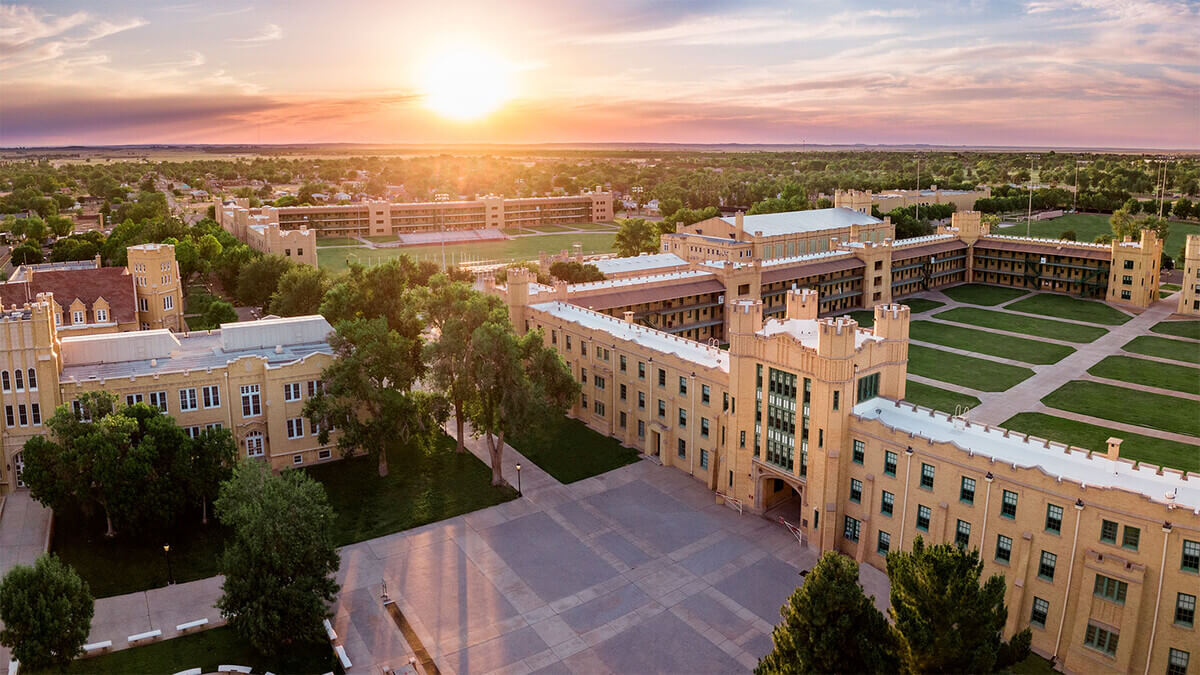
Life as an NMMI cadet is synonymous with structure, discipline, and tradition. The campus experience is built around military routine, with strict curfews that students report create a ‘very limited’ social atmosphere. Cadets live in dorms, and the social atmosphere within them is reportedly strong, a necessity given the intensity of the shared experience. Beyond the regimented schedule, the institute offers over 55 extracurricular activities, ranging from traditional options like band, choir, and STEM clubs to more unique offerings like skiing. The campus itself, with historic buildings like Old Lea Hall, stands as a ‘symbol of leadership, learning, and community.’ This is not a typical college social scene; it’s a total immersion in a leadership laboratory where personal time is scarce and the focus is on collective growth and preparation.
NMMI graduates follow distinct paths. A significant number pursue military careers directly through the Army ROTC Early Commissioning Program (ECP), which allows cadets to graduate with an associate’s degree and an Army commission in just two years. Academically, cadets perform well on standardized tests, with an average ACT score of 26—reportedly 34% above the national average. Longer-term outcomes show a mixed picture: the median earnings ten years after entry are $57,410, but the overall graduation rate is reported at a low 41% (with a rate for men as low as 34% in one source). Early career earnings are modest, with one source citing $12,981 one year after graduation. The median debt at graduation is relatively low at $5,500. The institute highlights cadets being accepted into top colleges through ROTC pathways.
The average after aid for students is $4,571. Financial aid includes federal programs, with unsubsidized loans available to all students regardless of need—up to $3,500 for the first year and $4,500 for the second. The institute also promotes , grants, and FAFSA-linked funding as important options for lowering costs. One promotional post mentions ‘zero cost tuition’ for eligible students, though specific eligibility criteria are not detailed in the provided sources. The financial aid office provides forms and assistance, encouraging contact for families navigating the process.
NMMI stands out as one of the nation's only public military junior colleges, offering a path to an Army commission in just two years—a fast track unmatched by traditional ROTC programs at four-year schools. Its defining characteristic is the total integration of military discipline with academics; this isn't a college with an ROTC detachment, it's a college that is an ROTC detachment. The 100% advanced-degree faculty provides a scholarly rigor unusual for a two-year institution. The environment is intentionally all-consuming: the structured cadet life, limited social freedoms, and focus on leadership forge a unique type of graduate—one prepared for the discipline of military service or the transfer to a demanding four-year program. It’s a place for students who don’t just want to attend college, but who want to be fundamentally transformed by the experience.
New Mexico Military Institute seal · sourceNew Mexico Military Institute · sourceNew Mexico Military Institute - Wikipedia · sourceNew Mexico Military Institute Case Study · source
.jpg?width=1600)


%20Website%20Imagery/Success%20Stories/Success%20Stories-New%20Mexico%20Military%20Institute-Building-Regular%20Page%20Image.jpg)