Loading…
← All schools
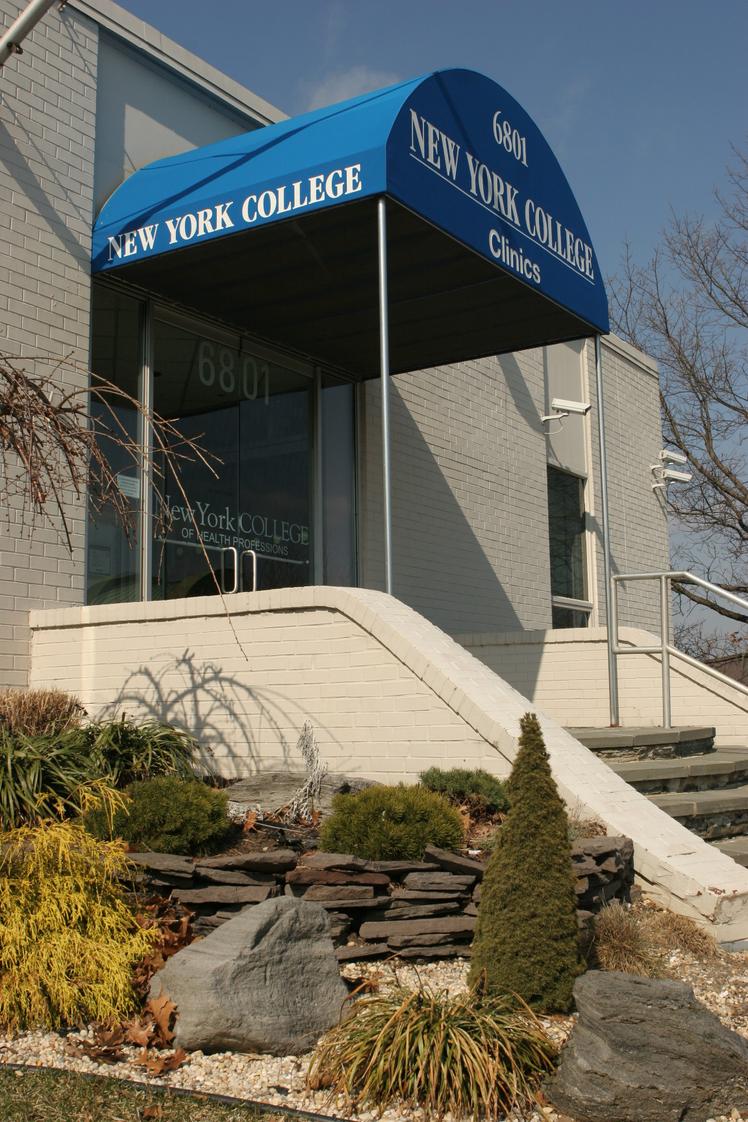
New York College of Health Professions
Syosset, NYprivate nonprofitnycollege.edu
Earnings (10 yr)
$31,601
Graduation rate
50%
Acceptance & SAT from Common Data Set / IPEDS; net price, earnings & graduation from the U.S. Dept. of Education College Scorecard. Figures lag ~1–2 years — verify with the school.
New York College of Health Professions is a specialized, single-purpose institution in Syosset, Long Island, laser-focused on training practitioners in massage therapy, acupuncture, and Chinese herbal medicine. It operates more like a professional trade school than a traditional liberal arts college, with a curriculum and campus life entirely oriented toward clinical practice and licensure. The admissions process is broadly accessible, but the path is demanding, leading directly into a specific, niche sector of the healthcare field.
More details
- Undergrad enrollment
- 58
- In-state tuition
- $16,395
- Out-of-state tuition
- $16,395
- No-Loan Policy
- No indication
- Graduation Rate
- 50%
- Meets Full Need
- No indication
- ED Share of Class
- N/A
- First-Year Retention
- Not stated in sources
- Demonstrated Interest
- Not considered
- Median Earnings (10yr)
- $31,601
Outcomes & value
Outcomes & value
- Median earnings (10 yr)
- $31,601
- Median debt at graduation
- $24,867
- Graduation rate
- 50%
- Reducing loan balance (3 yr)
- 47%
- Pell (lower-income) share
- —
- First-gen share (among federal-aid recipients)
- 45%
Earnings = median of students working ~10 years after entry; debt = median of graduates. Value divides 10-yr earnings by one year’s net price — read it as earnings per dollar of annual cost, not a full lifetime ROI; it favors lower-cost schools. Source: U.S. Dept. of Education College Scorecard. Figures lag ~2 years and reflect all students, not your intended major.
Financial health
2.8 / 3.0Meets the federal financial-responsibility standard
U.S. Dept. of Education Financial Responsibility Composite Score (FY2022-23). Scale −1.0 to 3.0; ≥1.5 meets the standard. Reported for private nonprofit & for-profit institutions only — public universities are state-backed and not scored, so this is a stability signal, not a ranking.
Campus & location
Climate
- Pleasant days / yr
- 97
- Summer high
- 82°F
- Winter low
- 29°F
- Annual rain
- 55.6"
- Annual snow
- 19.9"
- Natural-hazard risk
- Relatively High
Pleasant days counts days per year with a mean temperature of 55–75°F, a high at or below 90°F, a low at or above 45°F, and little precipitation — a transparent comfort measure, not a weighting we invented. Computed from Open-Meteo ERA5 daily history (2019–2023). Natural-hazard risk is the county’s composite rating from the FEMA National Risk Index.
Deep dive — research, future-scholar output & economic mobility
Research output
- Institutional h-index
- 295
- Scholarly works
- 4,962
Institutional research volume and impact from OpenAlex. The h-index reflects large research universities and will be low for teaching-focused liberal-arts colleges — not a measure of undergraduate quality.
Quick answers
- How many undergraduates attend New York College of Health Professions?
- New York College of Health Professions enrolls approximately 58 undergraduate students.
- Where is New York College of Health Professions located?
- New York College of Health Professions is located in Syosset, NY.
Admissions
Admissions at New York College of Health Professions is characterized by high accessibility rather than selectivity. The institution reports ranging from 96% to 100%, with one source noting that 96% of 105 applicants were admitted in a given cycle. Another source cites a 78.8% acceptance rate from 2015 data. The average entering GPA for admitted students is reported as 2.73. The college does not appear to have an Early Decision program, and sources indicate that demonstrated interest is not a considered factor in admissions decisions. The process is straightforward, prioritizing applicants committed to its specialized health profession tracks over traditional academic metrics.
Compare New York College of Health Professions
See colleges similar to New York College of Health Professions →Sources
- Common Data Set 2024-2025
- Common Data Set 2024-2025 - Institutional Research
- Common Data Set: Home
- Common Data Set Explorer 2026: Compare 100 Colleges
- New York College of Health Professions
- Common Data Set Repository
- New York College of Health Professions
- New York College of Health Professions Acceptance Rates & ...
- New York College of Health Professions: Statistics
- New York College of Health Professions