Admit rate has ranged 24%–67% over the last 5 years — notably volatile. Source: IPEDS via Urban Institute.
Acceptance & SAT from Common Data Set / IPEDS; net price, earnings & graduation from the U.S. Dept. of Education College Scorecard. Figures lag ~1–2 years — verify with the school.
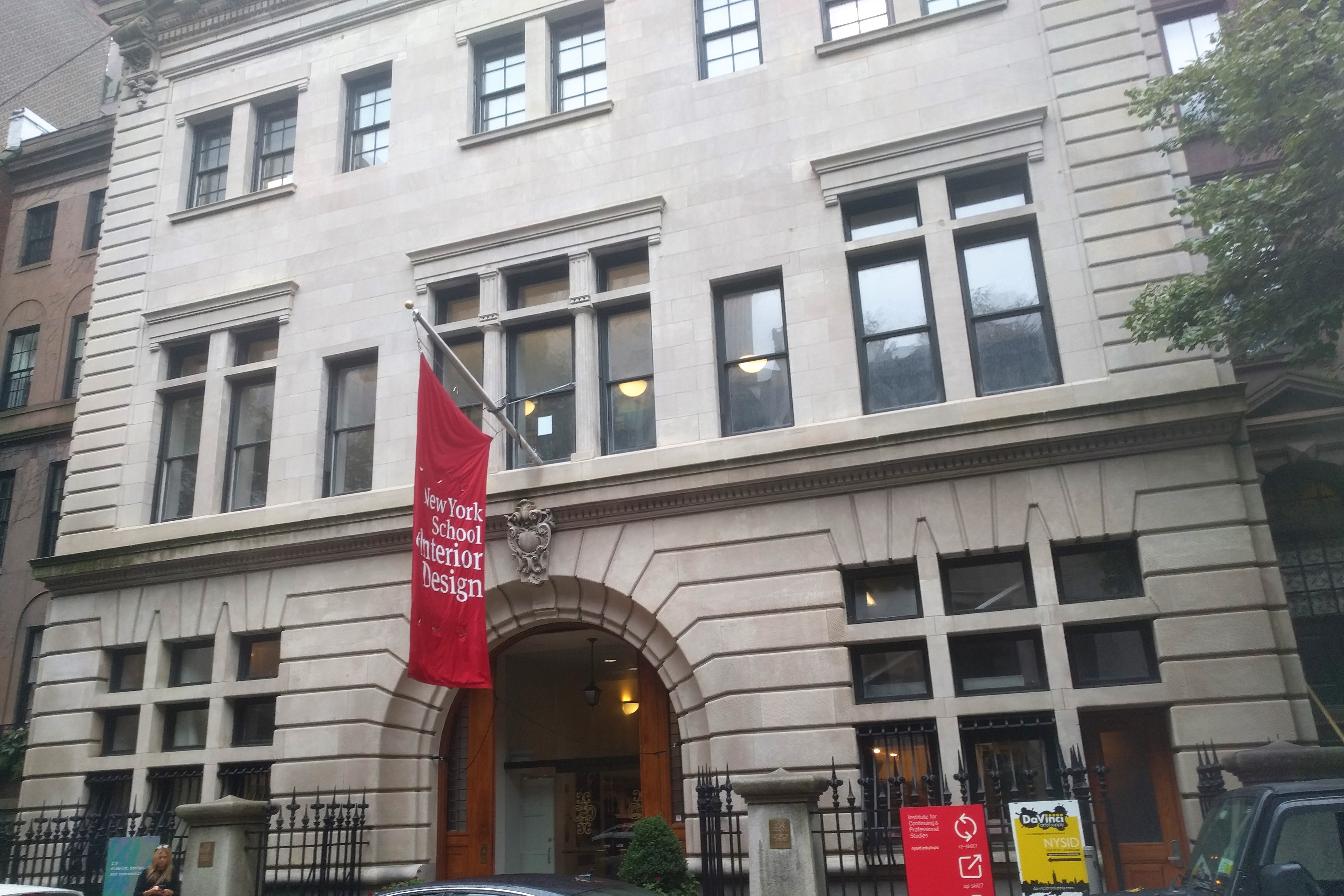
The New York School of Interior Design is a hyper-specialized, single-purpose institution where the entire campus is a design studio and the city itself is the ultimate classroom. It’s not a traditional college with dorms and football teams; it’s a professional launchpad for aspiring designers, offering a laser-focused curriculum that leverages its prime Upper East Side location to connect students directly to the industry's epicenter. While the price tag is steep and the campus is compact, its national rankings and immersive, city-centric approach make it a compelling choice for students who are certain about their path.
Admission requirements
Test-optional — scores considered if submitted
Required
High school transcript
Grade point average
Letters of recommendation
Demonstrated competencies
TOEFL (non-native English)
Considered (not required)
Test scores (SAT/ACT)
College-prep program
Source: IPEDS Admissions survey (2022) via Urban Institute. Covers formal factors only — it does not reflect essays, extracurriculars, or other holistic criteria.
More details
Undergrad enrollment
427
In-state tuition
$32,330
Out-of-state tuition
$32,330
Campus Setting
Urban, Compact (Upper East Side, NYC)
Graduation Rate
69%
Program Ranking
Top 5 Nationally (UG & Grad)
Student Body Vibe
Professionally-focused, urban
Median Earnings (10yr)
$48,041
Outcomes & value
Outcomes & value
Median earnings (10 yr)
$48,041
Value (earnings ÷ net price)
1.1×
Graduation rate
69%
First-year retention
100%
Reducing loan balance (3 yr)
60%
Pell (lower-income) share
15%
First-gen share (among federal-aid recipients)
36%
Endowment / student
$19,899
Earnings = median of students working ~10 years after entry; debt = median of graduates. divides 10-yr earnings by net price — read it as earnings per dollar of annual cost, not a full lifetime ROI; it favors lower-cost schools. Source: U.S. Dept. of Education College Scorecard. Figures lag ~2 years and reflect all students, not your intended major.
Financial health
3.0 / 3.0Meets the federal financial-responsibility standard
U.S. Dept. of Education Financial Responsibility Composite Score (FY2022-23). Scale −1.0 to 3.0; ≥1.5 meets the standard. Reported for private nonprofit & for-profit institutions only — public universities are state-backed and not scored, so this is a stability signal, not a ranking.
Campus & location
Campus safety
On-campus violent crimes (2024)
0
Per 1,000 students
0.00
On-campus criminal offenses classed as violent (murder/non-negligent manslaughter, rape, robbery, aggravated assault) for the most recent reported year. Source: U.S. Dept. of Education Campus Safety and Security (Clery Act). Counts reflect what’s reported to the school, and urban campuses often report more partly due to non-student incidents nearby — read alongside campus size and setting, not as a standalone safety verdict.
Climate
Pleasant days / yr
89
Summer high
83°F
Winter low
29°F
Annual rain
53.2"
Annual snow
17.8"
Natural-hazard risk
Relatively High
Pleasant days counts days per year with a mean temperature of 55–75°F, a high at or below 90°F, a low at or above 45°F, and little precipitation — a transparent comfort measure, not a weighting we invented. Computed from Open-Meteo ERA5 daily history (2019–2023). Natural-hazard risk is the county’s composite rating from the FEMA National Risk Index.
Deep dive — research, future-scholar output & economic mobility▾
Research output
Institutional h-index
20
Scholarly works
158
Institutional research volume and impact from OpenAlex. The h-index reflects large research universities and will be low for teaching-focused liberal-arts colleges — not a measure of undergraduate quality.
Quick answers
What is the acceptance rate at New York School of Interior Design?
New York School of Interior Design's acceptance rate is approximately 63% (New York, NY), based on the most recent figures we compiled from public and primary sources.
How much does New York School of Interior Design cost?
At New York School of Interior Design, the average net price (after aid) is about $45,271 per year. Actual cost varies with financial aid and residency.
How many undergraduates attend New York School of Interior Design?
New York School of Interior Design enrolls approximately 427 undergraduate students.
Where is New York School of Interior Design located?
New York School of Interior Design is located in New York, NY.
Admissions
Admissions at NYSID are characterized as "somewhat selective" or "less selective," with an that has fluctuated in recent years. The school operates on a policy, meaning SAT or ACT scores are not required for the admissions application, though applicants may choose to submit them. For those who do submit, reported average SAT scores range from 1050 to 1300, and average ACT scores are around 22. The average high school GPA of admitted students is reported as 3.37. The admissions process does not appear to have an Early Decision program, and the provided sources do not indicate that demonstrated interest is a formal factor in evaluation, though the school's niche focus inherently attracts a self-selecting pool of applicants.
NYSID offers a tightly curated academic portfolio dedicated exclusively to interior design and related fields. The school provides certificate programs, three undergraduate degrees (including a Bachelor of Fine Arts in Interior Design), and four master's degree programs, such as a Master of Fine Arts (MFA) in Interior Design and a Master of Interior Architecture. The curriculum is described as combining a comprehensive interior design education with a strong liberal arts foundation. The school's reputation is significant within the field; its undergraduate and graduate programs have been ranked among the best in the nation, with graduate programs ranked No. 4 and undergraduate programs ranked No. 5 in a 2016 survey. The pedagogy is intensely practical, with a focus on mastery of industry-standard technologies like AutoCAD, Revit, and Rhinoceros for 3-D modeling.
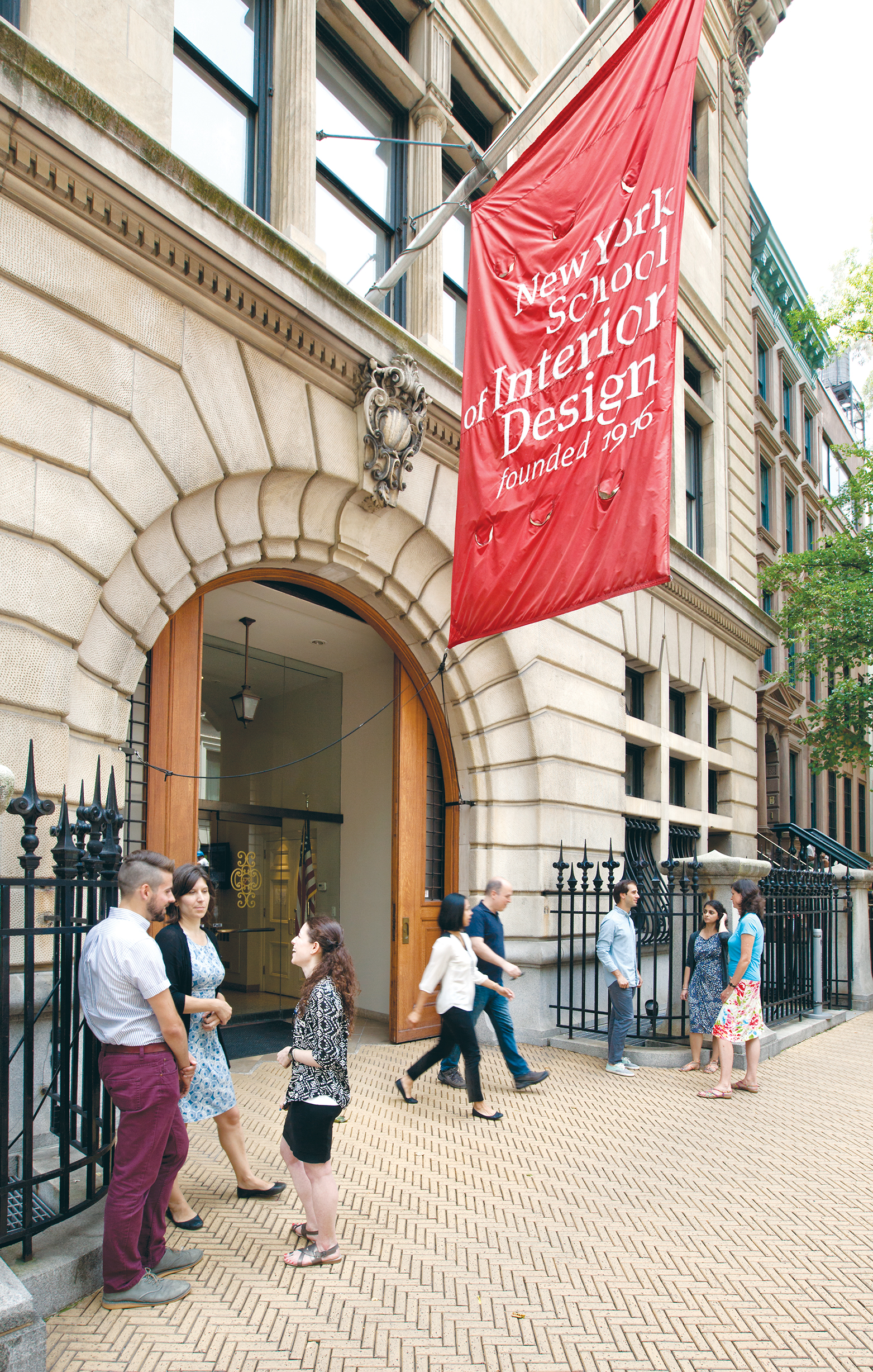
Student life at NYSID is fundamentally shaped by its identity as a specialized, urban institution without a traditional residential campus. The school is situated in a compact campus on Manhattan's Upper East Side, which some students note is less than ideal for a conventional campus experience. Activities are professionally and socially oriented, revolving around events for socializing, exploring New York City, and enhancing life as a designer. This includes live interactive sessions and virtual visits to the city's premier design studios and showrooms, offering students an insider's view of the industry. The school describes itself as a "diverse and inclusive global community" focused on empowering thought leaders in design. There is no mention of Greek life or collegiate athletics; the vibe is that of a focused design studio where the city itself serves as the primary extracurricular resource.
Outcomes for NYSID graduates reflect the professional focus of the school. The six-year graduation rate is reported as 59%, while the four-year graduation rate is notably lower at 40%. According to federal data, the median salary for graduates six years after entry is $37,810. The school's programs are highly regarded within the interior design industry, with its undergraduate and graduate programs historically ranked among the top five in the nation, a factor that likely aids in professional placement and reputation.
The cost of attending NYSID is significant, with an average annual —the cost after grants and scholarships are applied—reported from various sources. Financial aid is available for both full-time and part-time students, and need is a determining factor for aid packages, which may include grants, scholarships, and loans. New York State residents attending full-time may be eligible for state-funded grants like the TAP grant. The school provides a Net Price Calculator for prospective students to estimate their individual cost. There is no indication in the provided sources that NYSID has a "no-loan" policy or commits to meeting 100% of demonstrated financial need without loans.
NYSID stands out for its utter, uncompromising dedication to a single discipline: interior design. It is not a liberal arts college with a design department; it is a design-centric institution through and through. This singular focus is its greatest strength, offering an immersive, professional-grade education that leverages its location in New York City—a global design capital—as an integral part of the curriculum. Students gain direct, practical exposure to studios, showrooms, and industry leaders. The school's national rankings (historically in the top five for both undergraduate and graduate programs) affirm its quality and reputation within a competitive professional field. The trade-off is the absence of a traditional campus life and a high cost, making it an ideal choice only for students who are unequivocally committed to a career in interior design and who thrive in an intense, urban, studio-based environment.
New York School of Interior Design seal · sourceNew York School of Interior Design - Wikipedia · sourceNew York School of Interior Design | Projects | Gensler · sourceFacilities — New York School of Interior Design · source