Loading…
← All schools
Northeast Technology Center
Pryor, OKpublicnetech.edu
Avg net price
$10,478
Earnings (10 yr)
$34,457
Acceptance & SAT from Common Data Set / IPEDS; net price, earnings & graduation from the U.S. Dept. of Education College Scorecard. Figures lag ~1–2 years — verify with the school.
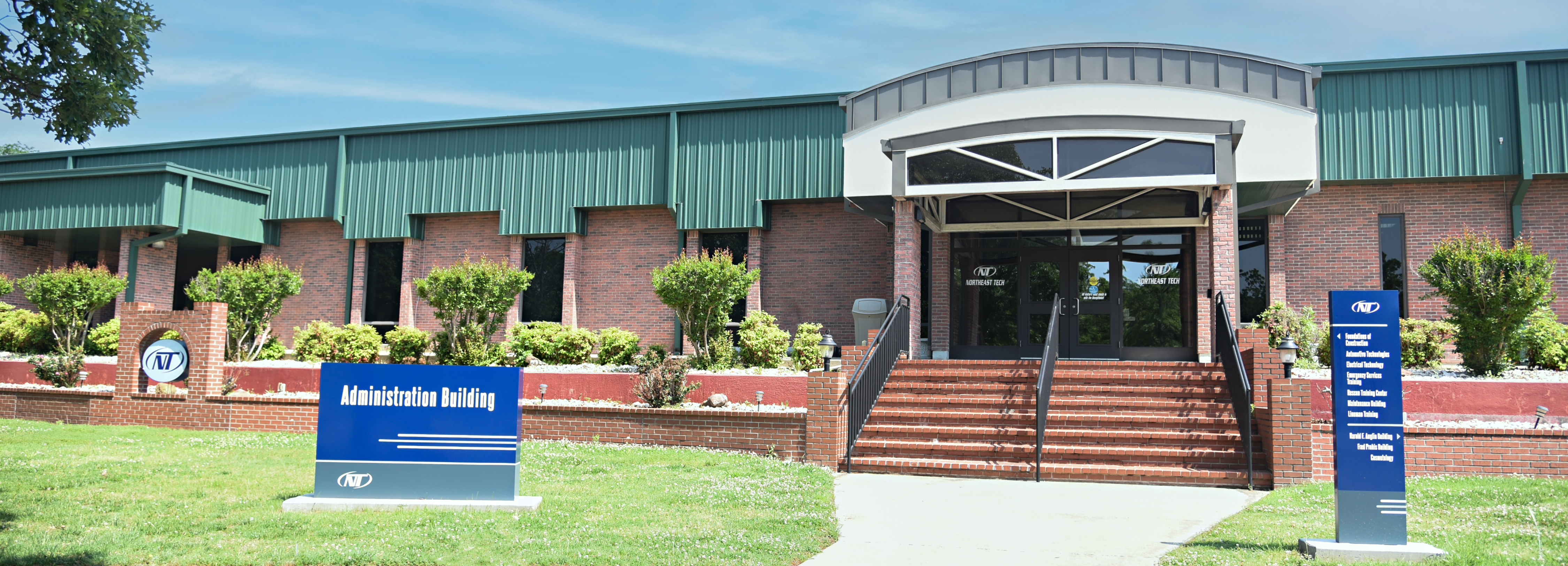
Northeast Technology Center is not a traditional university but a public career and technical education center in Pryor, Oklahoma, operating on a radically open-access model. It functions as a direct pipeline to the workforce, offering intensive, hands-on training in skilled trades and technical fields with a near-guarantee of admission for anyone 16 or older. The culture is pragmatic and results-driven, focused on equipping students with certifiable skills for immediate employment, reflected in its exceptionally high graduation rate.
More details
- Undergrad enrollment
- 1,498
- Average Cost
- $7,251
- Application Fee
- None
- Graduation Rate
- 97.1%
- Students Receiving Aid
- 86% of first-year undergraduates
Outcomes & value
Outcomes & value
- Median earnings (10 yr)
- $34,457
- Value (earnings ÷ net price)
- 3.3×
- Pell (lower-income) share
- 11%
- First-gen share (among federal-aid recipients)
- 54%
Earnings = median of students working ~10 years after entry; debt = median of graduates. Value divides 10-yr earnings by one year’s net price — read it as earnings per dollar of annual cost, not a full lifetime ROI; it favors lower-cost schools. Source: U.S. Dept. of Education College Scorecard. Figures lag ~2 years and reflect all students, not your intended major.
Campus & location
Campus safety
- On-campus violent crimes (2024)
- 0
On-campus criminal offenses classed as violent (murder/non-negligent manslaughter, rape, robbery, aggravated assault) for the most recent reported year. Source: U.S. Dept. of Education Campus Safety and Security (Clery Act). Counts reflect what’s reported to the school, and urban campuses often report more partly due to non-student incidents nearby — read alongside campus size and setting, not as a standalone safety verdict.
Climate
- Pleasant days / yr
- 80
- Summer high
- 90°F
- Winter low
- 33°F
- Annual rain
- 39.6"
- Annual snow
- 6.7"
- Natural-hazard risk
- Relatively Low
Pleasant days counts days per year with a mean temperature of 55–75°F, a high at or below 90°F, a low at or above 45°F, and little precipitation — a transparent comfort measure, not a weighting we invented. Computed from Open-Meteo ERA5 daily history (2019–2023). Natural-hazard risk is the county’s composite rating from the FEMA National Risk Index.
Quick answers
- How much does Northeast Technology Center cost?
- At Northeast Technology Center, the average net price (after aid) is about $10,478 per year. Actual cost varies with financial aid and residency.
- How many undergraduates attend Northeast Technology Center?
- Northeast Technology Center enrolls approximately 1,498 undergraduate students.
- Where is Northeast Technology Center located?
- Northeast Technology Center is located in Pryor, OK.
Admissions
Northeast Tech's admissions policy is the polar opposite of the selective, gatekeeping model of traditional colleges. The school operates under a concept of open enrollment, where all persons 16 years of age or older are eligible for admission. You may enroll at any time during the year, and there is no application fee. This policy results in a reported 100% acceptance rate. The process is designed for accessibility, not selectivity, reflecting its mission to serve the workforce development needs of northeast Oklahoma. There is no mention of standardized test requirements, early decision rounds, or demonstrated interest as factors—the sole barriers to entry are age and, presumably, a desire to train for a career.
- Open Enrollment Policy: All persons 16+ eligible.
- Acceptance Rate: 100%.
- Application Fee: None.
- Enrollment: Can occur at any time.
Academics
Academics at Northeast Tech are singularly focused on career preparation and workforce development, which it bills as northeast Oklahoma's #1 choice for career training. The curriculum is not organized around majors in the liberal arts sense but around and designed for specific skilled trades and technical occupations. The institution offers a , with the potential to earn credits toward further credentials. Training is intensely hands-on and practical. Recent expansions include programs attracting future through a Pre-Engineering pathway at its Claremore Campus. The academic model is modular and flexible, catering both to students seeking comprehensive career training and to working adults needing specific skill upgrades.
Compare Northeast Technology Center
vs University of Arkansas at Pine Bluffvs Florida Polytechnic Universityvs Northwestern Oklahoma State Universityvs Alcorn State University
See colleges similar to Northeast Technology Center →Sources
- Common Data Set - University Decision Support
- Common Data Set 2022-2023 - Administration Offices
- IR - Common Data Set
- Common Data Set: Home
- Common Data Set - Analytics & Institutional Effectiveness
- Common Data Set | Institutional Effectiveness
- Admissions
- Northeast Technology Center - Pryor
- Northeast Technology Center Statistics
- Northeast Tech| Home
- Northeast Technology Center - Admissions
- Northeast Technology Center - Sallie