Loading…
← All schools
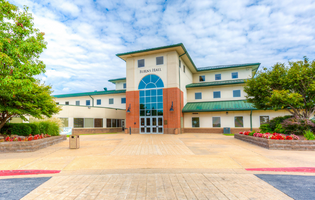
NorthWest Arkansas Community College
Bentonville, ARpublicwww.nwacc.edu/
Avg net price
$7,196
Earnings (10 yr)
$43,505
Acceptance & SAT from Common Data Set / IPEDS; net price, earnings & graduation from the U.S. Dept. of Education College Scorecard. Figures lag ~1–2 years — verify with the school.
NorthWest Arkansas Community College (NWACC) is the region's essential, open-door engine of economic mobility, built for the practical needs of its community rather than prestige. With a 100% acceptance rate and a sprawling menu of career-focused programs—from Artisanal Foods to Nursing—it operates as a low-cost, high-impact launchpad for first-generation students, career-changers, and anyone seeking a direct path to a skilled job. Its identity is rooted in affordability, accessibility, and a distinctly non-residential, commuter-focused vibe, where student life is built around clubs and campus events rather than dorms or football games.
More details
- Undergrad enrollment
- 4,953
- In-state tuition
- $3,342
- Out-of-state tuition
- $5,238
- Application Fee
- $0
- Graduation Rate
- 26-37%
- Transfer-Out Rate
- 35%
- Student Body: White
- 53.8%
- Out-of-State Students
- 10%
- Median Earnings (10yr)
- $43,505
- Student Body: Hispanic/Latino
- 23.7%
- Students Receiving Grant/Scholarship Aid
- 59%
Outcomes & value
Outcomes & value
- Median earnings (10 yr)
- $43,505
- Value (earnings ÷ net price)
- 6.0×
- Median debt at graduation
- $9,506
- Reducing loan balance (3 yr)
- 43%
- Pell (lower-income) share
- 23%
- First-gen share (among federal-aid recipients)
- 52%
Earnings = median of students working ~10 years after entry; debt = median of graduates. Value divides 10-yr earnings by one year’s net price — read it as earnings per dollar of annual cost, not a full lifetime ROI; it favors lower-cost schools. Source: U.S. Dept. of Education College Scorecard. Figures lag ~2 years and reflect all students, not your intended major.
Campus & location
Campus safety
- On-campus violent crimes (2024)
- 0
On-campus criminal offenses classed as violent (murder/non-negligent manslaughter, rape, robbery, aggravated assault) for the most recent reported year. Source: U.S. Dept. of Education Campus Safety and Security (Clery Act). Counts reflect what’s reported to the school, and urban campuses often report more partly due to non-student incidents nearby — read alongside campus size and setting, not as a standalone safety verdict.
Climate
- Pleasant days / yr
- 85
- Summer high
- 88°F
- Winter low
- 31°F
- Annual rain
- 50"
- Annual snow
- 9.1"
- Natural-hazard risk
- Relatively Moderate
Pleasant days counts days per year with a mean temperature of 55–75°F, a high at or below 90°F, a low at or above 45°F, and little precipitation — a transparent comfort measure, not a weighting we invented. Computed from Open-Meteo ERA5 daily history (2019–2023). Natural-hazard risk is the county’s composite rating from the FEMA National Risk Index.
Deep dive — research, future-scholar output & economic mobility
Research output
- Institutional h-index
- 19
- Scholarly works
- 149
Institutional research volume and impact from OpenAlex. The h-index reflects large research universities and will be low for teaching-focused liberal-arts colleges — not a measure of undergraduate quality.
Economic mobility
- Mobility rate
- 1.8%
- Bottom → top quintile
- 14%
- From bottom quintile
- 13%
Mobility rate = the share of students who both start in the bottom household-income quintile and reach the top quintile; bottom → top is that chance conditional on starting at the bottom. Source: Opportunity Insights Mobility Report Cards (Chetty, Friedman, Saez, Turner & Yagan). Reflects 1980–82 birth cohorts, so it’s directional, not current.
Quick answers
- How much does NorthWest Arkansas Community College cost?
- At NorthWest Arkansas Community College, the average net price (after aid) is about $7,196 per year. Actual cost varies with financial aid and residency.
- How many undergraduates attend NorthWest Arkansas Community College?
- NorthWest Arkansas Community College enrolls approximately 4,953 undergraduate students.
- Where is NorthWest Arkansas Community College located?
- NorthWest Arkansas Community College is located in Bentonville, AR.
Admissions
NWACC's defining characteristic is its radically accessible, open-door admissions policy. The college has a 100% , significantly higher than the Arkansas state average of 95% for community colleges. There is no minimum test score or GPA required for admission, and the application is free. Standardized tests like the ACT or SAT are only used for course placement, not for admissions decisions. The process is straightforward: after applying, students complete onboarding tasks like submitting documents and verifying personal information. This policy results in a highly diverse student body reflective of the region. The enrolled population is 53.8% White, 23.7% Hispanic or Latino, 3.67% Asian, 3.45% Two or More Races, and 2.33% Black or African American. About 10% of students come from out of state.
Compare NorthWest Arkansas Community College
vs Southern University and A & M Collegevs Alabama A & M Universityvs Southern Arkansas University Main Campusvs East Central University
See colleges similar to NorthWest Arkansas Community College →Sources
- 2025 Fact Book.xlsx
- NorthWest Arkansas Community College
- Apply to NWACC - Admissions Process
- Enrollment Steps
- Common Data Set
- Common Data Set 2024-2025 - Office of Strategic Analytics & Insights
- NorthWest Arkansas Community College
- NorthWest Arkansas Community College
- NorthWest Arkansas Community College
- NorthWest Arkansas Community College (Top-Ranked ...