Admit rate has ranged 74%–87% over the last 5 years — notably volatile. Source: IPEDS via Urban Institute.
Acceptance & SAT from Common Data Set / IPEDS; net price, earnings & graduation from the U.S. Dept. of Education College Scorecard. Figures lag ~1–2 years — verify with the school.
Norwich University isn't just Vermont's oldest private military college; it's a rugged, pragmatic institution where the Corps of Cadets' disciplined culture bleeds into a civilian student body focused on practical, high-demand fields like cybersecurity, intelligence, and criminal justice. The result is a no-nonsense campus where leadership is the curriculum, and graduates consistently out-earn their peers, commanding a significant wage premium that validates its 'Expect Challenge. Achieve Distinction.' ethos.
Admission requirements
Test-optional — scores considered if submitted
Required
High school transcript
Grade point average
TOEFL (non-native English)
Considered (not required)
Class rank
Letters of recommendation
Test scores (SAT/ACT)
Source: IPEDS Admissions survey (2022) via Urban Institute. Covers formal factors only — it does not reflect essays, extracurriculars, or other holistic criteria.
More details
Undergrad enrollment
2,428
In-state tuition
$49,740
Out-of-state tuition
$49,740
Top Majors
Intelligence, Criminal Justice, Nursing
Graduation Rate
60%
On-Campus Housing
70%
Demonstrated Interest
Not considered
Student-Faculty Ratio
16:1
Financial Aid Coverage
100% of first-year students receive grants/scholarships
Median Earnings (10yr)
$65,575
Outcomes & value
Outcomes & value
Median earnings (10 yr)
$65,575
Value (earnings ÷ net price)
2.9×
Median debt at graduation
$25,000
Graduation rate
60%
First-year retention
79%
Reducing loan balance (3 yr)
79%
Pell (lower-income) share
24%
First-gen share (among federal-aid recipients)
24%
Financial health
2.2 / 3.0Meets the federal financial-responsibility standard
U.S. Dept. of Education Financial Responsibility Composite Score (FY2022-23). Scale −1.0 to 3.0; ≥1.5 meets the standard. Reported for private nonprofit & for-profit institutions only — public universities are state-backed and not scored, so this is a stability signal, not a ranking.
Top-earning majors
Median earnings by field of study (highest credential), ~2 years after completion.
Registered Nursing, Nursing Administration, Nursing Research and Clinical Nursing$64,865
Construction Management$57,318
Mechanical Engineering$46,589
Business Administration, Management and Operations$45,696
Criminal Justice and Corrections$42,682
International Relations and National Security Studies
Campus & location
Campus safety
On-campus violent crimes (2024)
9
Per 1,000 students
3.05
On-campus criminal offenses classed as violent (murder/non-negligent manslaughter, rape, robbery, aggravated assault) for the most recent reported year. Source: U.S. Dept. of Education Campus Safety and Security (Clery Act). Counts reflect what’s reported to the school, and urban campuses often report more partly due to non-student incidents nearby — read alongside campus size and setting, not as a standalone safety verdict.
Climate
Pleasant days / yr
85
Summer high
76°F
Winter low
15°F
Annual rain
42.8"
Annual snow
71.8"
Natural-hazard risk
Relatively Low
Pleasant days counts days per year with a mean temperature of 55–75°F, a high at or below 90°F, a low at or above 45°F, and little precipitation — a transparent comfort measure, not a weighting we invented. Computed from Open-Meteo ERA5 daily history (2019–2023). Natural-hazard risk is the county’s composite rating from the FEMA National Risk Index.
Deep dive — research, future-scholar output & economic mobility▾
Research output
Institutional h-index
205
Scholarly works
7,018
Institutional research volume and impact from OpenAlex. The h-index reflects large research universities and will be low for teaching-focused liberal-arts colleges — not a measure of undergraduate quality.
Economic mobility
Mobility rate
2.8%
Bottom → top quintile
34%
From bottom quintile
8%
Mobility rate = the share of students who both start in the bottom household-income quintile and reach the top quintile; bottom → top is that chance conditional on starting at the bottom. Source: Opportunity Insights Mobility Report Cards (Chetty, Friedman, Saez, Turner & Yagan). Reflects 1980–82 birth cohorts, so it’s directional, not current.
Quick answers
What is the acceptance rate at Norwich University?
Norwich University's acceptance rate is approximately 74% (Northfield, VT), based on the most recent figures we compiled from public and primary sources.
What SAT score do you need for Norwich University?
Admitted students at Norwich University typically score 1060–1320 on the SAT (the middle-50% range). Scores outside this band are still admitted, especially with strong applications.
How much does Norwich University cost?
At Norwich University, the average net price (after aid) is about $22,257 per year. Actual cost varies with financial aid and residency.
How many undergraduates attend Norwich University?
Norwich University enrolls approximately 2,428 undergraduate students.
Where is Norwich University located?
Norwich University is located in Northfield, VT.
Admissions
Norwich operates on a rolling admissions schedule, releasing decisions beginning in September for fall applicants. The process is described as "somewhat competitive," with a focus on a . While the university is , submitted scores for admitted students typically fall within a middle 50% SAT range of 1060–1320, and the average entering GPA is 3.30. Demonstrated interest is not considered in the admissions process, placing the emphasis squarely on the applicant's academic record and other submitted materials. All domestic admitted applicants who file a FAFSA are considered for need-based financial aid if eligible.
The academic environment at Norwich is defined by its blend of traditional liberal arts and intensely practical, career-oriented programs, all delivered with a 16:1 student-faculty ratio. The university offers over 50 undergraduate degree programs on campus. The most popular majors, which dominate the graduate profile, point to a campus focused on public service and security: Intelligence (18% of 2024 graduates), Criminal Justice/Law Enforcement Administration (16%), and Registered Nursing. Other strong programs include Cybersecurity, Construction Management, and Business. The ethos is captured in the university motto: 'Expect Challenge. Achieve Distinction.'
Earnings = median of students working ~10 years after entry; debt = median of graduates. Value divides 10-yr earnings by one year’s net price — read it as earnings per dollar of annual cost, not a full lifetime ROI; it favors lower-cost schools. Source: U.S. Dept. of Education College Scorecard. Figures lag ~2 years and reflect all students, not your intended major.
$38,721
Psychology, General$37,568
Allied Health Diagnostic, Intervention, and Treatment Professions$36,848
Source: U.S. Dept. of Education College Scorecard (field-of-study earnings). Figures cover graduates who received federal aid and lag ~2 years; not all programs report data.
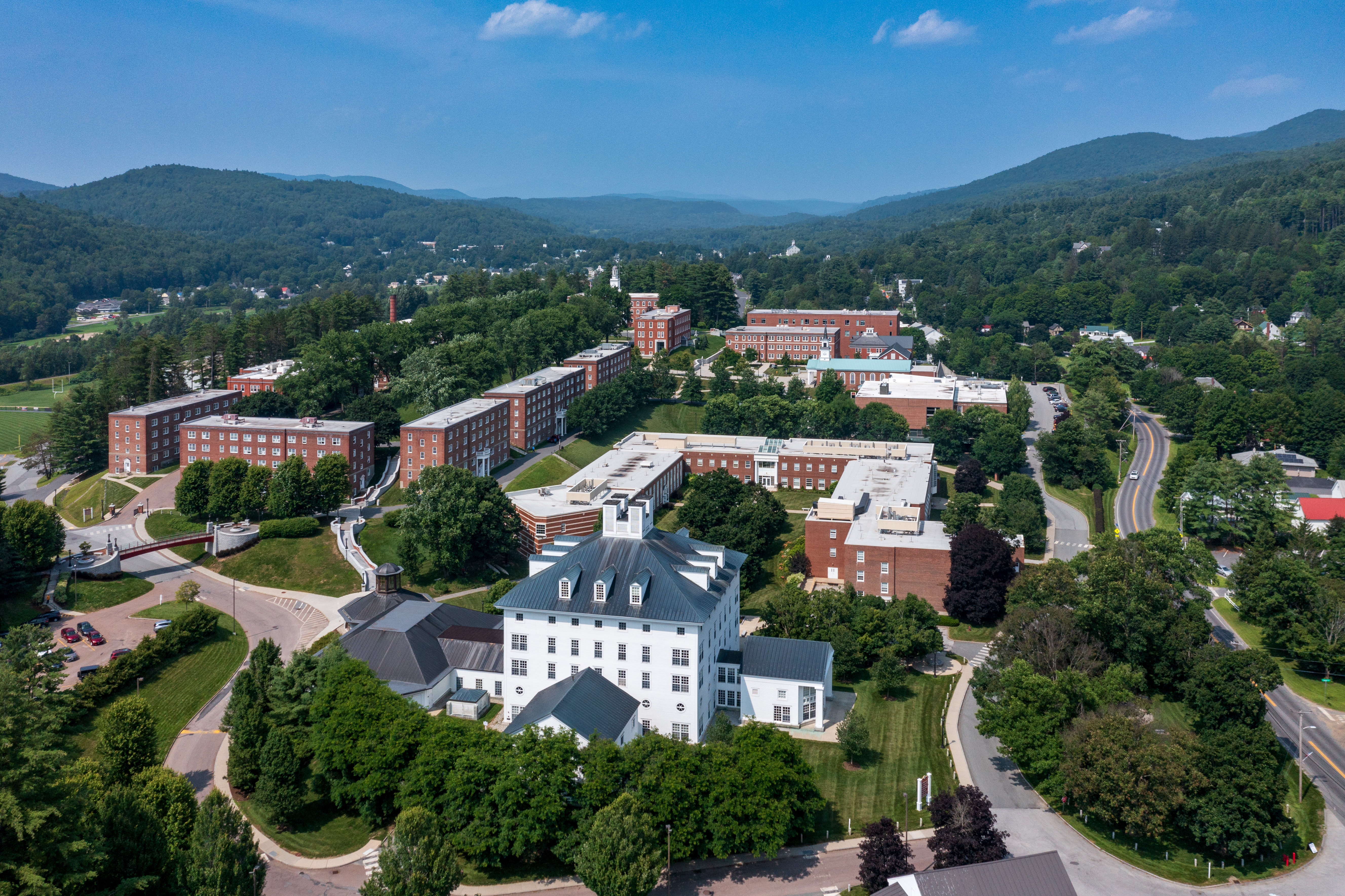
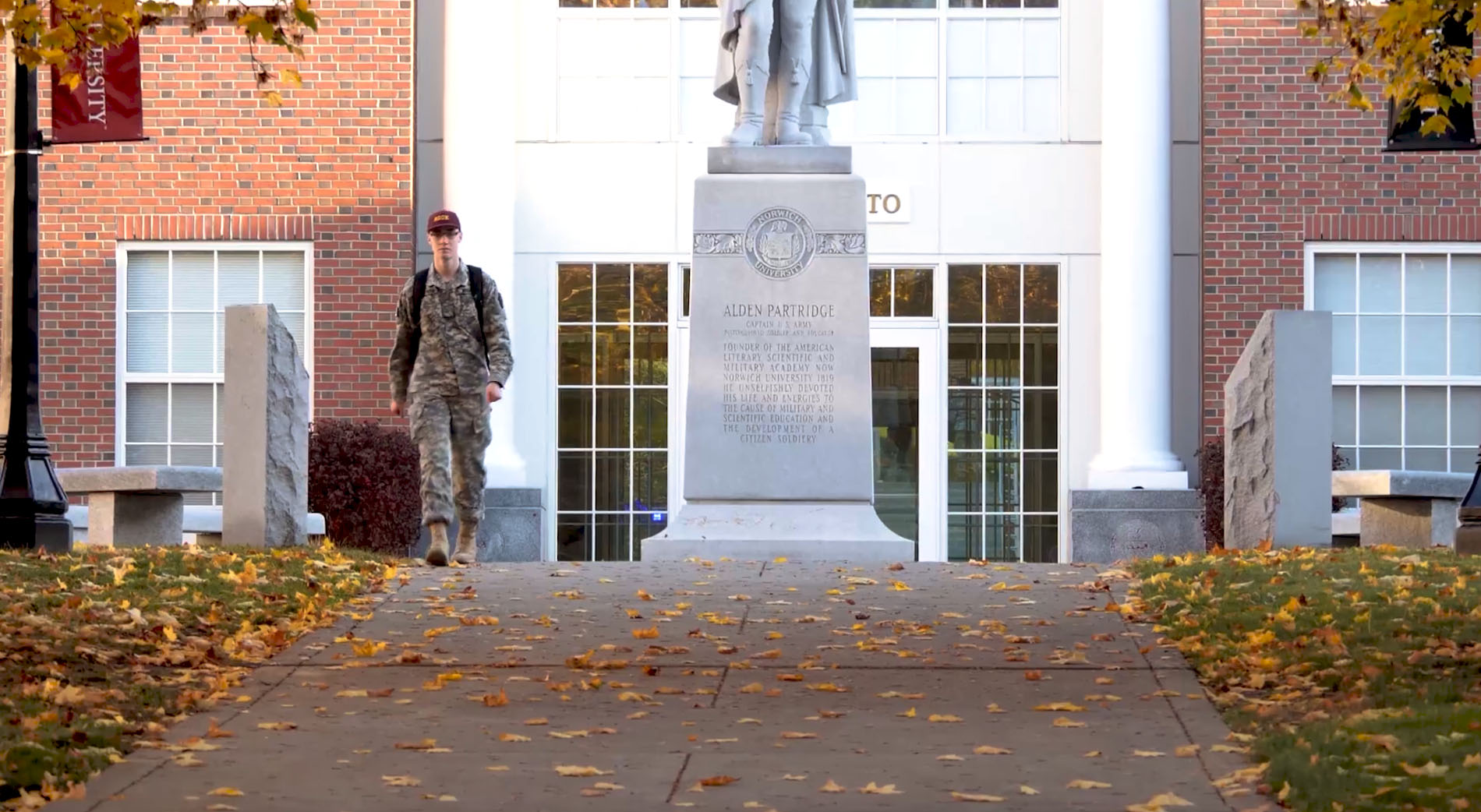
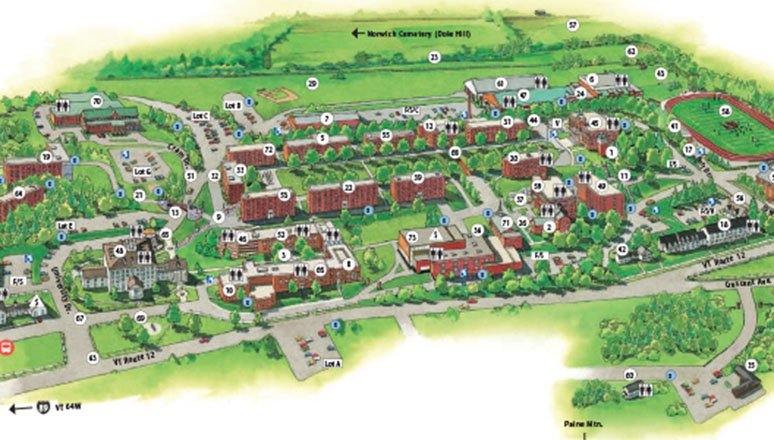
Life on the Northfield campus is sharply bifurcated, creating two distinct student experiences within the same institution. The defining feature is the Corps of Cadets, which involves a disciplined military structure complete with physical training, uniform requirements, and leadership development. Alongside this exists a traditional civilian student lifestyle. About 70% of students live in college-owned, -operated, or -affiliated housing. The campus is active, with over 100 student clubs and organizations managed by a creative Campus Activities team. Social media and virtual tours offer snapshots of daily life, from students in classes to campus visits.
Norwich's value proposition is powerfully demonstrated in its graduate outcomes. The university's graduation rate stands at 60%. More strikingly, its alumni earn a significant premium. Four years after graduation, Norwich alumni who received federal aid reported median earnings of $76,000, which placed the university first in Vermont for graduate earnings. This high earning potential is consistent; graduates report median earnings of about $59,743 six years after entry (37% higher than the national median), and $73,483 per year five years after graduation. This strong return on investment is a central pillar of the university's recent national recognition.
Norwich is proactive in providing financial aid, with 100% of full-time beginning undergraduates receiving grant or scholarship aid. The average financial aid package is reported to be $50,729. For residential first-year students in Fall 2025, the average after receiving Norwich aid (excluding external tuition benefits) was $24,365. The university offers a range of substantial merit-based scholarships, including a Presidential Award of up to $30,000 per year for four years (for students with a GPA of 3.60 or greater), a Provost Award of up to $28,000 per year (GPA 3.40-3.599), and a Trustee Award. All domestic admitted applicants who file a FAFSA are considered for .
Norwich University carves out a singular niche in American higher education. It is not merely a military college but a unique fusion where the leadership rigor and structured life of the Corps of Cadets coexists with and influences a robust civilian academic program. This creates a campus culture steeped in discipline, service, and practical application unmatched by typical liberal arts colleges. Its academic focus is ruthlessly aligned with high-demand, high-earning fields like intelligence, cybersecurity, criminal justice, and nursing, which directly translates into its standout graduate outcomes: it consistently produces alumni who command top-tier salaries in Vermont and nationally. The university delivers a specific, challenging, and highly effective form of education for students seeking a clear path to leadership roles in defense, public safety, and critical infrastructure.
Norwich University seal · sourceCampus Map, Directions, Trip Planning | Norwich University · sourceWelcome to Norwich University · sourceCampus Map, Directions, Trip Planning | Norwich University · source