Admit rate has ranged 69%–98% over the last 5 years — notably volatile. Source: IPEDS via Urban Institute.
Acceptance & SAT from Common Data Set / IPEDS; net price, earnings & graduation from the U.S. Dept. of Education College Scorecard. Figures lag ~1–2 years — verify with the school.
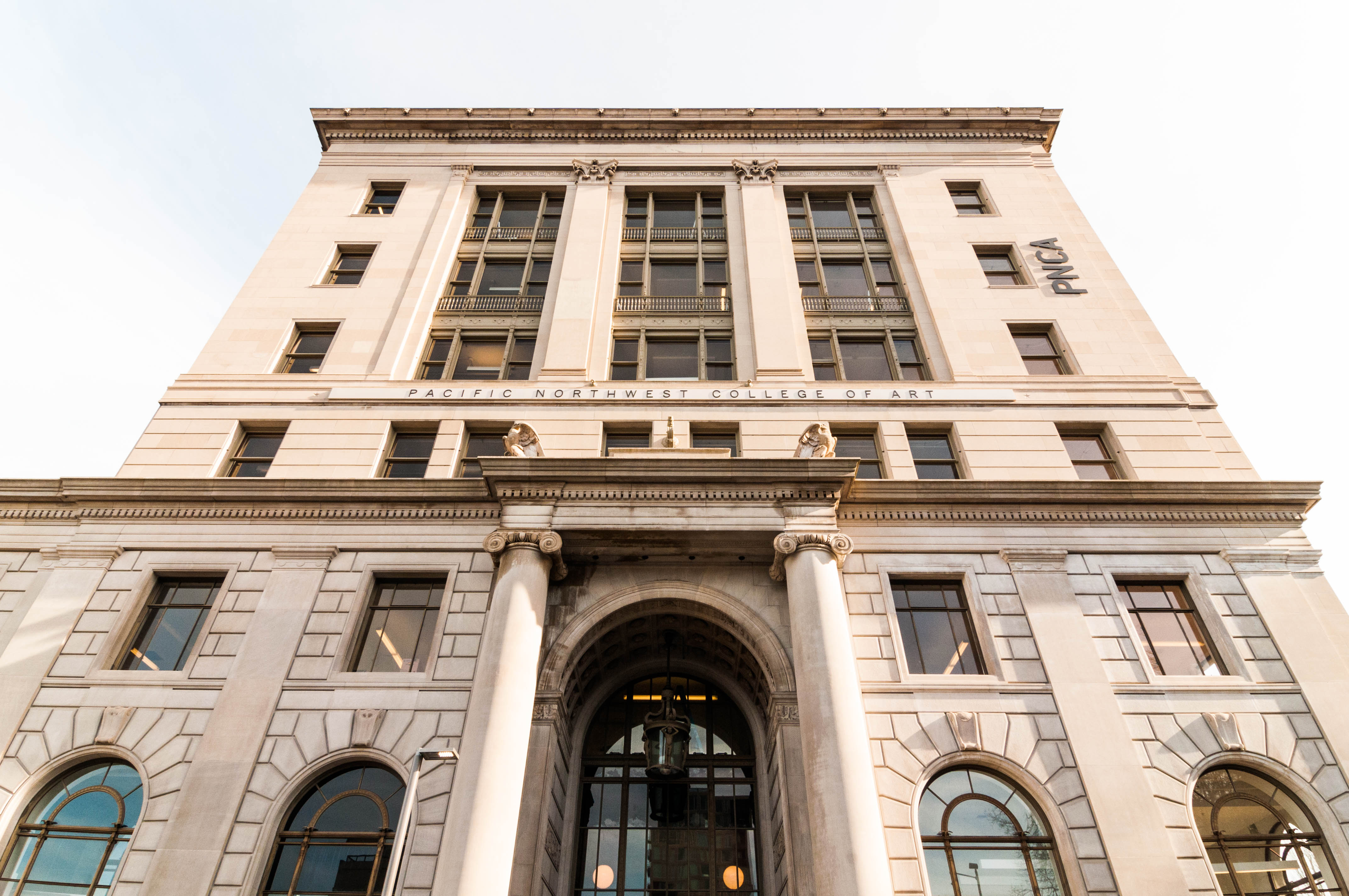
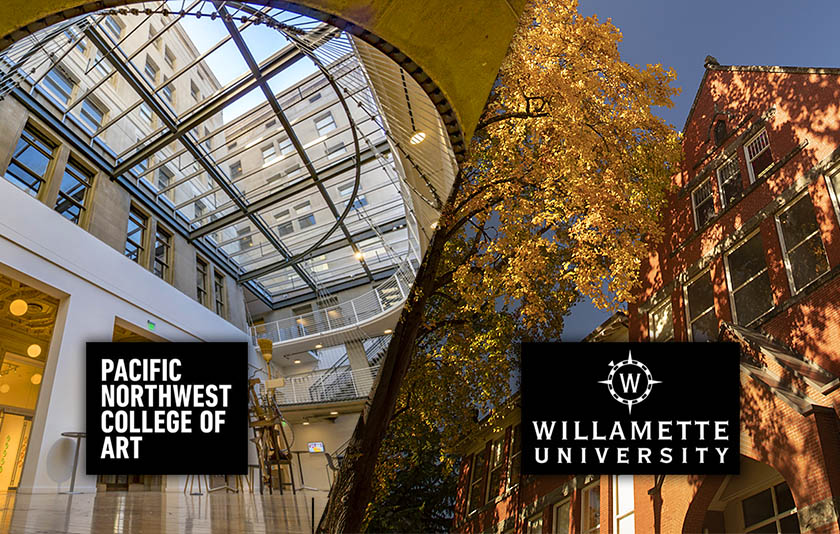
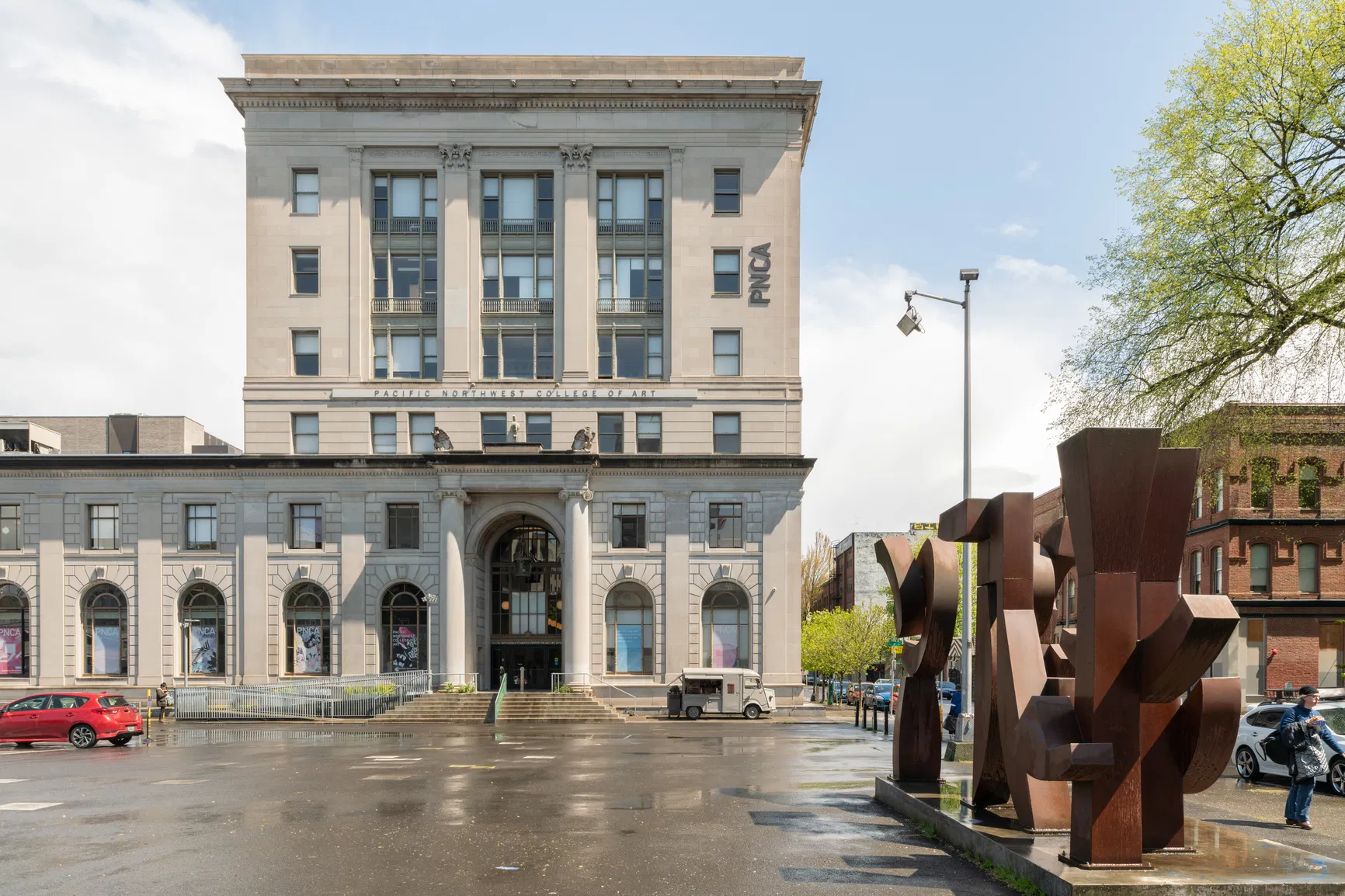
Pacific Northwest College of Art (PNCA) is Portland's scrappy, experimental art school, where students dive into hands-on studio practice amid the city's thriving creative scene. With a 75% acceptance rate and a focus on illustration, digital arts, and fine arts, PNCA attracts students who want to push boundaries—though its 29% graduation rate suggests the path isn't for everyone. The school's merger with Willamette University adds liberal arts depth to its DIY ethos.
Admission requirements
Test-blind — scores not considered
Required
Grade point average
Demonstrated competencies
TOEFL (non-native English)
Considered (not required)
High school transcript
Letters of recommendation
Source: IPEDS Admissions survey (2022) via Urban Institute. Covers formal factors only — it does not reflect essays, extracurriculars, or other holistic criteria.
More details
Undergrad enrollment
420
In-state tuition
$49,006
Out-of-state tuition
$49,006
Merger Partner
Willamette University
Popular Majors
Illustration, Digital Arts, Fine Arts
Graduation Rate
29%
Student Housing
Arthouse (featured on Instagram)
Early Career Earnings
$21,811
Outcomes & value
Outcomes & value
Median earnings (10 yr)
$34,883
Value (earnings ÷ net price)
1.0×
Median debt at graduation
$25,000
Graduation rate
29%
First-year retention
69%
Reducing loan balance (3 yr)
48%
Pell (lower-income) share
41%
First-gen share (among federal-aid recipients)
18%
Top-earning majors
Median earnings by field of study (highest credential), ~2 years after completion.
Design and Applied Arts$27,494
Fine and Studio Arts$19,835
Source: U.S. Dept. of Education College Scorecard (field-of-study earnings). Figures cover graduates who received federal aid and lag ~2 years; not all programs report data.
Campus & location
Climate
Pleasant days / yr
115
Summer high
81°F
Winter low
36°F
Annual rain
52"
Annual snow
16.3"
Natural-hazard risk
Relatively High
Pleasant days counts days per year with a mean temperature of 55–75°F, a high at or below 90°F, a low at or above 45°F, and little precipitation — a transparent comfort measure, not a weighting we invented. Computed from Open-Meteo ERA5 daily history (2019–2023). Natural-hazard risk is the county’s composite rating from the FEMA National Risk Index.
Deep dive — research, future-scholar output & economic mobility▾
Research output
Institutional h-index
19
Scholarly works
96
Institutional research volume and impact from OpenAlex. The h-index reflects large research universities and will be low for teaching-focused liberal-arts colleges — not a measure of undergraduate quality.
Quick answers
What is the acceptance rate at Pacific Northwest College of Art?
Pacific Northwest College of Art's acceptance rate is approximately 75% (Portland, OR), based on the most recent figures we compiled from public and primary sources.
How much does Pacific Northwest College of Art cost?
At Pacific Northwest College of Art, the average net price (after aid) is about $35,785 per year. Actual cost varies with financial aid and residency.
How many undergraduates attend Pacific Northwest College of Art?
Pacific Northwest College of Art enrolls approximately 420 undergraduate students.
Where is Pacific Northwest College of Art located?
Pacific Northwest College of Art is located in Portland, OR.
Admissions
PNCA is accessible by art school standards, admitting 75% of applicants (363 out of 485 in 2024), though have declined by nearly 20% recently. The average admitted student has a 3.48 GPA, and while SAT/ACT scores are considered, the portfolio carries far more weight. The regular decision deadline is February 1, with a priority deadline of January 15. Notably, the school's merger with Willamette University has begun to shift its admissions profile, blending PNCA's freewheeling vibe with more traditional academic expectations.
PNCA offers 10 BFA programs—with illustration, digital arts, and fine arts being the most popular—plus five graduate programs including an unusual dual MA/MFA track. The curriculum leans heavily on studio practice, though the Willamette merger has introduced more liberal arts coursework. A standout feature is the school's Post-Baccalaureate program, which lets students refine their portfolios before applying to MFA programs. Forbes notes that PNCA's partnership with Willamette provides 'a rare breadth of academic tools,' blending art-school intensity with civic engagement and policy studies.
Earnings = median of students working ~10 years after entry; debt = median of graduates. Value divides 10-yr earnings by one year’s net price — read it as earnings per dollar of annual cost, not a full lifetime ROI; it favors lower-cost schools. Source: U.S. Dept. of Education College Scorecard. Figures lag ~2 years and reflect all students, not your intended major.
Life at PNCA revolves around its industrial-chic Portland campus, where students share studio spaces and critique each other's work late into the night. The school's Instagram showcases a tight-knit, slightly chaotic creative community, with highlights like the 'Arthouse' student housing (featured in a viral reel) and open-studio nights. Portland's art scene serves as an extended campus—students intern at galleries, screen prints at local shops, and show work in DIY spaces. The vibe is unpretentious but ambitious, with an emphasis on reimagining 'what art and design can do in the world.'
PNCA grads face mixed returns: the 29% graduation rate (within 6 years) is low, and early-career earnings average just $21,811. Design majors report median earnings of $20,535 initially, though salaries rise to $33,646 after five years. The school's strength lies in its Portland network—many alumni stay in the city to work in studios, galleries, and creative agencies. ROI calculations suggest it takes over 50 years to recoup the based on typical earnings, making PNCA a gamble best suited to those committed to the artist's life.
With a sticker price of $77,110 (tuition + fees), PNCA is expensive, though the average after aid drops to $35,785. About 70% of students receive financial aid, with average packages around $10,382. The school offers a Net Price Calculator, but families should note that art supplies can add $1,000–$3,000 in unreimbursed costs annually. While cheaper than East Coast art schools, the cost remains steep given graduates' earning potential—only those with significant merit scholarships or outside funding should consider paying full price.
PNCA is Portland's art school, period—a place where students can fail spectacularly in the studio, then grab a cheap beer at a dive bar with their professor. Unlike more rigid programs, it encourages cross-disciplinary experimentation (a painting major might take a coding class, or a designer might collaborate on a zine). The Willamette merger adds stability without diluting its punk-rock sensibility, and the city itself acts as both muse and marketplace. Just know: this isn't a school for those seeking conventional outcomes or six-figure salaries. It's for artists who want to live their work, even if that means scraping by initially.
Pacific Northwest College of Art logo · sourcePacific Northwest College of Art - Wikipedia · sourceWillamette Completes the Merge with PNCA | Willamette News · sourcePacific Northwest College of Art | Portland, OR Art School · source
.jpg?width=1600)