Admit rate has ranged 42%–59% over the last 5 years — notably volatile. Source: IPEDS via Urban Institute.
Acceptance & SAT from Common Data Set / IPEDS; net price, earnings & graduation from the U.S. Dept. of Education College Scorecard. Figures lag ~1–2 years — verify with the school.
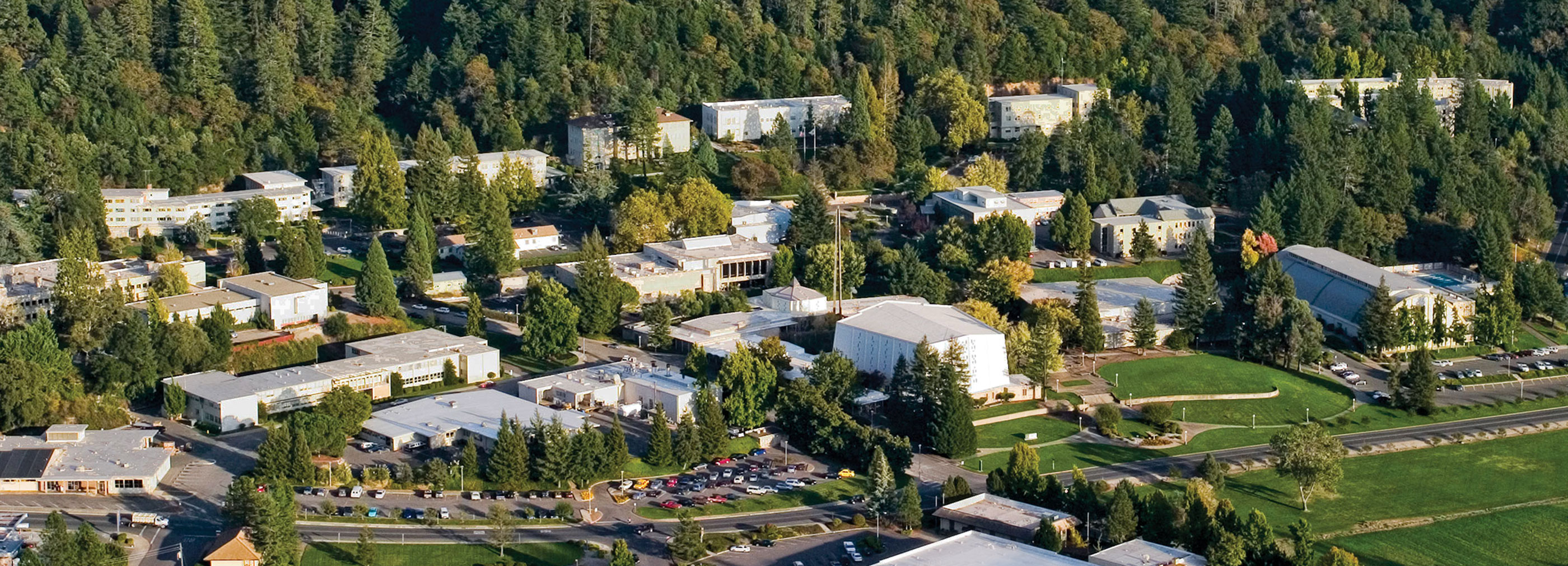
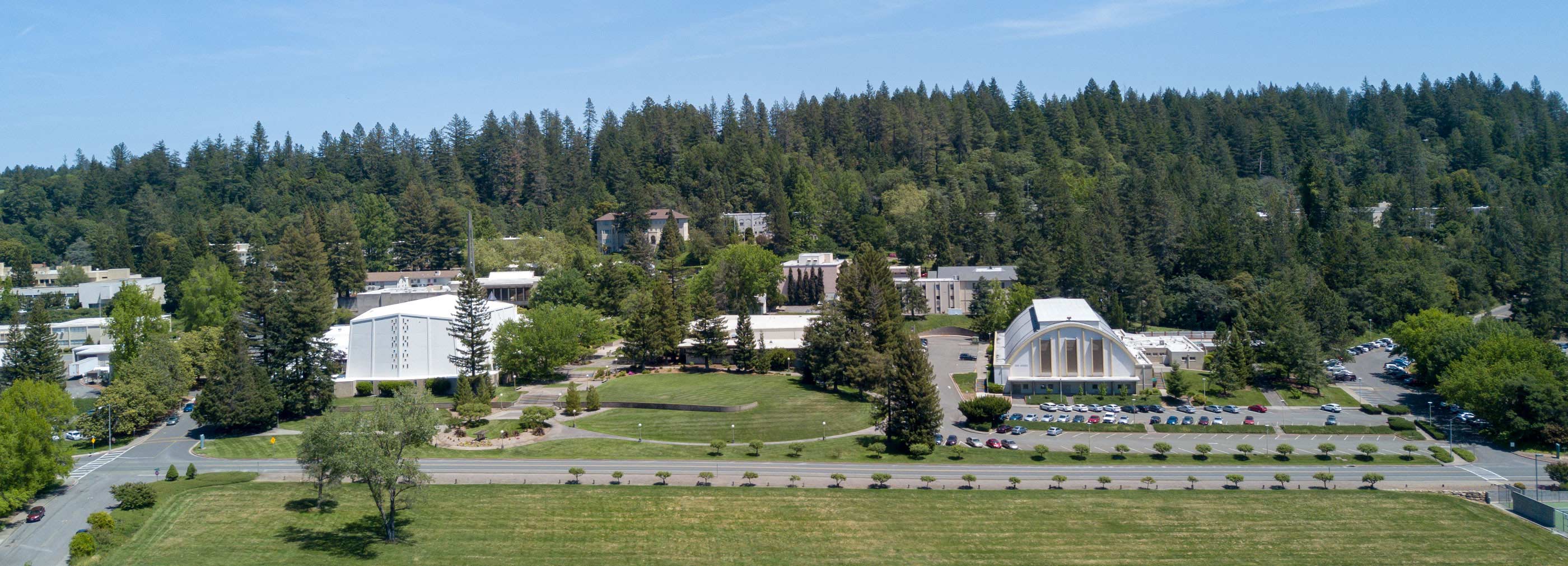
Pacific Union College is a small, faith-driven liberal arts college perched in the Napa Valley hills of Angwin, California. It operates as a Seventh-day Adventist institution where spiritual life is woven into the fabric of daily routines, from Sabbath observance to a campus-wide prohibition on alcohol. With a tight-knit community of under 1,000 undergraduates and a sprawling menu of over 70 academic programs, PUC offers a distinctive blend of conservative Christian values and surprisingly robust professional pathways, most notably in nursing.
Admission requirements
Test-optional — scores considered if submitted
Required
High school transcript
Grade point average
TOEFL (non-native English)
Considered (not required)
Letters of recommendation
Test scores (SAT/ACT)
College-prep program
Source: IPEDS Admissions survey (2022) via Urban Institute. Covers formal factors only — it does not reflect essays, extracurriculars, or other holistic criteria.
More details
Undergrad enrollment
805
In-state tuition
$37,173
Out-of-state tuition
$37,173
Graduation Rate
58%
Most Popular Major
Registered Nursing/Registered Nurse
Gender Distribution
37.7% male, 62.3% female
Student-Faculty Ratio
11:1
Median Earnings (10yr)
$70,484
Outcomes & value
Outcomes & value
Median earnings (10 yr)
$70,484
Value (earnings ÷ net price)
1.7×
Median debt at graduation
$27,500
Graduation rate
58%
First-year retention
89%
Reducing loan balance (3 yr)
60%
Pell (lower-income) share
34%
First-gen share (among federal-aid recipients)
26%
Financial health
-0.2 / 3.0Below the federal standard — financial stress
U.S. Dept. of Education Financial Responsibility Composite Score (FY2022-23). Scale −1.0 to 3.0; ≥1.5 meets the standard. Reported for private nonprofit & for-profit institutions only — public universities are state-backed and not scored, so this is a stability signal, not a ranking.
Top-earning majors
Median earnings by field of study (highest credential), ~2 years after completion.
Registered Nursing, Nursing Administration, Nursing Research and Clinical Nursing$92,410
Business/Commerce, General$31,839
Sports, Kinesiology, and Physical Education/Fitness$25,967
Source: U.S. Dept. of Education College Scorecard (field-of-study earnings). Figures cover graduates who received federal aid and lag ~2 years; not all programs report data.
On-campus criminal offenses classed as violent (murder/non-negligent manslaughter, rape, robbery, aggravated assault) for the most recent reported year. Source: U.S. Dept. of Education Campus Safety and Security (Clery Act). Counts reflect what’s reported to the school, and urban campuses often report more partly due to non-student incidents nearby — read alongside campus size and setting, not as a standalone safety verdict.
Climate
Pleasant days / yr
107
Summer high
89°F
Winter low
36°F
Annual rain
26.6"
Annual snow
2.6"
Natural-hazard risk
Relatively High
Pleasant days counts days per year with a mean temperature of 55–75°F, a high at or below 90°F, a low at or above 45°F, and little precipitation — a transparent comfort measure, not a weighting we invented. Computed from Open-Meteo ERA5 daily history (2019–2023). Natural-hazard risk is the county’s composite rating from the FEMA National Risk Index.
Deep dive — research, future-scholar output & economic mobility▾
Research output
Institutional h-index
37
Scholarly works
354
Institutional research volume and impact from OpenAlex. The h-index reflects large research universities and will be low for teaching-focused liberal-arts colleges — not a measure of undergraduate quality.
Economic mobility
Mobility rate
2.8%
Bottom → top quintile
45%
From bottom quintile
6%
Mobility rate = the share of students who both start in the bottom household-income quintile and reach the top quintile; bottom → top is that chance conditional on starting at the bottom. Source: Opportunity Insights Mobility Report Cards (Chetty, Friedman, Saez, Turner & Yagan). Reflects 1980–82 birth cohorts, so it’s directional, not current.
Quick answers
What is the acceptance rate at Pacific Union College?
Pacific Union College's acceptance rate is approximately 47% (Angwin, CA), based on the most recent figures we compiled from public and primary sources.
How much does Pacific Union College cost?
At Pacific Union College, the average net price (after aid) is about $41,008 per year. Actual cost varies with financial aid and residency.
How many undergraduates attend Pacific Union College?
Pacific Union College enrolls approximately 805 undergraduate students.
Where is Pacific Union College located?
Pacific Union College is located in Angwin, CA.
Admissions
Admissions at Pacific Union College are moderately selective, with an of 47%. The process appears to be test-flexible, with reported SAT score ranges for admitted students typically between 930 and 1190, and ACT scores between 18 and 24. The college offers an early acceptance option for students who meet certain criteria, including a secondary-school unweighted GPA of at least 2.75 over six semesters. While the framework suggests colleges rate factors like demonstrated interest, the specific weight PUC assigns to such factors in its admissions decisions is not detailed in the provided sources. The undergraduate student body is predominantly female, with a fall 2024 enrollment of 963 students and a gender distribution of 37.7% male and 62.3% female.
Earnings = median of students working ~10 years after entry; debt = median of graduates. Value divides 10-yr earnings by one year’s net price — read it as earnings per dollar of annual cost, not a full lifetime ROI; it favors lower-cost schools. Source: U.S. Dept. of Education College Scorecard. Figures lag ~2 years and reflect all students, not your intended major.
PUC's academic identity is defined by its close-knit learning community—with an 11:1 student-faculty ratio—and a surprisingly wide array of program choices. The college offers over 70 academic programs across 18 departments, embracing intellectual curiosity, creativity, and critical thinking. Its undisputed powerhouse is the Registered Nursing program, consistently cited as the most popular major. Other noted strengths include aviation, biology, business, chemistry, and education. The curriculum is delivered within a framework that integrates faith and learning, a hallmark of its Seventh-day Adventist heritage.
Life at PUC is intentionally wholesome and community-focused, shaped profoundly by its religious character. The campus culture is described as inclusive but centered on wholesome activities rather than partying, with alcohol prohibited. Spiritual life is "vibrant and student-centered," expressed through weekly traditions like Collegiate Sabbath School and Vespers, as well as Outreach Ministries and Women's Ministries. Faith is not compartmentalized but integrated into friendships and daily campus life. The college celebrates diversity and has graduated thousands of students from diverse walks of life over its century-long history. With under 1,000 undergraduates, the environment is intimate and closely connected.
Post-graduate outcomes at PUC present a mixed picture, heavily influenced by its role as a transfer point for some students and a direct pipeline to careers for others. The college's own data indicates a significant transfer-out rate of 30-40%, and a typical graduating class is only about 70% the size of its entering freshman class. Reported overall graduation rates vary, with one source citing 51%. For those who complete their degrees, reported average annual salaries start around $31,215, with business and commerce graduates tending to fare better. The college's nursing program is a key driver of stable career outcomes, though specific earnings data for that major is not provided in the sources.
Understanding the true cost of attending PUC requires proactive use of its calculator, as aid packages can significantly reduce the sticker price. The college promotes several scholarship opportunities, including full-tuition awards like the Maxwell Scholarship and Pioneer Promise Scholarship, available for four years to students of excellent character, strong academic achievement, and high financial need. One external analysis suggests that treating PUC scholarships as part of a comprehensive funding plan, rather than a single award, is the most effective strategy. While some elite colleges advertise no-loan policies for lower-income families, the provided sources do not confirm whether PUC has a formal policy of meeting full demonstrated financial need or eliminating loans from aid packages.
Pacific Union College carves out a singular niche in American higher education. It is not just a Christian college; it is a Seventh-day Adventist institution where faith dictates the rhythm of the week—Sabbath observance is central—and shapes community norms, like a dry campus. This creates an environment of intense, intentional fellowship that is the absolute core of the PUC experience. Yet, within this conservative religious framework, it operates a surprisingly expansive and pragmatic academic enterprise. The contrast is striking: a small, secluded hilltop community that simultaneously runs one of the region's prominent nursing schools and offers programs in fields like aviation and conservation technology. It's a place where spiritual formation and professional preparation are not at odds but are pursued in tandem, making it a compelling, if very specific, choice for students seeking that particular fusion.
Pacific Union College seal · sourceAbout - Pacific Union College · sourcePacific Union College - Adventist Colleges and Universities · sourceCampus Services - Pacific Union College · source