Loading…
← All schools
Park Place Premier Barber School
New Orleans, LAprivate forprofitwww.parkplacebarberschool.edu/
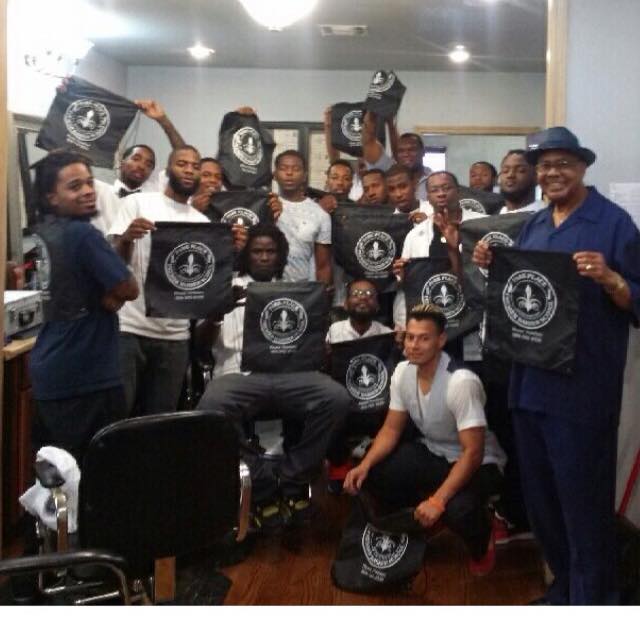
Park Place Premier Barber School isn't your typical college—it's a hyper-focused, for-profit trade school in the heart of New Orleans where the entire curriculum is the art and business of barbering. With a tiny cohort of about two dozen students and a 3:1 student-to-faculty ratio, it operates more like an intensive apprenticeship than an academic institution, boasting a 100% open admissions policy and a surprisingly robust 60% graduation rate for its certificate program. This is a place for decisive career-changers and aspiring entrepreneurs who want to skip the liberal arts and get straight to wielding clippers and building a clientele.
More details
- Undergrad enrollment
- 32
- Location
- New Orleans, LA (Urban)
- Degrees Offered
- Certificate
- Graduation Rate
- 60%
- Institution Type
- Private, For-Profit, Less-than-2-year
- Academic Calendar
- Continuous
- Student Gender Split
- 59% Male, 41% Female
- Median Earnings (10yr)
- $20,809
- Student-to-Faculty Ratio
- 3:1
Outcomes & value
Outcomes & value
- Pell (lower-income) share
- 74%
Earnings = median of students working ~10 years after entry; debt = median of graduates. Value divides 10-yr earnings by one year’s net price — read it as earnings per dollar of annual cost, not a full lifetime ROI; it favors lower-cost schools. Source: U.S. Dept. of Education College Scorecard. Figures lag ~2 years and reflect all students, not your intended major.
Financial health
-1.0 / 3.0Below the federal standard — financial stress
U.S. Dept. of Education Financial Responsibility Composite Score (FY2022-23). Scale −1.0 to 3.0; ≥1.5 meets the standard. Reported for private nonprofit & for-profit institutions only — public universities are state-backed and not scored, so this is a stability signal, not a ranking.
Campus & location
Climate
- Pleasant days / yr
- 125
- Summer high
- 88°F
- Winter low
- 51°F
- Annual rain
- 51.6"
- Natural-hazard risk
- Relatively High
Pleasant days counts days per year with a mean temperature of 55–75°F, a high at or below 90°F, a low at or above 45°F, and little precipitation — a transparent comfort measure, not a weighting we invented. Computed from Open-Meteo ERA5 daily history (2019–2023). Natural-hazard risk is the county’s composite rating from the FEMA National Risk Index.
Quick answers
- How much does Park Place Premier Barber School cost?
- At Park Place Premier Barber School, the average net price (after aid) is about $14,532 per year. Actual cost varies with financial aid and residency.
- How many undergraduates attend Park Place Premier Barber School?
- Park Place Premier Barber School enrolls approximately 32 undergraduate students.
- Where is Park Place Premier Barber School located?
- Park Place Premier Barber School is located in New Orleans, LA.
Admissions
Getting into Park Place Premier Barber School is about commitment, not competition. The school maintains an open admission policy, meaning it admits virtually all secondary school graduates or students with GED equivalency diplomas, resulting in a 100% acceptance rate. There is no mention of standardized test scores (SAT/ACT) being required or considered in the available materials. The process is straightforward: if you have a high school diploma or equivalent and want to become a barber, you're in. The institution is a private, for-profit, less-than-2-year school, and its total enrollment is exceptionally small, hovering around 22 students. The student body is predominantly male, with a gender breakdown of approximately 59% male and 41% female.
Compare Park Place Premier Barber School
vs Livingstone Collegevs Thomas Universityvs West Virginia University Institute of Technologyvs Mars Hill University
See colleges similar to Park Place Premier Barber School →Sources
- Common Data Set - The City College of New York - CUNY
- Park Place Premier Barber School - Institution Data Profile
- [PDF] 2023-2024 Common Data Set Template
- Park Place Premier Barber School Information | Find Colleges
- Park Place Premier Barber School Admissions - BigFuture
- Park Place Premier Barber School - Sallie
- Park Place Premier Barber School Tuition and Costs - BigFuture
- Park Place Premier Barber School - College Decoded
- Park Place Premier Barber School - Niche
- Park Place Premier Barber School - My Future