Loading…
← All schools
Park University
Parkville, MOprivate nonprofitwww.park.edu/
Avg net price
$21,032
Earnings (10 yr)
$56,309
Graduation rate
38%
Acceptance & SAT from Common Data Set / IPEDS; net price, earnings & graduation from the U.S. Dept. of Education College Scorecard. Figures lag ~1–2 years — verify with the school.
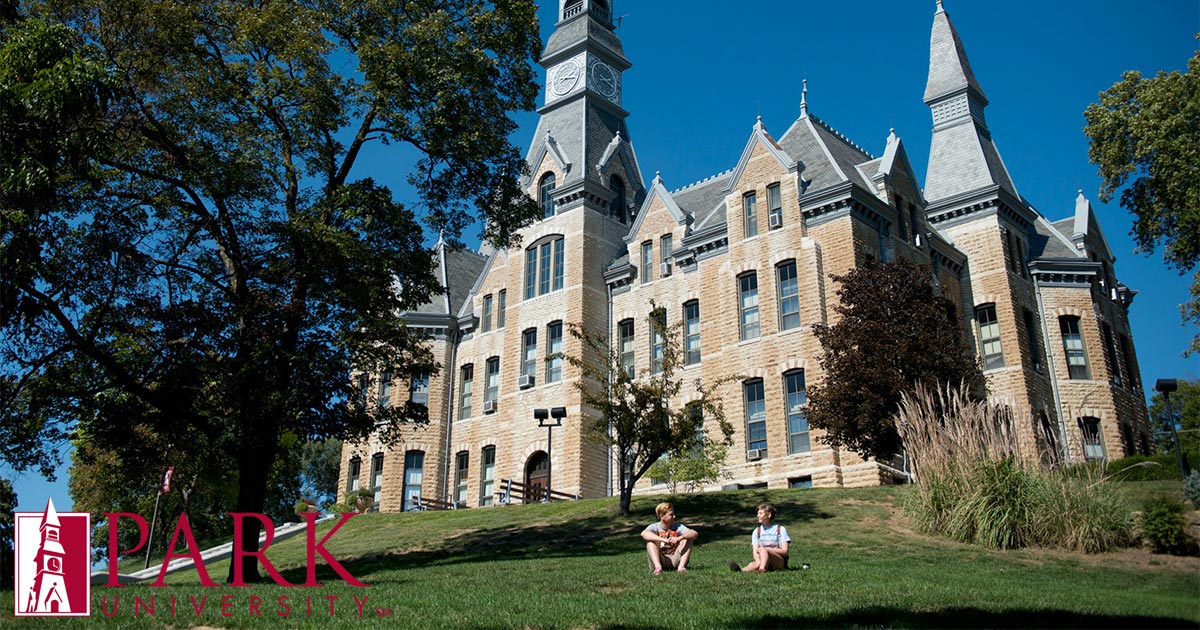
Park University is an open-access, private liberal arts institution in Parkville, Missouri, built on a mission of serving a diverse, often non-traditional student body. With a sprawling catalog of over 90 programs delivered online and at its flagship campus, it operates less as a selective academic fortress and more as an educational utility—pragmatic, flexible, and focused on practical outcomes for working adults and first-generation students. Its character is defined by accessibility and a sprawling online presence, though its traditional campus life offers a more conventional collegiate experience for a smaller residential cohort.
More details
- Undergrad enrollment
- 4,555
- In-state tuition
- $17,500
- Out-of-state tuition
- $17,500
- Graduation Rate
- 38%
- Programs Offered
- 90+
- Student-Faculty Ratio
- 13:1
- Median Earnings (10yr)
- $56,309
- First-Year Retention Rate
- 58%
Outcomes & value
Outcomes & value
- Median earnings (10 yr)
- $56,309
- Value (earnings ÷ net price)
- 2.7×
- Median debt at graduation
- $21,685
- Graduation rate
- 38%
- First-year retention
- 58%
- Reducing loan balance (3 yr)
- 48%
- Pell (lower-income) share
- 41%
- First-gen share (among federal-aid recipients)
- 48%
Financial health
2.4 / 3.0Meets the federal financial-responsibility standard
U.S. Dept. of Education Financial Responsibility Composite Score (FY2022-23). Scale −1.0 to 3.0; ≥1.5 meets the standard. Reported for private nonprofit & for-profit institutions only — public universities are state-backed and not scored, so this is a stability signal, not a ranking.
Top-earning majors
Median earnings by field of study (highest credential), ~2 years after completion.
- Computer Software and Media Applications$62,887
- Management Information Systems and Services$61,020
- Accounting and Related Services$53,810
- Computer Systems Networking and Telecommunications$53,358
- Human Resources Management and Services$45,383
- Health and Medical Administrative Services
Campus & location
Campus safety
- On-campus violent crimes (2024)
- 0
- Per 1,000 students
- 0.00
On-campus criminal offenses classed as violent (murder/non-negligent manslaughter, rape, robbery, aggravated assault) for the most recent reported year. Source: U.S. Dept. of Education Campus Safety and Security (Clery Act). Counts reflect what’s reported to the school, and urban campuses often report more partly due to non-student incidents nearby — read alongside campus size and setting, not as a standalone safety verdict.
Climate
- Pleasant days / yr
- 74
- Summer high
- 86°F
- Winter low
- 25°F
- Annual rain
- 47.5"
- Annual snow
- 18.1"
- Natural-hazard risk
- Relatively Low
Pleasant days counts days per year with a mean temperature of 55–75°F, a high at or below 90°F, a low at or above 45°F, and little precipitation — a transparent comfort measure, not a weighting we invented. Computed from Open-Meteo ERA5 daily history (2019–2023). Natural-hazard risk is the county’s composite rating from the FEMA National Risk Index.
Deep dive — research, future-scholar output & economic mobility
Research output
- Institutional h-index
- 256
- Scholarly works
- 5,524
Institutional research volume and impact from OpenAlex. The h-index reflects large research universities and will be low for teaching-focused liberal-arts colleges — not a measure of undergraduate quality.
Economic mobility
- Mobility rate
- 3.9%
- Bottom → top quintile
- 28%
- From bottom quintile
- 14%
Mobility rate = the share of students who both start in the bottom household-income quintile and reach the top quintile; bottom → top is that chance conditional on starting at the bottom. Source: Opportunity Insights Mobility Report Cards (Chetty, Friedman, Saez, Turner & Yagan). Reflects 1980–82 birth cohorts, so it’s directional, not current.
Quick answers
- How much does Park University cost?
- At Park University, the average net price (after aid) is about $21,032 per year. Actual cost varies with financial aid and residency.
- How many undergraduates attend Park University?
- Park University enrolls approximately 4,555 undergraduate students.
- Where is Park University located?
- Park University is located in Parkville, MO.
Admissions
Park University's admissions philosophy is one of near-universal access, positioning it as a stark contrast to selective liberal arts colleges. The process is rolling and notably non-competitive, with multiple sources citing a 100% . One source states that for the 2024 application year, the overall acceptance rate was 88.1%, with 6,300 applicants and 5,550 admitted, though another source lists an acceptance rate of 100%. The university does not appear to offer an Early Decision program that provides a significant admissions advantage, a common practice at more selective institutions. The admissions factors are not detailed in the provided sources, but the high acceptance rates suggest a focus on capacity and readiness rather than competitive screening. The regular admissions application deadline is rolling.
Academics
Park University defines itself as a private, nonprofit, liberal arts institution offering a vast and flexible academic portfolio. The university provides more than 60 accredited undergraduate majors and over 90 associate, bachelor's, master's, and certificate programs in total. This breadth allows students to tailor their education, with notable program areas including Business, Communication, Computer Science, Criminal Justice, Education, Healthcare, Health Sciences, and Social Sciences. The student-faculty ratio is 13:1, which suggests the potential for personalized attention in classrooms. However, the average freshman retention rate, a key indicator of student satisfaction and academic integration, is reported at 58%. This figure points to significant challenges in keeping first-year students engaged and progressing, which may be influenced by the university's open-access model and the many non-traditional, part-time students it serves.
Compare Park University
See colleges similar to Park University →Sources
- Common Data Set | Point Park University | Pittsburgh, PA
- Common Data Set | Office of Planning, Assessment, and ... - opair
- Common Data Set: Home
- Common Data Set - GradGPT
- Common Data Set Repository - College Transitions
- The Common Data Set: What It Is & How to Use It In College ...
- Park University (Park) - The Princeton Review College Rankings ...
- Park University Tuition, Acceptance Rate, & Academics - Sallie
- Point Park Class Profile | Point Park University | Pittsburgh, PA
- Park University - Tuition and Acceptance Rate - Peterson's
- Park University Admissions & Acceptance - Niche