Loading…
← All schools
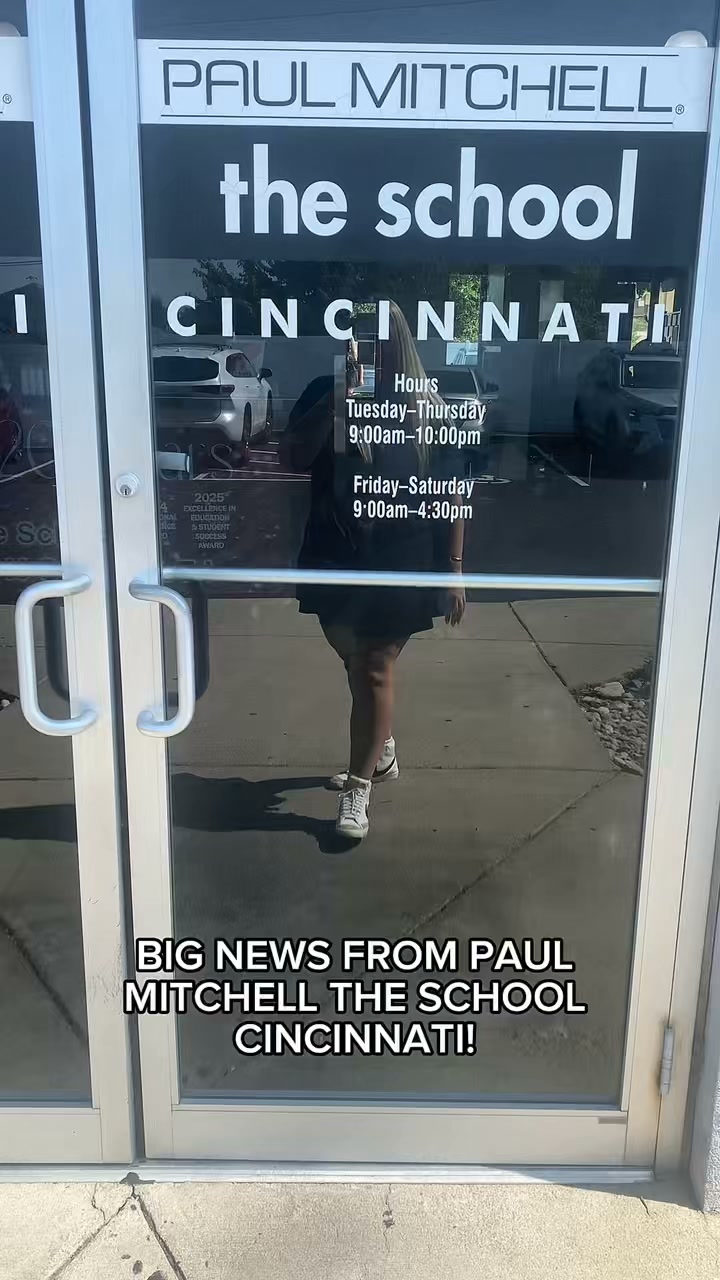
Paul Mitchell the School-Cincinnati
Cincinnati, OHprivate forprofitpaulmitchell.edu/cincinnati
Avg net price
$27,029
Earnings (10 yr)
$28,363
Acceptance & SAT from Common Data Set / IPEDS; net price, earnings & graduation from the U.S. Dept. of Education College Scorecard. Figures lag ~1–2 years — verify with the school.
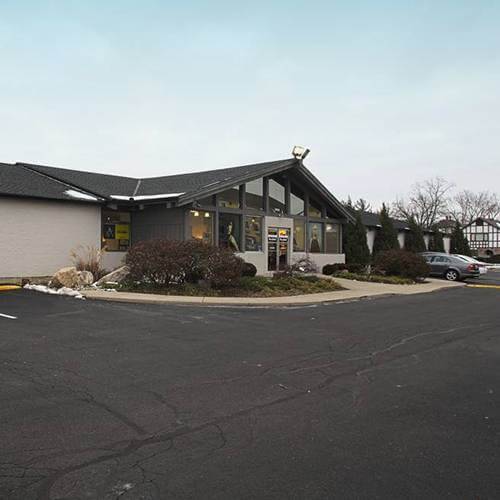
Paul Mitchell the School-Cincinnati is not a traditional liberal arts college but a focused, nationally accredited trade school for the beauty industry, operating under the banner of a globally recognized brand. Its singular purpose is to turn out licensed cosmetology professionals through an intensely hands-on curriculum, with a culture that emphasizes creativity, community, and salon-ready skills from day one. The school's metrics—high graduation rates, strong licensure pass rates, and a suburban campus of just a few hundred students—paint a picture of a practical, career-oriented education where the goal is a state license and a job, not a bachelor's degree.
More details
- Undergrad enrollment
- 246
- Top Major
- General Cosmetology
- Graduation Rate
- 70.43% (2024)
- Job Placement Rate
- 74.55% (2024)
- Licensure Pass Rate
- 90.77% (2024)
- Median Earnings (10yr)
- $28,363
- Student-to-Faculty Ratio
- 18:1
- First-Year Retention Rate
- 83%
Outcomes & value
Outcomes & value
- Median earnings (10 yr)
- $28,363
- Value (earnings ÷ net price)
- 1.0×
- Median debt at graduation
- $12,500
- Reducing loan balance (3 yr)
- 35%
- Pell (lower-income) share
- 47%
- First-gen share (among federal-aid recipients)
- 49%
Earnings = median of students working ~10 years after entry; debt = median of graduates. Value divides 10-yr earnings by one year’s net price — read it as earnings per dollar of annual cost, not a full lifetime ROI; it favors lower-cost schools. Source: U.S. Dept. of Education College Scorecard. Figures lag ~2 years and reflect all students, not your intended major.
Financial health
3.0 / 3.0Meets the federal financial-responsibility standard
U.S. Dept. of Education Financial Responsibility Composite Score (FY2022-23). Scale −1.0 to 3.0; ≥1.5 meets the standard. Reported for private nonprofit & for-profit institutions only — public universities are state-backed and not scored, so this is a stability signal, not a ranking.
Campus & location
Campus safety
- On-campus violent crimes (2024)
- 0
On-campus criminal offenses classed as violent (murder/non-negligent manslaughter, rape, robbery, aggravated assault) for the most recent reported year. Source: U.S. Dept. of Education Campus Safety and Security (Clery Act). Counts reflect what’s reported to the school, and urban campuses often report more partly due to non-student incidents nearby — read alongside campus size and setting, not as a standalone safety verdict.
Climate
- Pleasant days / yr
- 84
- Summer high
- 84°F
- Winter low
- 28°F
- Annual rain
- 44.1"
- Annual snow
- 15.1"
- Natural-hazard risk
- Relatively High
Pleasant days counts days per year with a mean temperature of 55–75°F, a high at or below 90°F, a low at or above 45°F, and little precipitation — a transparent comfort measure, not a weighting we invented. Computed from Open-Meteo ERA5 daily history (2019–2023). Natural-hazard risk is the county’s composite rating from the FEMA National Risk Index.
Quick answers
- How much does Paul Mitchell the School-Cincinnati cost?
- At Paul Mitchell the School-Cincinnati, the average net price (after aid) is about $27,029 per year. Actual cost varies with financial aid and residency.
- How many undergraduates attend Paul Mitchell the School-Cincinnati?
- Paul Mitchell the School-Cincinnati enrolls approximately 246 undergraduate students.
- Where is Paul Mitchell the School-Cincinnati located?
- Paul Mitchell the School-Cincinnati is located in Cincinnati, OH.
Admissions
Admission here is straightforward and non-selective, reflecting its mission as a career-focused trade school. The school has an of 100%, operating on what is effectively an open admission policy for applicants meeting basic requirements. There is no available data on SAT or ACT ranges, high school GPA expectations, or class rank, as these standardized academic metrics are not central to the admissions process for cosmetology training. The application fee is $25. The school does not offer Early Decision programs, and concepts like 'demonstrated interest'—a factor tracked by some traditional colleges—are not applicable in this context. The process is geared toward evaluating a prospective student's commitment to the beauty industry and their ability to undertake the program, rather than competing on academic pedigree.
Academics
The academic model is a laser-focused, single-track immersion into cosmetology. The school offers just three majors, with General Cosmetology dominating the landscape—it accounted for 121 of the degrees awarded in a recent year, with over 95% of those going to women. The curriculum is described as 'unique' and 'multifaceted,' designed explicitly to provide the hands-on training needed to become a licensed professional. Instruction happens in a practical, workshop-style environment, not lecture halls. The student-to-faculty ratio is 18:1, which allows for considerable direct supervision and technique correction, critical for a skill-based trade. The program is nationally accredited by the National Accrediting Commission of Career Arts & Sciences (NACCAS), the primary accreditor for cosmetology schools, which oversees and validates its educational standards and outcomes.
Compare Paul Mitchell the School-Cincinnati
vs Hillsdale Collegevs United States Coast Guard Academyvs William Woods Universityvs Drury University
See colleges similar to Paul Mitchell the School-Cincinnati →Sources
- Common Data Set 2025-2026
- Common Data Set Explorer 2026: Compare 100 Colleges
- Decoding the Common Data Set What You Need to Know for ...
- Common Data Set: Home
- Common Data Set Highlights: 2024 - 2025
- How To Use a Common Data Set
- Paul Mitchell the School - Cincinnati
- Paul Mitchell The School Cincinnati Acceptance Rate, SAT, ...
- Paul Mitchell The School Cincinnati Admissions - BigFuture
- Consumer Information | Paul Mitchell Cincinnati Ohio
- Blog - Paul Mitchell The School Cincinnati