Loading…
← All schools
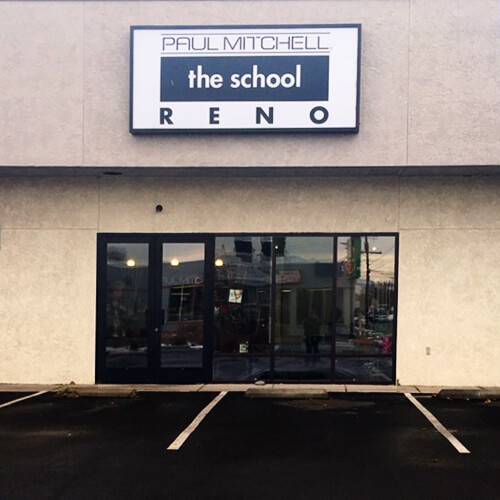
Paul Mitchell the School-Reno
Reno, NVprivate forprofitpaulmitchell.edu/reno
Paul Mitchell the School-Reno is a hyper-focused, single-purpose trade school for aspiring beauty professionals. It operates less like a traditional college and more like a direct pipeline into the salon industry, offering intensive, hands-on cosmetology training under a globally recognized brand. The school is defined by its accessible admissions, a culture steeped in salon etiquette and creativity, and a clear, vocational mission to get students licensed and working.
More details
- Undergrad enrollment
- 161
- Most Popular Major
- Cosmetology
- Licensure Pass Rate
- 93.10%
- Student-to-Faculty Ratio
- 10:1 (per comparable campus data)
- Graduation Rate (Program)
- 77.85%
- Job Placement Rate (Program)
- 96%
Outcomes & value
Outcomes & value
- Median debt at graduation
- $10,500
- Reducing loan balance (3 yr)
- 46%
- Pell (lower-income) share
- 47%
- First-gen share (among federal-aid recipients)
- 50%
Earnings = median of students working ~10 years after entry; debt = median of graduates. Value divides 10-yr earnings by one year’s net price — read it as earnings per dollar of annual cost, not a full lifetime ROI; it favors lower-cost schools. Source: U.S. Dept. of Education College Scorecard. Figures lag ~2 years and reflect all students, not your intended major.
Financial health
2.3 / 3.0Meets the federal financial-responsibility standard
U.S. Dept. of Education Financial Responsibility Composite Score (FY2022-23). Scale −1.0 to 3.0; ≥1.5 meets the standard. Reported for private nonprofit & for-profit institutions only — public universities are state-backed and not scored, so this is a stability signal, not a ranking.
Campus & location
Campus safety
- On-campus violent crimes (2024)
- 0
On-campus criminal offenses classed as violent (murder/non-negligent manslaughter, rape, robbery, aggravated assault) for the most recent reported year. Source: U.S. Dept. of Education Campus Safety and Security (Clery Act). Counts reflect what’s reported to the school, and urban campuses often report more partly due to non-student incidents nearby — read alongside campus size and setting, not as a standalone safety verdict.
Climate
- Pleasant days / yr
- 89
- Summer high
- 88°F
- Winter low
- 28°F
- Annual rain
- 15.1"
- Annual snow
- 43.2"
- Natural-hazard risk
- Relatively High
Pleasant days counts days per year with a mean temperature of 55–75°F, a high at or below 90°F, a low at or above 45°F, and little precipitation — a transparent comfort measure, not a weighting we invented. Computed from Open-Meteo ERA5 daily history (2019–2023). Natural-hazard risk is the county’s composite rating from the FEMA National Risk Index.
Quick answers
- How much does Paul Mitchell the School-Reno cost?
- At Paul Mitchell the School-Reno, the average net price (after aid) is about $27,899 per year. Actual cost varies with financial aid and residency.
- How many undergraduates attend Paul Mitchell the School-Reno?
- Paul Mitchell the School-Reno enrolls approximately 161 undergraduate students.
- Where is Paul Mitchell the School-Reno located?
- Paul Mitchell the School-Reno is located in Reno, NV.
Admissions
Admissions at Paul Mitchell the School-Reno is straightforward and accessible, reflecting its mission as a vocational trade school rather than a selective liberal arts college. While a specific for the Reno campus is not provided in the sources, data from other Paul Mitchell schools and related platforms indicate a highly inclusive process. For example, Paul Mitchell The School Saint Louis is reported to have a 90% , and the Reno campus is listed on College Decoded with a 100% acceptance rate. Similarly, the Pasadena campus is noted on Niche as having a 100% acceptance rate. This suggests the Reno school likely follows a similar open-access model, prioritizing a candidate's desire to enter the beauty industry over traditional academic metrics. The application fee is $25. The process appears designed to be a gateway for career-changers and recent high school graduates alike, with the primary hurdle being commitment to the program rather than competitive selection.
Academics
The academic offering is singular and intense: cosmetology. This is not a school of broad exploration but of deep, practical immersion. According to Niche, the most popular programs are Cosmetology (with 83 graduates), Nail Technician (48 graduates), and Cosmetology Instruction and Salon Management (2 graduates). MyMajors lists similar majors: Cosmetology/Cosmetologist, General; Nail Technician/Specialist and Manicurist; and Cosmetology, Barber/Styling, and Nail Instructor. College Raptor states that at the Reno campus, "only one major is offered: Cosmetology." The curriculum is entirely hands-on, designed to provide "real salon experience," as stated on the school's official page. The student-to-faculty ratio at the Normal, IL campus is 10:1, which likely reflects the intimate, workshop-style instruction found across the Paul Mitchell network, where students work directly on mannequins and live models under close supervision. The goal is mastery of technical skills—cutting, coloring, styling, nail care—required for state licensure.
Compare Paul Mitchell the School-Reno
vs Northwest Nazarene Universityvs Carroll Collegevs The College of Idahovs Oregon State University-Cascades Campus
See colleges similar to Paul Mitchell the School-Reno →Sources
- Common Data Set (CDS)
- Common Data Set: Home
- Paul Mitchell the School-Louisville - DFR Report HTML
- Common Data Set 2022-2023
- How To Use a Common Data Set
- Paul Mitchell the School-Clear Lake
- Paul Mitchell The School Saint Louis Admissions: SAT, ACT & GPA ...
- Paul Mitchell the School-Reno - College Decoded
- Paul Mitchell the School - Pasadena - Niche
- Paul Mitchell The School Normal Admissions - BigFuture
- Paul Mitchell the School-Normal - Data USA