Admit rate has ranged 67%–91% over the last 5 years — notably volatile. Source: IPEDS via Urban Institute.
Acceptance & SAT from Common Data Set / IPEDS; net price, earnings & graduation from the U.S. Dept. of Education College Scorecard. Figures lag ~1–2 years — verify with the school.
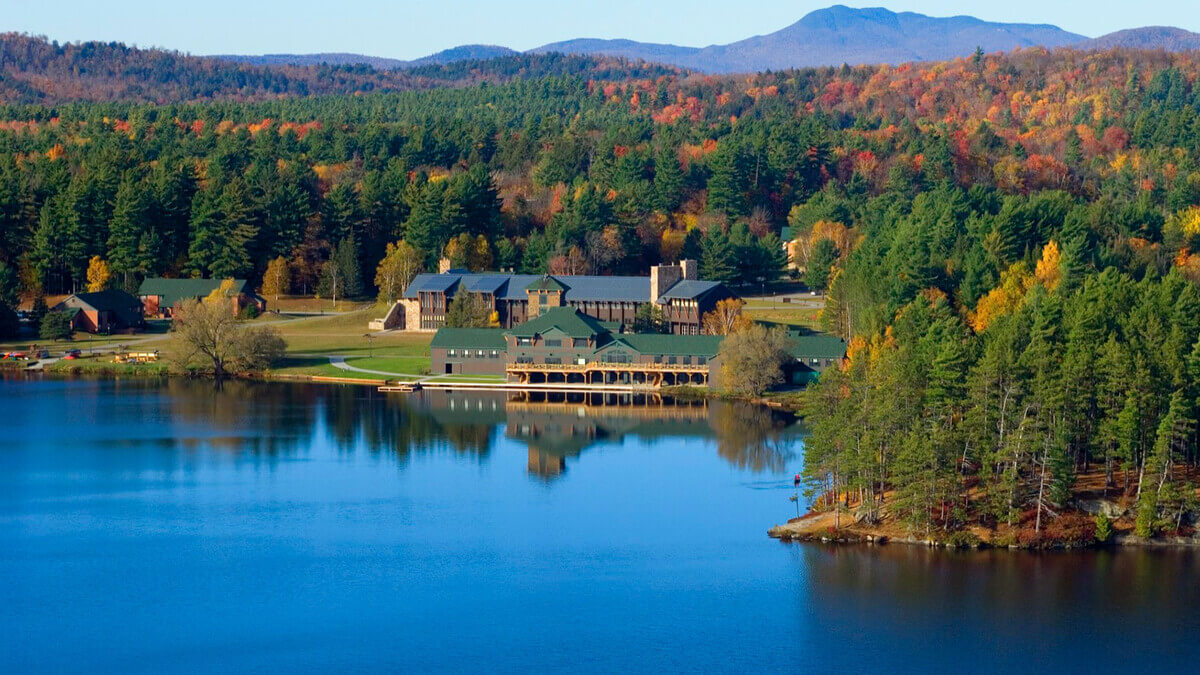
Paul Smith's College is not your typical liberal arts school; it's a rugged, hands-on outpost in the heart of the Adirondacks where learning happens as much in the field as in the classroom. The college has carved out a distinctive niche with its focus on natural resources, environmental science, and hospitality, attracting students who are as comfortable in hiking boots as they are in lecture halls. While its graduation rate suggests a challenging academic path, its recent enrollment surge and test-blind policy signal a college actively seeking students passionate about its unique, immersive mission.
Admission requirements
Test-optional — scores considered if submitted
Required
High school transcript
Grade point average
TOEFL (non-native English)
Considered (not required)
Class rank
Letters of recommendation
Test scores (SAT/ACT)
College-prep program
Demonstrated competencies
Source: IPEDS Admissions survey (2022) via Urban Institute. Covers formal factors only — it does not reflect essays, extracurriculars, or other holistic criteria.
More details
Undergrad enrollment
579
In-state tuition
$33,009
Out-of-state tuition
$33,009
Graduation Rate
51%
On-Campus Housing
89% of students
Application Policy
Test-Blind
Median Earnings (10yr)
$46,145
First-Year Aid Recipients
100% receive grant/scholarship aid
Outcomes & value
Outcomes & value
Median earnings (10 yr)
$46,145
Value (earnings ÷ net price)
1.7×
Median debt at graduation
$22,750
Graduation rate
51%
First-year retention
75%
Reducing loan balance (3 yr)
69%
Pell (lower-income) share
36%
First-gen share (among federal-aid recipients)
30%
Top-earning majors
Median earnings by field of study (highest credential), ~2 years after completion.
Forestry$38,289
Environmental/Natural Resources Management and Policy$31,996
Natural Resources Conservation and Research$28,598
Culinary Arts and Related Services$28,381
Wildlife and Wildlands Science and Management$25,774
Source: U.S. Dept. of Education College Scorecard (field-of-study earnings). Figures cover graduates who received federal aid and lag ~2 years; not all programs report data.
Campus & location
Campus safety
On-campus violent crimes (2024)
1
Per 1,000 students
1.66
On-campus criminal offenses classed as violent (murder/non-negligent manslaughter, rape, robbery, aggravated assault) for the most recent reported year. Source: U.S. Dept. of Education Campus Safety and Security (Clery Act). Counts reflect what’s reported to the school, and urban campuses often report more partly due to non-student incidents nearby — read alongside campus size and setting, not as a standalone safety verdict.
Climate
Pleasant days / yr
78
Summer high
73°F
Winter low
13°F
Annual rain
48.7"
Annual snow
79.4"
Natural-hazard risk
Relatively Low
Pleasant days counts days per year with a mean temperature of 55–75°F, a high at or below 90°F, a low at or above 45°F, and little precipitation — a transparent comfort measure, not a weighting we invented. Computed from Open-Meteo ERA5 daily history (2019–2023). Natural-hazard risk is the county’s composite rating from the FEMA National Risk Index.
Quick answers
What is the acceptance rate at Paul Smiths College of Arts and Science?
Paul Smiths College of Arts and Science's acceptance rate is approximately 77% (Paul Smiths, NY), based on the most recent figures we compiled from public and primary sources.
How much does Paul Smiths College of Arts and Science cost?
At Paul Smiths College of Arts and Science, the average net price (after aid) is about $26,683 per year. Actual cost varies with financial aid and residency.
How many undergraduates attend Paul Smiths College of Arts and Science?
Paul Smiths College of Arts and Science enrolls approximately 579 undergraduate students.
Where is Paul Smiths College of Arts and Science located?
Paul Smiths College of Arts and Science is located in Paul Smiths, NY.
Admissions
Paul Smith's College operates with a notably accessible admissions process, characterized by a high and a test-blind policy. The college accepts the Common Application and does not consider SAT or ACT scores in its decisions, focusing instead on other applicant credentials.
Selectivity: The admissions process is not highly selective. For the Fall 2025 cycle, the college reported a significant 30% increase in first-time, full-time freshman enrollment compared to the previous year, bucking national trends.
Application Profile: While specific GPA and test score ranges are not uniformly reported across authoritative sources, some third-party sites suggest an average high school GPA around 2.8 and SAT composite scores in the 920-1100 range. However, the official test-blind policy means these scores are not a primary factor.
Early Decision: The college offers an Early Decision option with a November 30th deadline. Data indicates the early acceptance rate is significantly higher than the regular rate, at 85.8%.
Yield: Of those admitted, a relatively modest portion choose to enroll, with a reported rate of 30.7%.
The admissions landscape here is defined by growth and accessibility, seeking students drawn to its specific, hands-on educational model rather than competing on prestige-based selectivity.
Earnings = median of students working ~10 years after entry; debt = median of graduates. Value divides 10-yr earnings by one year’s net price — read it as earnings per dollar of annual cost, not a full lifetime ROI; it favors lower-cost schools. Source: U.S. Dept. of Education College Scorecard. Figures lag ~2 years and reflect all students, not your intended major.
Academics at Paul Smith's are unabashedly practical and immersive, built around the slogan 'the college of sharp minds and calloused hands.' The curriculum is deeply experiential, with hands-on learning integrated into more than 20 degree programs spanning two-year and four-year options.
The college's identity is firmly rooted in the environment of its 14,000-acre Adirondack campus. Its most popular and signature programs are in natural resources, environmental science, fisheries, and wildlife science. This isn't theoretical study; it's fieldwork, internships, and research from day one. The faculty are described as being incredibly talented and wholly dedicated to each student, bringing real-world experience as authors, paleoclimatologists, musicians, and policymakers to their teaching. The college also offers a Master of Science in Natural Resources, catering to students seeking advanced, applied study in this core area.
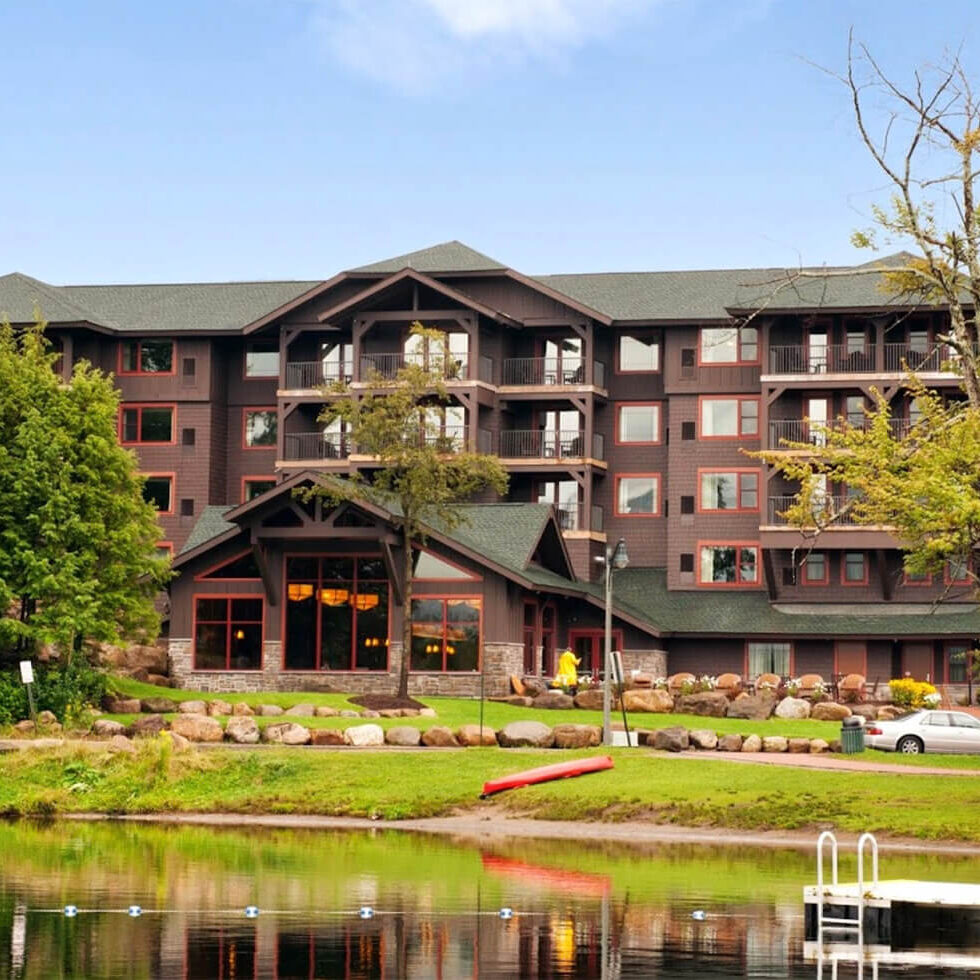
Life at Paul Smith's is defined by its remote, spectacular setting and the intensely close-knit community that such an environment fosters. The vast majority of students (89%) live on campus in college-owned housing, creating a residential experience where the boundaries between classroom, dorm, and wilderness blur. This fosters a small, supportive campus culture where students and faculty interact closely.
The college's own marketing captures the vibe perfectly: it's a place for 'big dreams' that are 'built by hand.' Student life is inherently shaped by the outdoor opportunities of the Adirondack Park—hiking, fishing, skiing, and environmental stewardship aren't just extracurriculars; they're part of the fabric of daily life. This attracts a specific type of student: one who is self-reliant, passionate about the environment, and comfortable in a small, rugged community far from urban centers.
Outcomes for Paul Smith's graduates reflect the college's specialized, hands-on mission. The most recent data shows a six-year graduation rate of 51%. Post-graduation earnings data from third-party sources varies, but the canonical figure for median earnings ten years after entry is $46,145.
It's important to contextualize these figures. The college's focus on fields like natural resources and environmental science leads to careers that are often mission-driven and may not top income charts initially, but provide essential skills for stewardship and management of natural resources. The outcomes speak to a path that is less about immediate high earnings and more about applied, impactful work in specific sectors.
Paul Smith's College is a private institution with a published that requires significant financial planning for most families. However, the college reports that 100% of its full-time beginning undergraduates receive some form of grant or scholarship aid.
The financial aid philosophy is need-based, with packages determined primarily by the Free Application for Federal Student Aid (FAFSA). The college offers a robust merit scholarship program for incoming freshmen, with awards ranging from $6,000 to $19,000 per year, renewable for up to four years. In addition to grants and scholarships, federal loan programs like Direct Unsubsidized Loans are part of the aid landscape. Students are encouraged to use the college's Calculator to get a personalized estimate of costs and aid.
Note on Aid Policy: A review of the provided source snippets does not contain explicit, authoritative statements from Paul Smith's College confirming a policy of meeting 100% of demonstrated financial need or of having a no-loan policy for any income bracket. The linked policy page for 'The Next 150 Pledge' appears to be for Smith College (MA), not Paul Smith's College (NY). Therefore, such policies cannot be attributed to Paul Smith's College based on the provided sources.
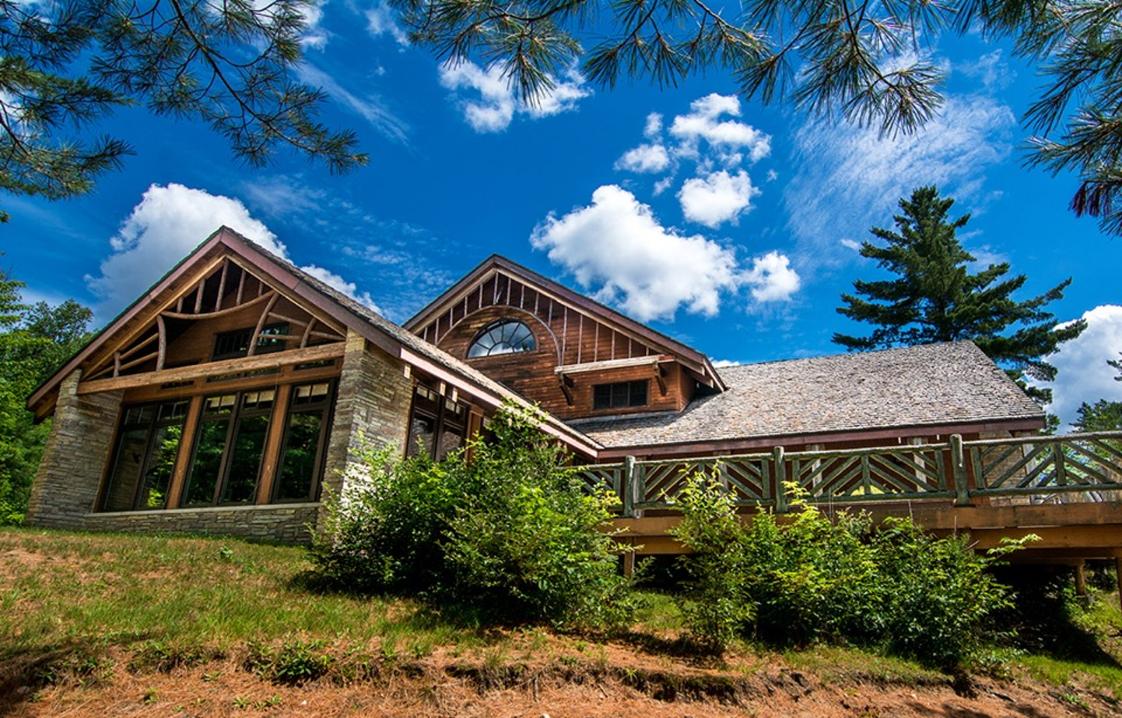
Paul Smith's College stands out as a defiantly singular institution in American higher education. It is less a traditional college campus and more a basecamp for applied environmental learning. Its identity is inextricably linked to its location—the 14,000-acre campus is the Adirondack classroom. This creates an educational experience that is visceral and immediate, where students studying forestry are literally walking among the trees they learn to manage, and those in fisheries science are sampling from the lakes on their doorstep.
This model attracts a self-selecting cohort of students who are often more comfortable in Carhartts than khakis, who value practical skills and environmental stewardship, and who thrive in a small, rugged, and intensely communal setting. While its graduation metrics suggest the path is demanding, its recent enrollment growth indicates a renewed resonance for its 'learn by doing' philosophy. In a landscape of homogenized liberal arts curricula, Paul Smith's offers an unapologetically specific, hands-on, and place-based education for those who want their college experience to be as much about building a campfire as building a resume.
Paul Smiths College of Arts and Science seal · sourcePaul Smiths College of Arts and Science — Admissions, Tuition & Acceptance Rate | Appily · sourcePaul Smiths College of Arts and Science (Top-Ranked Community College for 2026) - Paul Smiths, NY · sourceIn-Person - Paul Smith's College · source