Loading…
← All schools
Pennco Tech-Blackwood
Blackwood, NJprivate forprofitpenncotech.edu
Avg net price
$22,671
Earnings (10 yr)
$42,013
Acceptance & SAT from Common Data Set / IPEDS; net price, earnings & graduation from the U.S. Dept. of Education College Scorecard. Figures lag ~1–2 years — verify with the school.
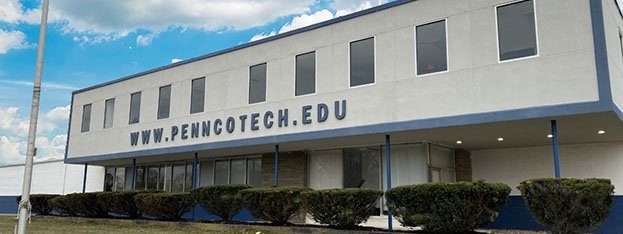
Pennco Tech-Blackwood isn't a traditional college; it's a tightly focused trade school on a 12-acre campus in New Jersey that operates with the pragmatic, no-frills ethos of a career-training bootcamp. With an open admissions policy and a student body under 1,000, it delivers concentrated programs in automotive, diesel, and healthcare fields, boasting graduation and retention rates that punch above the weight of many for-profit institutions. This is a place for hands-on learners who want a direct, accelerated path into skilled trades, not a broad liberal arts experience.
More details
- Undergrad enrollment
- 875
- Top Major
- Electrical and Power Transmission Installers / Automotive Mechanics
- Campus Size
- 12 acres, 124,708+ sq. ft.
- Graduation Rate
- 68.6%
- Student Body Size
- Under 1,000
- First-Year Retention
- 93.2%
- Median Earnings (10yr)
- $42,013
Outcomes & value
Outcomes & value
- Median earnings (10 yr)
- $42,013
- Value (earnings ÷ net price)
- 1.9×
- Median debt at graduation
- $8,331
- Reducing loan balance (3 yr)
- 37%
- Pell (lower-income) share
- 71%
- First-gen share (among federal-aid recipients)
- 58%
Earnings = median of students working ~10 years after entry; debt = median of graduates. Value divides 10-yr earnings by one year’s net price — read it as earnings per dollar of annual cost, not a full lifetime ROI; it favors lower-cost schools. Source: U.S. Dept. of Education College Scorecard. Figures lag ~2 years and reflect all students, not your intended major.
Campus & location
Campus safety
- On-campus violent crimes (2024)
- 0
On-campus criminal offenses classed as violent (murder/non-negligent manslaughter, rape, robbery, aggravated assault) for the most recent reported year. Source: U.S. Dept. of Education Campus Safety and Security (Clery Act). Counts reflect what’s reported to the school, and urban campuses often report more partly due to non-student incidents nearby — read alongside campus size and setting, not as a standalone safety verdict.
Climate
- Pleasant days / yr
- 86
- Summer high
- 85°F
- Winter low
- 30°F
- Annual rain
- 50.3"
- Annual snow
- 11.1"
- Natural-hazard risk
- Relatively Moderate
Pleasant days counts days per year with a mean temperature of 55–75°F, a high at or below 90°F, a low at or above 45°F, and little precipitation — a transparent comfort measure, not a weighting we invented. Computed from Open-Meteo ERA5 daily history (2019–2023). Natural-hazard risk is the county’s composite rating from the FEMA National Risk Index.
Quick answers
- How much does Pennco Tech-Blackwood cost?
- At Pennco Tech-Blackwood, the average net price (after aid) is about $22,671 per year. Actual cost varies with financial aid and residency.
- How many undergraduates attend Pennco Tech-Blackwood?
- Pennco Tech-Blackwood enrolls approximately 875 undergraduate students.
- Where is Pennco Tech-Blackwood located?
- Pennco Tech-Blackwood is located in Blackwood, NJ.
Admissions
Pennco Tech-Blackwood maintains an open admissions policy, meaning virtually all secondary school graduates or students with GED equivalency diplomas are admitted. This is reflected in its reported 100% . The school does not appear to have an Early Decision program, and its admissions process does not consider standardized test scores like the SAT or ACT—the policy for these is listed as 'unknown.' There is no indication from the provided sources that demonstrated interest is a factor in admissions decisions. The process is designed for accessibility, focusing on enrolling students who seek career training rather than selecting for academic pedigree.
Academics
The academic model is singularly career-focused. Pennco Tech offers 'robust career-training programs for in-demand professions in healthcare, automotive, and more.' While one source lists seven majors, another specifies that the Blackwood campus primarily focuses on fields like Automobile/Automotive Mechanics Technology/Technician and , which is its top major. Programs are intensive and hands-on, with students required to maintain a grade point average of at least 70% to meet Satisfactory Academic Progress. The student-to-faculty ratio is reported variably as 24:1 and 13:1, suggesting a generally small-class, workshop-style environment. The curriculum is built for completion, not exploration, with a clear emphasis on mastering a specific trade skill set.
Compare Pennco Tech-Blackwood
See colleges similar to Pennco Tech-Blackwood →Sources
- Common Data Set: Home
- [PDF] Common Data Set 2025-2026 - University of Cincinnati
- [PDF] Common Data Set 2021-2022 - Colorado Department of Education
- How To Use a Common Data Set - The College Solution
- Common Data Set (CDS) | Institutional Research
- Common Data Set - Analytics & Institutional Effectiveness
- Pennco Tech - Blackwood - Niche
- Pennco Tech-Blackwood Statistics - Overgrad
- Pennco Tech-Blackwood - Trade Colleges
- Pennco Tech-Bristol - Tuition and Acceptance Rate - Peterson's