Loading…
← All schools
Pennsylvania Academy of the Fine Arts
Philadelphia, PAprivate nonprofitpafa.org
Avg net price
$42,454
Earnings (10 yr)
$29,881
Graduation rate
58%
Admit rate has ranged 84%–91% over the last 5 years. Source: IPEDS via Urban Institute.
Acceptance & SAT from Common Data Set / IPEDS; net price, earnings & graduation from the U.S. Dept. of Education College Scorecard. Figures lag ~1–2 years — verify with the school.
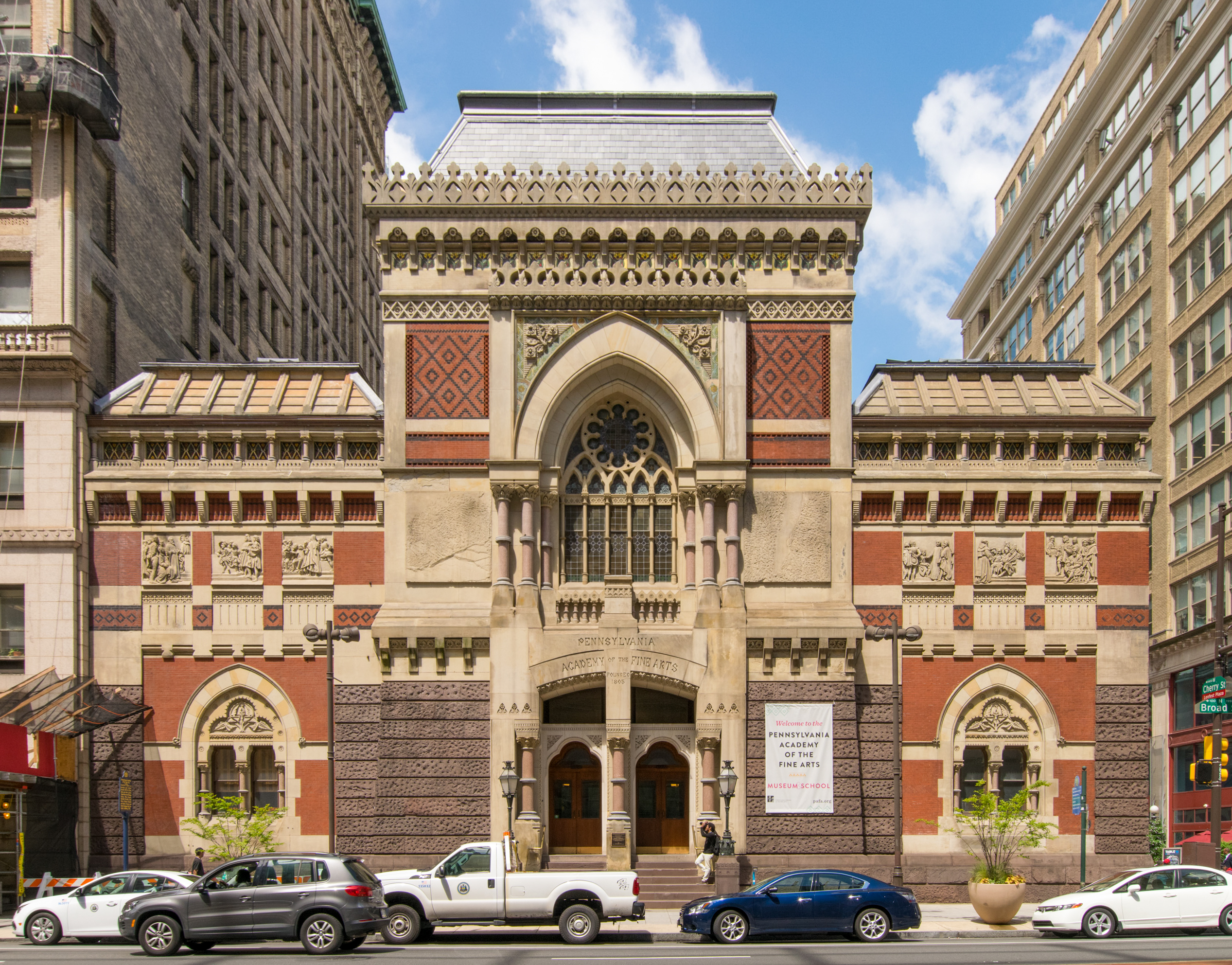
The Pennsylvania Academy of the Fine Arts is a singular, historic institution—America's first art museum and art school, founded in 1805—now in a state of profound transition. For generations, it offered an intimate, studio-focused education, but it will cease offering its Bachelor of Fine Arts and Master of Fine Arts degrees at the end of the 2024-25 academic year. This closure casts a shadow over its current identity, making it a school defined by its past prestige and an uncertain future, even as it maintains a high acceptance rate for its final cohorts.
Admission requirements
Test-blind — scores not considered
Required
- High school transcript
- Grade point average
- Demonstrated competencies
- TOEFL (non-native English)
Considered (not required)
- Letters of recommendation
Source: IPEDS Admissions survey (2022) via Urban Institute. Covers formal factors only — it does not reflect essays, extracurriculars, or other holistic criteria.
More details
- Undergrad enrollment
- 23
- In-state tuition
- $44,600
- Out-of-state tuition
- $44,600
- Status
- Degree programs ending 2025
- Founding Year
- 1805
- Graduation Rate
- 58%
- Demonstrated Interest
- Not considered
- Median Earnings (10yr)
- $29,881
Outcomes & value
Outcomes & value
- Median earnings (10 yr)
- $29,881
- Value (earnings ÷ net price)
- 0.7×
- Median debt at graduation
- $22,309
- Graduation rate
- 58%
- First-year retention
- —
- Reducing loan balance (3 yr)
- 55%
- Pell (lower-income) share
- 35%
- Endowment / student
- $1,151,339
Earnings = median of students working ~10 years after entry; debt = median of graduates. Value divides 10-yr earnings by net price — read it as earnings per dollar of annual cost, not a full lifetime ROI; it favors lower-cost schools. Source: U.S. Dept. of Education College Scorecard. Figures lag ~2 years and reflect all students, not your intended major.
Financial health
2.2 / 3.0Meets the federal financial-responsibility standard
U.S. Dept. of Education Financial Responsibility Composite Score (FY2022-23). Scale −1.0 to 3.0; ≥1.5 meets the standard. Reported for private nonprofit & for-profit institutions only — public universities are state-backed and not scored, so this is a stability signal, not a ranking.
Top-earning majors
Median earnings by field of study (highest credential), ~2 years after completion.
- Fine and Studio Arts$19,749
Source: U.S. Dept. of Education College Scorecard (field-of-study earnings). Figures cover graduates who received federal aid and lag ~2 years; not all programs report data.
Campus & location
Campus safety
- On-campus violent crimes (2024)
- 0
- Per 1,000 students
- 0.00
On-campus criminal offenses classed as violent (murder/non-negligent manslaughter, rape, robbery, aggravated assault) for the most recent reported year. Source: U.S. Dept. of Education Campus Safety and Security (Clery Act). Counts reflect what’s reported to the school, and urban campuses often report more partly due to non-student incidents nearby — read alongside campus size and setting, not as a standalone safety verdict.
Climate
- Pleasant days / yr
- 95
- Summer high
- 85°F
- Winter low
- 30°F
- Annual rain
- 38.2"
- Annual snow
- 12.7"
- Natural-hazard risk
- Very High
Pleasant days counts days per year with a mean temperature of 55–75°F, a high at or below 90°F, a low at or above 45°F, and little precipitation — a transparent comfort measure, not a weighting we invented. Computed from Open-Meteo ERA5 daily history (2019–2023). Natural-hazard risk is the county’s composite rating from the FEMA National Risk Index.
Quick answers
- How much does Pennsylvania Academy of the Fine Arts cost?
- At Pennsylvania Academy of the Fine Arts, the average net price (after aid) is about $42,454 per year. Actual cost varies with financial aid and residency.
- How many undergraduates attend Pennsylvania Academy of the Fine Arts?
- Pennsylvania Academy of the Fine Arts enrolls approximately 23 undergraduate students.
- Where is Pennsylvania Academy of the Fine Arts located?
- Pennsylvania Academy of the Fine Arts is located in Philadelphia, PA.
Admissions
PAFA's admissions process is notably accessible, especially in its final years of operation. For the 2023 cycle, the school received 192 undergraduate applications and admitted the vast majority, resulting in an 87.5% . The number of applicants grew by nearly 5% that year, while admissions grew by just 0.6%. Other sources corroborate this highly inclusive approach, citing acceptance rates of 92% and 93%. This stands in stark contrast to the selectivity one might expect from an institution with a historic relationship with the University of Pennsylvania and a storied reputation. The process is portfolio-driven, with the Admissions Committee reviewing all applications and making decisions based on the overall strength of the application. For students certain of their choice, an Early Decision option exists, with one source reporting a 100% acceptance rate for that binding path. Demonstrated interest—tracking a prospective student's engagement with the school—is explicitly marked as "not considered" in Section C7 for many institutions, a practice that likely applies to PAFA as well.
Compare Pennsylvania Academy of the Fine Arts
See colleges similar to Pennsylvania Academy of the Fine Arts →Sources
- Pennsylvania Academy of the Fine Arts
- College for Creative Studies - DFR Report HTML
- Common Data Set 2024-25
- Pennsylvania Academy of the Fine Arts - Tuition and Acceptance Rate
- Common Data Set: Home
- Pennsylvania Academy of the Fine Arts Admissions
- Pennsylvania Academy of the Fine Arts - Sallie
- Pennsylvania Academy of the Fine Arts Chances Calculator
- Is PAFA art school as good as it sounds? I'd think with the relationship with ...