Loading…
← All schools
Pennsylvania College of Technology
Williamsport, PApublicpct.edu
Avg net price
$25,110
Earnings (10 yr)
$52,567
Graduation rate
53%
Acceptance & SAT from Common Data Set / IPEDS; net price, earnings & graduation from the U.S. Dept. of Education College Scorecard. Figures lag ~1–2 years — verify with the school.
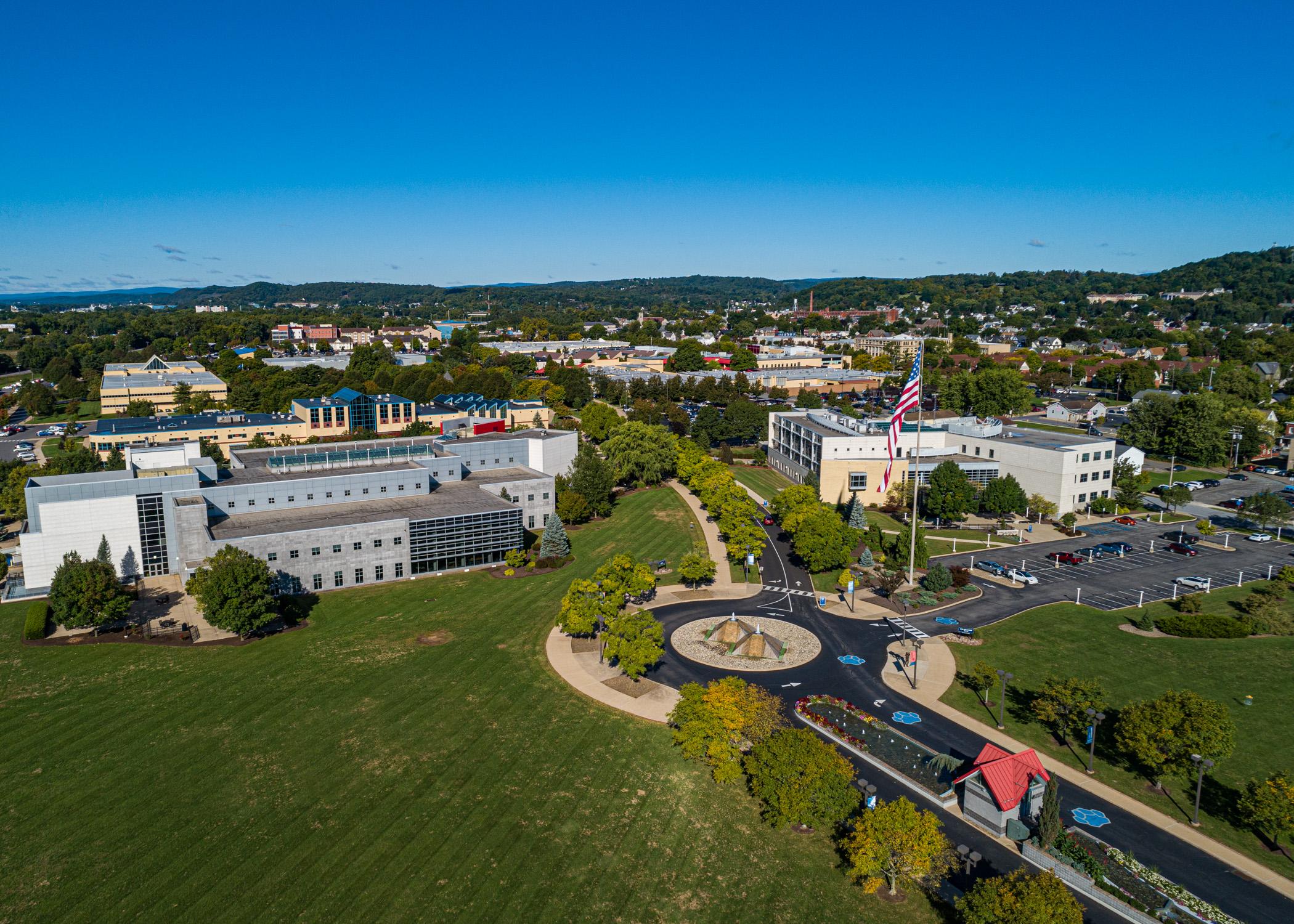
Pennsylvania College of Technology isn't your typical liberal arts college—it's a gritty, hands-on trade school on steroids, where students weld, build, code, and nurse their way to high-demand careers. As a special mission affiliate of Penn State, it offers a singular, industry-focused education where a 98% graduate placement rate is the real headline, not the acceptance rate. Think of it as a finishing school for the skilled trades and applied technologies, set in the blue-collar heart of Williamsport, Pennsylvania.
More details
- Undergrad enrollment
- 4,464
- In-state tuition
- $18,240
- Out-of-state tuition
- $25,980
- Graduation Rate
- 53%
- Median Earnings (10yr)
- $52,567
- Graduate Placement Rate
- 98%
- Financial Aid Recipients
- 67-68% of first-year students
- First-Year Retention Rate
- 81%
Outcomes & value
Outcomes & value
- Median earnings (10 yr)
- $52,567
- Value (earnings ÷ net price)
- 2.1×
- Median debt at graduation
- $23,961
- Graduation rate
- 53%
- First-year retention
- 81%
- Reducing loan balance (3 yr)
- 65%
- Pell (lower-income) share
- 33%
- First-gen share (among federal-aid recipients)
- 36%
Top-earning majors
Median earnings by field of study (highest credential), ~2 years after completion.
- Engineering/Engineering-Related Technologies/Technicians, Other$67,660
- Building/Construction Finishing, Management, and Inspection$67,660
- Registered Nursing, Nursing Administration, Nursing Research and Clinical Nursing$64,990
- Industrial Production Technologies/Technicians$60,485
- Civil Engineering Technologies/Technicians$52,941
Campus & location
Campus safety
- On-campus violent crimes (2024)
- 2
- Per 1,000 students
- 0.44
On-campus criminal offenses classed as violent (murder/non-negligent manslaughter, rape, robbery, aggravated assault) for the most recent reported year. Source: U.S. Dept. of Education Campus Safety and Security (Clery Act). Counts reflect what’s reported to the school, and urban campuses often report more partly due to non-student incidents nearby — read alongside campus size and setting, not as a standalone safety verdict.
Climate
- Pleasant days / yr
- 91
- Summer high
- 82°F
- Winter low
- 24°F
- Annual rain
- 46.7"
- Annual snow
- 31.2"
- Natural-hazard risk
- Relatively Low
Pleasant days counts days per year with a mean temperature of 55–75°F, a high at or below 90°F, a low at or above 45°F, and little precipitation — a transparent comfort measure, not a weighting we invented. Computed from Open-Meteo ERA5 daily history (2019–2023). Natural-hazard risk is the county’s composite rating from the FEMA National Risk Index.
Deep dive — research, future-scholar output & economic mobility
Economic mobility
- Mobility rate
- 1.6%
- Bottom → top quintile
- 19%
- From bottom quintile
- 8%
Mobility rate = the share of students who both start in the bottom household-income quintile and reach the top quintile; bottom → top is that chance conditional on starting at the bottom. Source: Opportunity Insights Mobility Report Cards (Chetty, Friedman, Saez, Turner & Yagan). Reflects 1980–82 birth cohorts, so it’s directional, not current.
Quick answers
- How much does Pennsylvania College of Technology cost?
- At Pennsylvania College of Technology, the average net price (after aid) is about $25,110 per year. Actual cost varies with financial aid and residency.
- How many undergraduates attend Pennsylvania College of Technology?
- Pennsylvania College of Technology enrolls approximately 4,464 undergraduate students.
- Where is Pennsylvania College of Technology located?
- Pennsylvania College of Technology is located in Williamsport, PA.
Admissions
Getting into Penn College is more about demonstrating readiness for a hands-on curriculum than competing in an academic arms race. The process is notably accessible, with reported ranging from 74% to 100%, placing it firmly in the 'less selective' category. The school is , meaning SAT and ACT scores are not required for admission. While specific GPA ranges aren't uniformly detailed across sources, one report indicates that among admitted students, 18% had a GPA of 3.75 or higher, 16% were in the 3.50–3.74 range, and 13% were between 3.25–3.49. The admissions office appears to prioritize factors directly relevant to its technical mission; however, none of the provided sources contain a Penn College-specific (C7) to confirm the official consideration of factors like class rank, recommendations, or demonstrated interest. The process seems designed to identify students prepared for its unique, applied academic environment.
Compare Pennsylvania College of Technology
vs SUNY Brockportvs Bowie State Universityvs United States Military Academyvs Slippery Rock University of Pennsylvania
See colleges similar to Pennsylvania College of Technology →Sources
- Institutional Research Data
- Common Data Set | Office of Planning, Assessment, and ...
- Common Data Set Explorer 2026: Compare 100 Colleges
- Common Data Set (CDS) Penn
- Common Data Set: Home
- Common Data Set | Institutional Research and Analytics
- Pennsylvania College of Technology Admissions - BigFuture
- Pennsylvania College of Technology Admissions
- Pennsylvania College of Technology SAT Scores and GPA
- Pennsylvania College of Technology