Loading…
← All schools
Pennsylvania State University-Penn State Fayette- Eberly
Lemont Furnace, PApublicfayette.psu.edu
Acceptance
95%
SAT 25–75
1120–1250
Avg net price
$14,596
Earnings (10 yr)
$63,435
Graduation rate
39%
Admit rate has ranged 81%–92% over the last 2 years — notably volatile, though the latest figure above (95%) falls outside that window. Source: IPEDS via Urban Institute.
Acceptance & SAT from Common Data Set / IPEDS; net price, earnings & graduation from the U.S. Dept. of Education College Scorecard. Figures lag ~1–2 years — verify with the school.
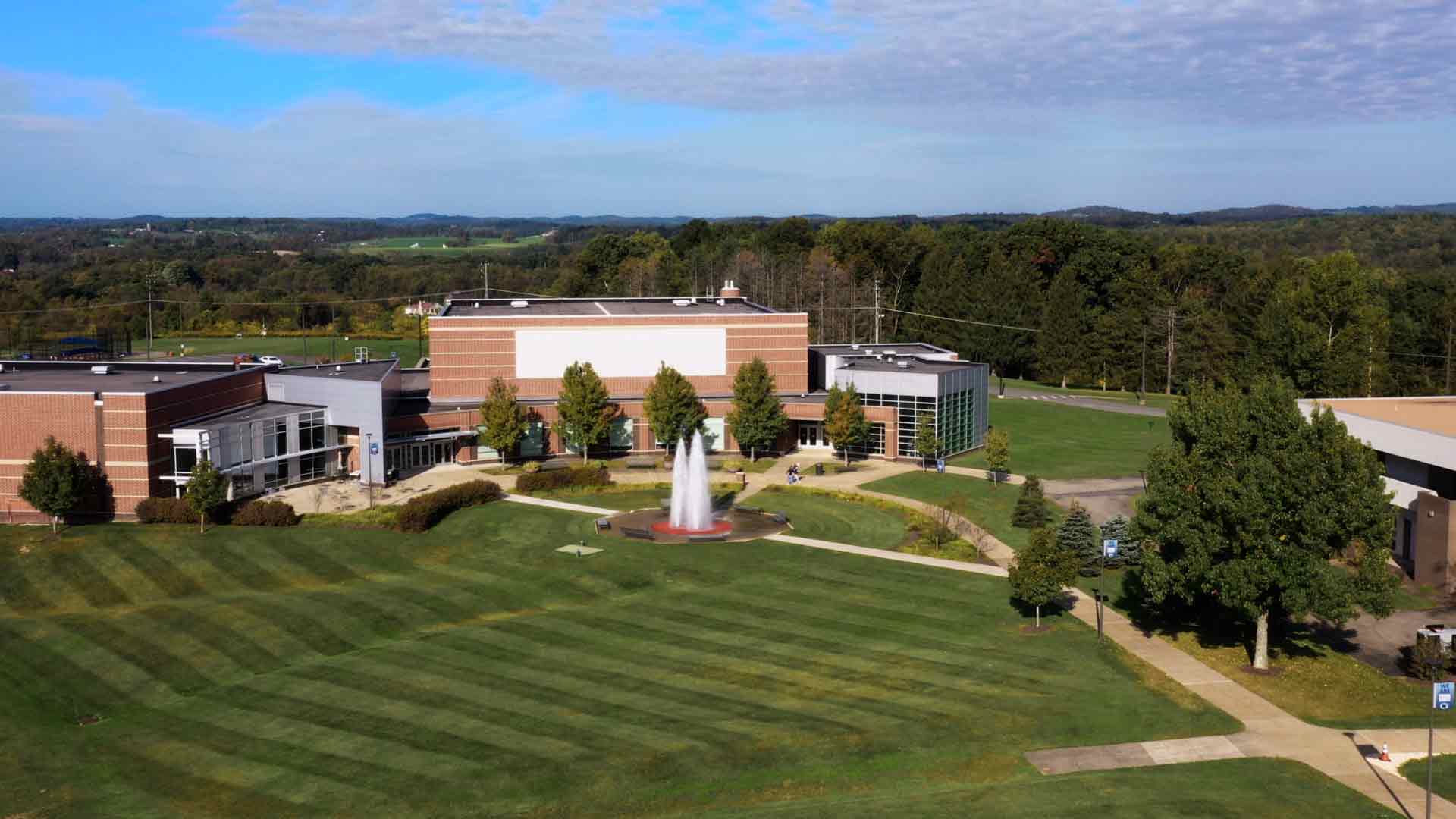
Penn State Fayette–Eberly is the practical, accessible, and deeply local gateway to the vast Penn State system. With an open admissions policy and a student body of just over 400, it offers a high-touch, community-college-like environment where students can start a Penn State degree at a fraction of the main campus cost, often with the explicit plan to transition to University Park after two years. This is a campus built for first-generation college-goers, commuters, and career-focused students from the surrounding Pennsylvania counties, offering a direct, low-stakes on-ramp to a Big Ten credential.
Admission requirements
Test-optional — scores considered if submitted
Required
- High school transcript
- Grade point average
- TOEFL (non-native English)
Considered (not required)
- Test scores (SAT/ACT)
- College-prep program
Source: IPEDS Admissions survey (2022) via Urban Institute. Covers formal factors only — it does not reflect essays, extracurriculars, or other holistic criteria.
More details
- Undergrad enrollment
- 402
- In-state tuition
- $14,408
- Out-of-state tuition
- $24,134
- Graduation Rate
- 39%
- Most Popular Major
- Registered Nursing
- First-Year Retention
- 78%
- Student-Faculty Ratio
- 10:1
- Median Earnings (10yr)
- $63,435
Outcomes & value
Outcomes & value
- Median earnings (10 yr)
- $63,435
- Value (earnings ÷ net price)
- 4.3×
- Median debt at graduation
- $25,000
- Graduation rate
- 39%
- First-year retention
- 78%
- Reducing loan balance (3 yr)
- 68%
- Pell (lower-income) share
- 39%
- First-gen share (among federal-aid recipients)
- 29%
Top-earning majors
Median earnings by field of study (highest credential), ~2 years after completion.
- Registered Nursing, Nursing Administration, Nursing Research and Clinical Nursing$69,419
- Management Information Systems and Services$59,172
- Management Sciences and Quantitative Methods$45,584
- Business/Commerce, General$40,538
- Business/Corporate Communications$39,909
- Criminal Justice and Corrections
Campus & location
Campus safety
- On-campus violent crimes (2024)
- 0
On-campus criminal offenses classed as violent (murder/non-negligent manslaughter, rape, robbery, aggravated assault) for the most recent reported year. Source: U.S. Dept. of Education Campus Safety and Security (Clery Act). Counts reflect what’s reported to the school, and urban campuses often report more partly due to non-student incidents nearby — read alongside campus size and setting, not as a standalone safety verdict.
Climate
- Pleasant days / yr
- 94
- Summer high
- 81°F
- Winter low
- 28°F
- Annual rain
- 53.4"
- Annual snow
- 26.9"
- Natural-hazard risk
- Relatively Moderate
Pleasant days counts days per year with a mean temperature of 55–75°F, a high at or below 90°F, a low at or above 45°F, and little precipitation — a transparent comfort measure, not a weighting we invented. Computed from Open-Meteo ERA5 daily history (2019–2023). Natural-hazard risk is the county’s composite rating from the FEMA National Risk Index.
Quick answers
- What is the acceptance rate at Pennsylvania State University-Penn State Fayette- Eberly?
- Pennsylvania State University-Penn State Fayette- Eberly's acceptance rate is approximately 95% (Lemont Furnace, PA), based on the most recent figures we compiled from public and primary sources.
- What SAT score do you need for Pennsylvania State University-Penn State Fayette- Eberly?
- Admitted students at Pennsylvania State University-Penn State Fayette- Eberly typically score 1120–1250 on the SAT (the middle-50% range). Scores outside this band are still admitted, especially with strong applications.
- How much does Pennsylvania State University-Penn State Fayette- Eberly cost?
- At Pennsylvania State University-Penn State Fayette- Eberly, the average net price (after aid) is about $14,596 per year. Actual cost varies with financial aid and residency.
- How many undergraduates attend Pennsylvania State University-Penn State Fayette- Eberly?
- Pennsylvania State University-Penn State Fayette- Eberly enrolls approximately 402 undergraduate students.
- Where is Pennsylvania State University-Penn State Fayette- Eberly located?
- Pennsylvania State University-Penn State Fayette- Eberly is located in Lemont Furnace, PA.
Admissions
Admissions at Penn State Fayette are best described as open-access, designed to provide a pathway into the Penn State system for a broad range of students from the region. The process is straightforward and non-selective. For the Fall 2024 cycle, the campus received 728 undergraduate applications and accepted 695, resulting in an of 95.5%. The admitted student profile suggests a solid, if not highly competitive, academic background: the middle 50% SAT range is 1080–1265, with a Math range of 540–630 and an Evidence-Based Reading and Writing range of 540–630. The average high school GPA of admitted students is 3.48. Notably, only about 13% of accepted students submitted SAT scores, indicating a policy that many applicants utilize. The campus does not appear to have a binding Early Decision program, and demonstrated interest is not a formal factor in admissions. The primary mission is accessibility, making it a realistic option for students who may not meet the more competitive thresholds of Penn State's flagship campus.
Compare Pennsylvania State University-Penn State Fayette- Eberly
vs Thaddeus Stevens College of Technologyvs CUNY Graduate School and University Centervs SUNY College at Potsdamvs SUNY at Fredonia
See colleges similar to Pennsylvania State University-Penn State Fayette- Eberly →Sources
- Pennsylvania State University-Penn State Fayette- Eberly - IPEDS
- Penn State Fayette | Fayette County PA
- Penn State Fayette, The Eberly Campus Admissions - BigFuture
- Pennsylvania State University-Penn State Fayette- Eberly - Data USA
- What is Penn State Fayette campus like for computer science ...
- Pennsylvania State University-Penn State Brandywine: Enrollment ...
- Penn State Fayette, The Eberly Campus SAT Scores and GPA
- Penn State Fayette, The Eberly Campus - The Princeton Review
- Pennsylvania State University-Penn State Fayette - College Raptor