Loading…
← All schools
Pets Playground Grooming School
Pompano Beach, FLprivate forprofitwww.petsplayground.edu/
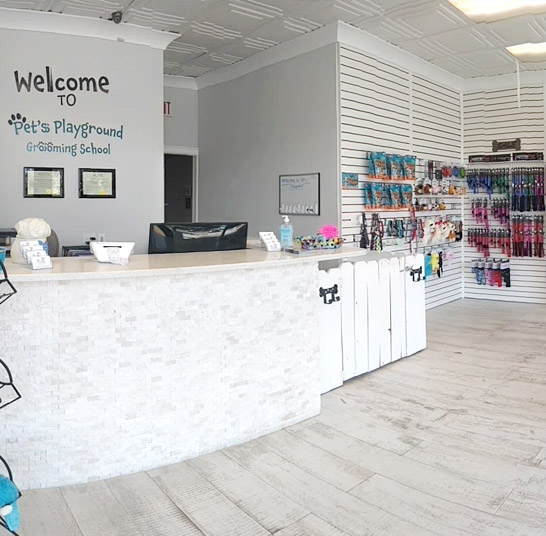
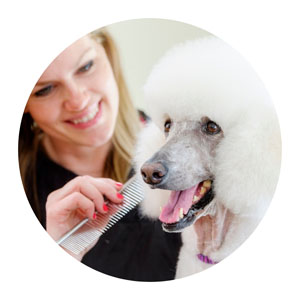
Pets Playground Grooming School is a tiny, intensely practical trade school in Pompano Beach, Florida, with a singular focus: turning animal lovers into professional groomers in a matter of months. With an open-door admissions policy and a student body of just over 20, it offers a no-frills, hands-on education where the curriculum is the clippers and the classroom is a working salon. Its claim to fame is being one of only two pet grooming schools in the country accredited to offer federal financial aid, making it a rare, accessible gateway into a hands-on trade.
More details
- Undergrad enrollment
- 22
- Setting
- Urban (Pompano Beach, FL)
- Programs
- 300-hour & 600-hour Pet Stylist
- Accreditation
- ACCSC (Title IV Eligible)
- Graduation Rate
- 85%
- Student Body Gender
- 77.3% women
- Student Demographics
- 50% White, 40.9% Hispanic/Latino, 4.55% Black
- Median Earnings (1yr)
- $36,427
Outcomes & value
Outcomes & value
- Pell (lower-income) share
- 60%
Earnings = median of students working ~10 years after entry; debt = median of graduates. Value divides 10-yr earnings by one year’s net price — read it as earnings per dollar of annual cost, not a full lifetime ROI; it favors lower-cost schools. Source: U.S. Dept. of Education College Scorecard. Figures lag ~2 years and reflect all students, not your intended major.
Campus & location
Campus safety
- On-campus violent crimes (2024)
- 0
On-campus criminal offenses classed as violent (murder/non-negligent manslaughter, rape, robbery, aggravated assault) for the most recent reported year. Source: U.S. Dept. of Education Campus Safety and Security (Clery Act). Counts reflect what’s reported to the school, and urban campuses often report more partly due to non-student incidents nearby — read alongside campus size and setting, not as a standalone safety verdict.
Climate
- Pleasant days / yr
- 93
- Summer high
- 87°F
- Winter low
- 64°F
- Annual rain
- 55.8"
- Natural-hazard risk
- Relatively High
Pleasant days counts days per year with a mean temperature of 55–75°F, a high at or below 90°F, a low at or above 45°F, and little precipitation — a transparent comfort measure, not a weighting we invented. Computed from Open-Meteo ERA5 daily history (2019–2023). Natural-hazard risk is the county’s composite rating from the FEMA National Risk Index.
Quick answers
- How many undergraduates attend Pets Playground Grooming School?
- Pets Playground Grooming School enrolls approximately 22 undergraduate students.
- Where is Pets Playground Grooming School located?
- Pets Playground Grooming School is located in Pompano Beach, FL.
Admissions
Admission to Pets Playground is defined by its open-door policy. The institution reports having an open admission policy for all or most entering first-time students, meaning there are no academic barriers to entry. This is reflected in the reported 100% . The process is straightforward, focused on a candidate's interest in the trade rather than traditional academic metrics like GPA or standardized test scores, which are not reported as factors. The school is small, with a total enrollment of 22 students as of 2024, and undergraduate enrollment hovering around 19. The student body is predominantly female (77.3%) and reflects South Florida's diversity, with an enrolled population that is 50% White, 40.9% Hispanic or Latino, and 4.55% Black or African American.
Compare Pets Playground Grooming School
vs Hampden-Sydney Collegevs Livingstone Collegevs University of Science and Arts of Oklahomavs Maryville College
See colleges similar to Pets Playground Grooming School →Sources
- Pets Playground Grooming School - IPEDS - Department of Education
- Pets Playground Grooming School - Sallie
- Pets Playground Grooming School Statistics - Overgrad
- Pets Playground Grooming School - Data USA
- Pets Playground Grooming School Tuition & Outcomes (2026)
- Common Data Set | Office of Planning, Assessment, and ... - opair
- Pets Playground Pet Grooming School Admissions - BigFuture
- Pets Playground Grooming School
- Pets Playground Grooming School
- Pets Playground Grooming School | Class of 2030 ...
- Pets Playground Grooming School Academics - Niche