Admit rate has ranged 14%–18% over the last 5 years, though the latest figure above (25%) falls outside that window. Source: IPEDS via Urban Institute.
Acceptance & SAT from Common Data Set / IPEDS; net price, earnings & graduation from the U.S. Dept. of Education College Scorecard. Figures lag ~1–2 years — verify with the school.
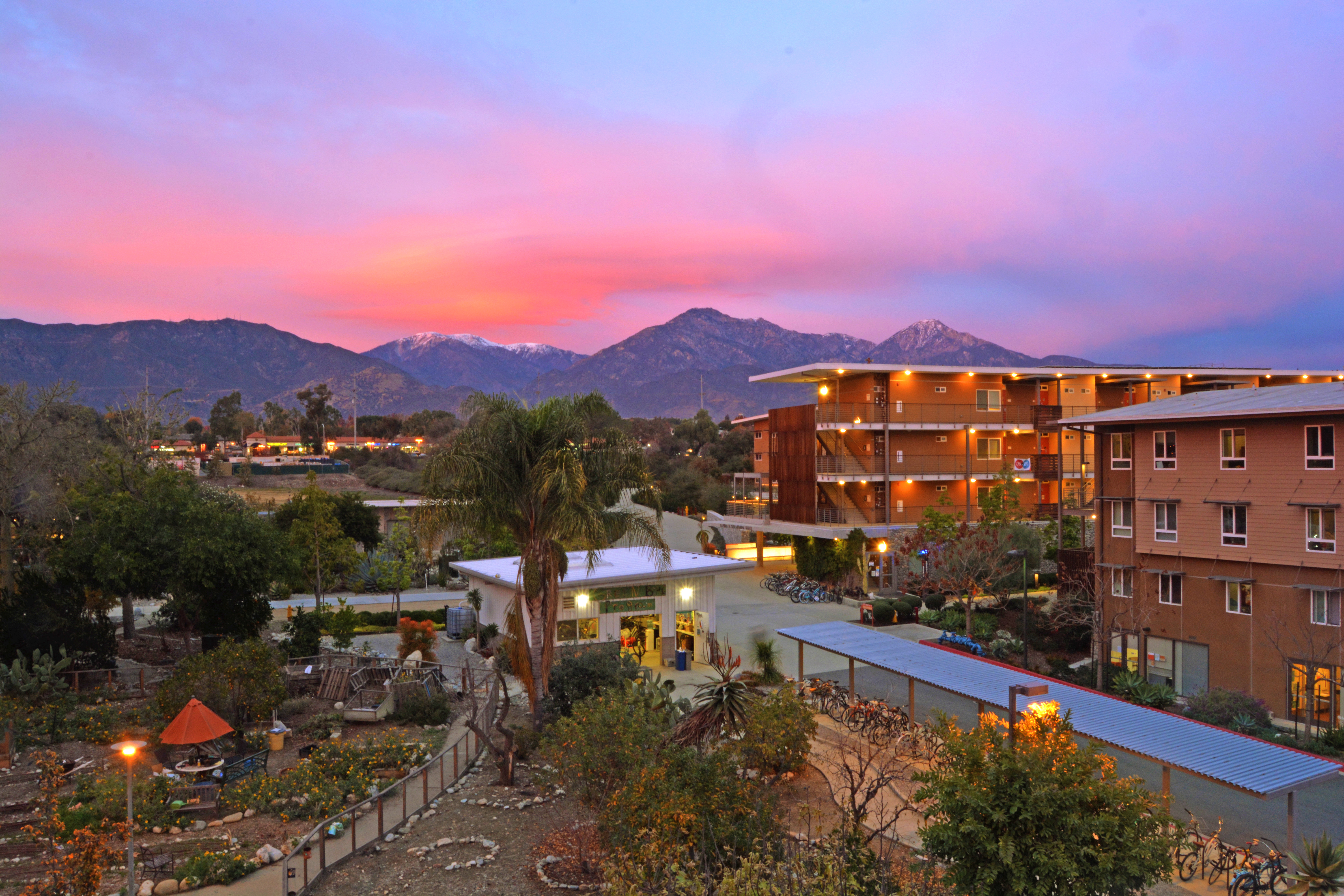
Pitzer College is the Claremont Colleges' iconoclast, a small liberal arts school where social justice and environmental stewardship aren't just buzzwords but the academic and cultural bedrock. Its identity is forged through a fiercely student-led campus, a test-free admissions process that prioritizes fit over scores, and a commitment to meeting 100% of demonstrated financial need. This isn't a place for passive learners; it's for activists, interdisciplinary thinkers, and those who want to build their education as much as receive it.
Admission requirements
Test-blind — scores not considered
Required
High school transcript
Letters of recommendation
TOEFL (non-native English)
Considered (not required)
Grade point average
Class rank
College-prep program
Demonstrated competencies
Source: IPEDS Admissions survey (2022) via Urban Institute. Covers formal factors only — it does not reflect essays, extracurriculars, or other holistic criteria.
More details
Undergrad enrollment
1,227
In-state tuition
$65,192
Out-of-state tuition
$65,192
Graduation Rate
83%
Meets Full Need
Yes
ED Share of Class
Over 75%
On-Campus Housing
85% of students
Students of Color
49.3%
Demonstrated Interest
Considered
International Students
8.2%
Median Earnings (10yr)
$69,512
First-Generation Students
8.1%
Outcomes & value
Outcomes & value
Median earnings (10 yr)
$69,512
Value (earnings ÷ net price)
2.0×
Median debt at graduation
$16,750
Graduation rate
83%
First-year retention
94%
Reducing loan balance (3 yr)
84%
Pell (lower-income) share
11%
First-gen share (among federal-aid recipients)
23%
Financial health
3.0 / 3.0Meets the federal financial-responsibility standard
U.S. Dept. of Education Financial Responsibility Composite Score (FY2022-23). Scale −1.0 to 3.0; ≥1.5 meets the standard. Reported for private nonprofit & for-profit institutions only — public universities are state-backed and not scored, so this is a stability signal, not a ranking.
Campus & location
Campus safety
On-campus violent crimes (2024)
2
On-campus criminal offenses classed as violent (murder/non-negligent manslaughter, rape, robbery, aggravated assault) for the most recent reported year. Source: U.S. Dept. of Education Campus Safety and Security (Clery Act). Counts reflect what’s reported to the school, and urban campuses often report more partly due to non-student incidents nearby — read alongside campus size and setting, not as a standalone safety verdict.
Climate
Pleasant days / yr
176
Summer high
89°F
Winter low
46°F
Annual rain
33.3"
Annual snow
3.5"
Natural-hazard risk
Very High
Pleasant days counts days per year with a mean temperature of 55–75°F, a high at or below 90°F, a low at or above 45°F, and little precipitation — a transparent comfort measure, not a weighting we invented. Computed from Open-Meteo ERA5 daily history (2019–2023). Natural-hazard risk is the county’s composite rating from the FEMA National Risk Index.
Deep dive — research, future-scholar output & economic mobility▾
Research output
Institutional h-index
96
Scholarly works
1,719
Institutional research volume and impact from OpenAlex. The h-index reflects large research universities and will be low for teaching-focused liberal-arts colleges — not a measure of undergraduate quality.
Economic mobility
Mobility rate
2.2%
Bottom → top quintile
35%
From bottom quintile
6%
Mobility rate = the share of students who both start in the bottom household-income quintile and reach the top quintile; bottom → top is that chance conditional on starting at the bottom. Source: Opportunity Insights Mobility Report Cards (Chetty, Friedman, Saez, Turner & Yagan). Reflects 1980–82 birth cohorts, so it’s directional, not current.
Quick answers
What is the acceptance rate at Pitzer College?
Pitzer College's acceptance rate is approximately 25% (Claremont, CA), based on the most recent figures we compiled from public and primary sources.
How much does Pitzer College cost?
At Pitzer College, the average net price (after aid) is about $34,191 per year. Actual cost varies with financial aid and residency.
How many undergraduates attend Pitzer College?
Pitzer College enrolls approximately 1,227 undergraduate students.
Where is Pitzer College located?
Pitzer College is located in Claremont, CA.
Admissions
Getting into Pitzer is less about gaming a test score and more about proving you belong to its distinctive community. The college operates on a test-free policy through at least the 2025-2026 cycle, meaning SAT or ACT scores are not accepted as part of the application [7]. This shifts immense weight onto the qualitative aspects of a candidate's profile. The admissions process is highly selective, with an of 25% [39]. However, the landscape is dramatically different for Early Decision applicants, who are admitted at a rate of 42% [40]. This strategic advantage is profound, as Pitzer fills a remarkably high percentage of its first-year class—reportedly over 75%—through its Early Decision I and II rounds [37, 38]. The admitted class profile reveals a high-achieving and diverse cohort, with an average GPA of 4.07, 49.3% students of color, 8.2% international students, and 8.1% students [9]. Demonstrated interest is a factor Pitzer considers in admissions [41, 42], making campus visits, interviews, and thoughtful application essays particularly meaningful for demonstrating a genuine fit with the college's core values.
Earnings = median of students working ~10 years after entry; debt = median of graduates. Value divides 10-yr earnings by one year’s net price — read it as earnings per dollar of annual cost, not a full lifetime ROI; it favors lower-cost schools. Source: U.S. Dept. of Education College Scorecard. Figures lag ~2 years and reflect all students, not your intended major.
Pitzer's academic philosophy is encapsulated in its core values: social responsibility, intercultural understanding, interdisciplinary learning, student engagement, and environmental sustainability [14]. This isn't lip service; it's the curriculum. Students design their own educational paths within a framework that emphasizes breadth and connection. The most popular majors include Economics, but the academic distribution is notably broad, with significant concentrations in Business, Management, Marketing (6%), History (6%), and Area, Ethnic, Cultural, Gender, and Group Studies (5%) [15, 17]. The true academic power, however, lies in its membership in The Claremont Colleges consortium [16]. This allows Pitzer students to take courses, pursue majors, and access resources at the four other undergraduate colleges (Pomona, Scripps, Claremont McKenna, Harvey Mudd) and the graduate schools. As one student noted, this system allows them to "curate an academic and collegiate career" with strength across STEM, the arts, and academia [13]. The result is an intensely personalized education where a student might combine environmental science from Pitzer with engineering from Harvey Mudd, or political studies from Claremont McKenna with art from Scripps.
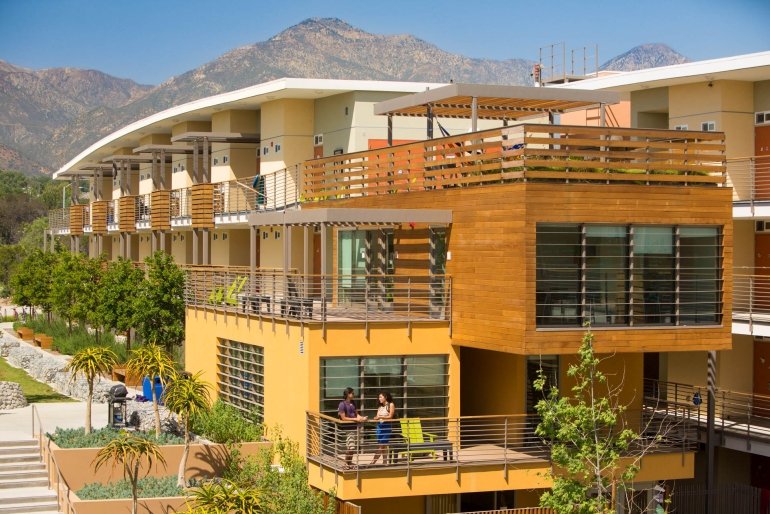
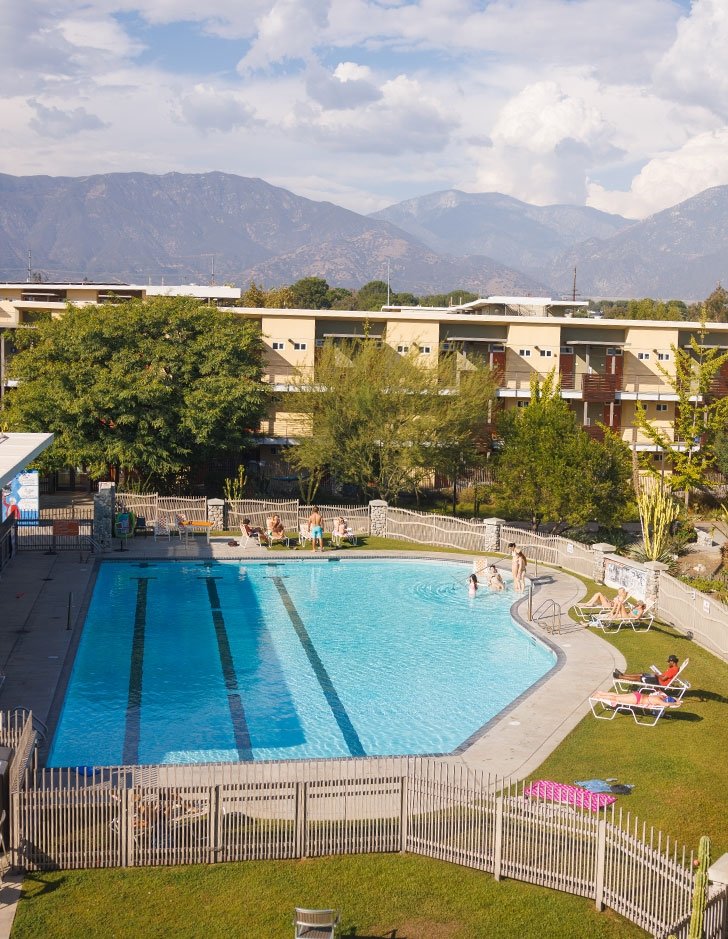
Life at Pitzer is defined by an extraordinary level of student agency and a tight-knit residential community. The college is unabashedly a "student-led campus," where governance, cultural events, and even campus operations like the Shakedown Café are largely run by students [22]. This creates a culture of ownership and activism that permeates daily life. The majority of students live on campus all four years in dorms specifically designed to foster connection [20], with 85% living in college-owned, -operated, or -affiliated housing [23]. This sustained residential commitment cements a strong sense of community. Students report feeling "extremely safe and secure" on campus [21], and the Campus Life Office actively supports involvement across a wide range of activities from 8:00am to 8:00pm [19]. The vibe is casual, politically and socially engaged, and deeply collaborative—a stark contrast to more traditional or competitive college atmospheres. It's a place where students don't just join clubs; they build them, run them, and shape the entire campus environment.
Pitzer measures success not just in first-job salaries but in the broader impact of its graduates. The college's Career Services reports outcome data for recent graduates approximately six months after graduation [24]. While specific median earnings figures from the sources vary, the college's financial health and alumni satisfaction are strong, having earned an A+ in financial health from Forbes based on metrics including graduation rates and alumni salaries [27]. The graduation rate is a solid 83% [26]. The value of a Pitzer degree is also amplified by the Claremont Colleges network, which provides a powerful alumni base spanning countless industries and geographies. Outcomes are tracked with an eye toward the kind of meaningful, value-driven work that aligns with the college's mission, preparing graduates for careers in education, non-profits, environmental advocacy, public policy, and beyond.
Pitzer backs its commitment to access and equity with one of the most robust financial aid policies among liberal arts colleges. The college meets 100% of demonstrated financial need for all admitted students, domestic and international [43, 44, 46, 47]. This is a cornerstone of its admissions philosophy. The average financial aid package is substantial, reported at $61,090 [43], which brings the average after aid down significantly. Prospective families are encouraged to use Pitzer's MyinTuition quick estimator and its official net price calculator for personalized figures [30, 31, 35]. Aid packages for domestic students typically consist of a Pitzer need-based scholarship (free funds), federal subsidized loans ($3,500 - $5,500), and work-study ($2,500 - $3,000) [33]. This comprehensive, no-gap policy ensures that admitted students from all economic backgrounds can attend without being burdened by unmet need.
Pitzer College stands out as a deliberate and unapologetic counterpoint to the conventional elite liberal arts experience. Its identity is built on three inseparable pillars. First, its academic ethos, where the core values are the curriculum, pushing interdisciplinary, socially-conscious learning beyond the theoretical. Second, its student-powered ecosystem, where governance, culture, and daily life are genuinely run by undergraduates, fostering a rare sense of agency and responsibility. Third, its structural advantages: membership in the Claremont Consortium offers the academic breadth of a university, while its test-free admissions and 100% need-met aid policy create a more equitable and mission-focused community. This isn't a school for everyone; it's for the self-directed, the activist, the student who wants to build a college experience as much as receive one. In a landscape of homogenizing prestige, Pitzer remains stubbornly, productively itself.
Pitzer College seal · sourceOur Campus | Pitzer College · sourcePitzer College | A Top-Ranked Liberal Arts College · sourceOur Campus | Pitzer College · source