Loading…
← All schools
Polaris Career Center
Middleburg Heights, OHpublicpolaris.edu
Avg net price
$9,931
Earnings (10 yr)
$38,718
Acceptance & SAT from Common Data Set / IPEDS; net price, earnings & graduation from the U.S. Dept. of Education College Scorecard. Figures lag ~1–2 years — verify with the school.
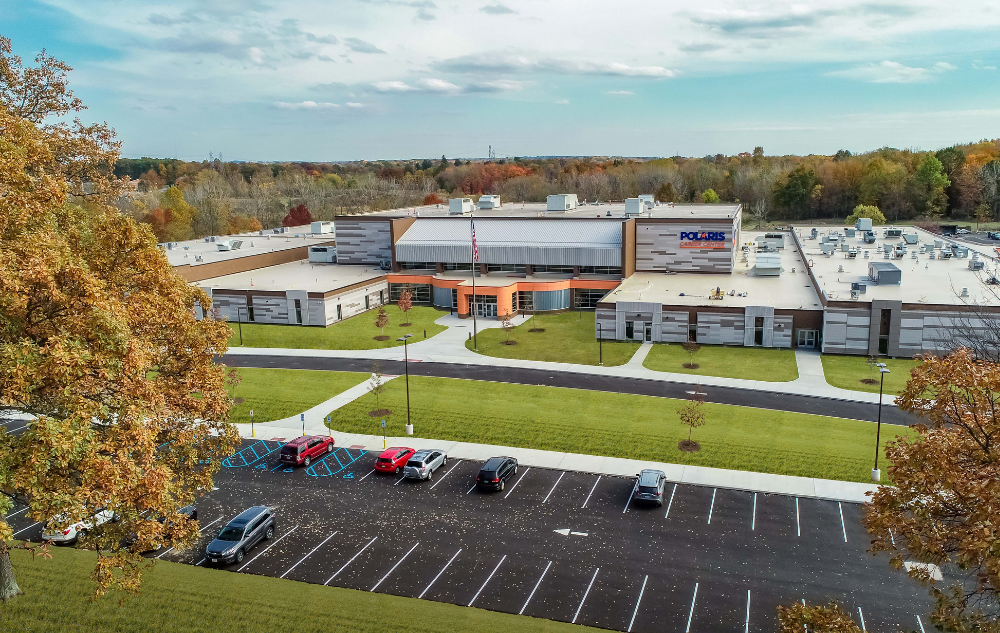
Polaris Career Center is not a traditional four-year university but a powerhouse career-technical school in Middleburg Heights, Ohio, laser-focused on launching students directly into skilled trades and technical careers. It operates with an open-admission policy, boasting a 100% acceptance rate and a remarkably high 85.7% graduation rate, a testament to its practical, hands-on educational model. As the second-largest adult education provider in Cuyahoga County, Polaris serves a unique dual mission of preparing both high school students and adult learners for immediate, in-demand employment.
More details
- Undergrad enrollment
- 300
- Graduation Rate
- 85.7%
- Student-Faculty Ratio
- 12:1
- Students Receiving Grant/Scholarship Aid
- 79%
Outcomes & value
Outcomes & value
- Median earnings (10 yr)
- $38,718
- Value (earnings ÷ net price)
- 3.9×
- Median debt at graduation
- $6,365
- Reducing loan balance (3 yr)
- 40%
- Pell (lower-income) share
- 44%
- First-gen share (among federal-aid recipients)
- 58%
Earnings = median of students working ~10 years after entry; debt = median of graduates. Value divides 10-yr earnings by one year’s net price — read it as earnings per dollar of annual cost, not a full lifetime ROI; it favors lower-cost schools. Source: U.S. Dept. of Education College Scorecard. Figures lag ~2 years and reflect all students, not your intended major.
Campus & location
Campus safety
- On-campus violent crimes (2024)
- 0
On-campus criminal offenses classed as violent (murder/non-negligent manslaughter, rape, robbery, aggravated assault) for the most recent reported year. Source: U.S. Dept. of Education Campus Safety and Security (Clery Act). Counts reflect what’s reported to the school, and urban campuses often report more partly due to non-student incidents nearby — read alongside campus size and setting, not as a standalone safety verdict.
Climate
- Pleasant days / yr
- 94
- Summer high
- 80°F
- Winter low
- 26°F
- Annual rain
- 46.3"
- Annual snow
- 37.1"
- Natural-hazard risk
- Relatively High
Pleasant days counts days per year with a mean temperature of 55–75°F, a high at or below 90°F, a low at or above 45°F, and little precipitation — a transparent comfort measure, not a weighting we invented. Computed from Open-Meteo ERA5 daily history (2019–2023). Natural-hazard risk is the county’s composite rating from the FEMA National Risk Index.
Quick answers
- How much does Polaris Career Center cost?
- At Polaris Career Center, the average net price (after aid) is about $9,931 per year. Actual cost varies with financial aid and residency.
- How many undergraduates attend Polaris Career Center?
- Polaris Career Center enrolls approximately 300 undergraduate students.
- Where is Polaris Career Center located?
- Polaris Career Center is located in Middleburg Heights, OH.
Admissions
Polaris Career Center operates with an open admission policy, meaning all applicants who meet the basic requirements are accepted. The is consistently reported as 100%. This is a defining characteristic that sets it apart from selective four-year colleges; the barrier to entry is not a competitive application but a commitment to a career-focused path. The school's own enrollment FAQs outline the process and requirements, emphasizing accessibility over selectivity. There is no mention of Early Decision programs or consideration of demonstrated interest—concepts central to traditional undergraduate admissions—as Polaris's mission is to provide open access to career training. The focus is on enrolling students ready to engage with hands-on, technical programs.
Academics
The academic model at Polaris is purely career-technical, built around hands-on training in specific trades and technologies. The school describes its mission as inspiring "middle and high school students and adult learners to achieve career success" through programs featuring "the latest technology." It serves two distinct populations: secondary students and, significantly, adult learners through a dedicated Adult Education division. This adult programming is designed to "help students prepare for meaningful careers, update job qualifications, or develop a personal interest." Programs are intensely practical; for example, the Adult Automotive Service Technician program provides "hands-on training for one of today's most in-demand skilled trades." The curriculum is not about liberal arts exploration but about developing immediately marketable skills, with a student-faculty ratio of 12:1 suggesting a focus on direct instruction and supervision.
Compare Polaris Career Center
vs Chicago State Universityvs University of Minnesota-Morrisvs Dickinson State Universityvs United States Coast Guard Academy
See colleges similar to Polaris Career Center →Sources
- Common Data Set - Institutional Research & Planning - Georgia Tech
- Common Data Set: Home
- Common Data Set - UGA Office of Institutional Research
- [PDF] Common Data Set 2021-2022 - Colorado Department of Education
- Common Data Set Application Priorities for T-25s Visualized - Reddit
- [PDF] Common Data Set 2022-2023 - ArtCenter College of Design
- Enrollment FAQs
- Polaris Career Center
- Polaris Career Center Acceptance Rate, SAT, GPA & ACT ...
- Polaris Earns 5 Star Rating on State Report Card!
- Polaris Career Center - Sallie