Loading…
← All schools
Pro Beauty Academy
Edison, NJprivate forprofitwww.probeautyacademy.com/
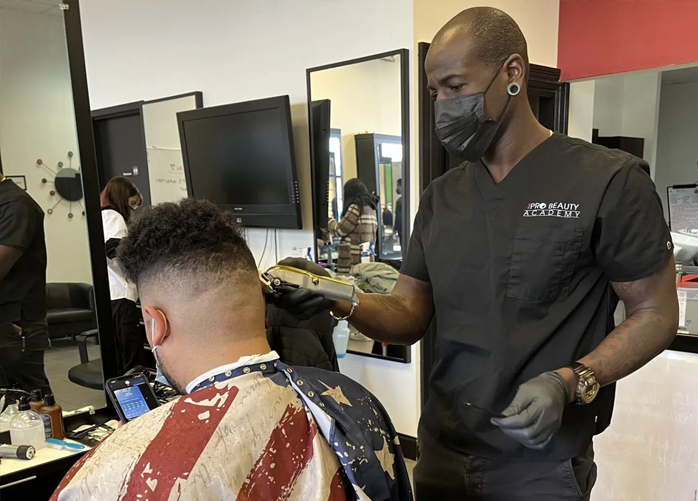
Pro Beauty Academy in Edison, New Jersey, is a hyper-focused, career-first institution where the entire curriculum is the 1,200-hour cosmetology and hairstyling program. It’s a small, diverse community of about 100 students who are there for one reason: to become salon-ready professionals. This isn't a place for a traditional liberal arts experience; it's a direct pipeline into the beauty industry, where the measure of success is a state license and a clientele.
More details
- Undergrad enrollment
- 67
- Program Length
- 1,200 hours
- Average Aid Package
- $3,098
- Student Demographics
- 32% Black, 31% White, 23% Hispanic, 10% Asian, 1% Two+ Races
Outcomes & value
Outcomes & value
- Median debt at graduation
- $5,500
- Pell (lower-income) share
- 38%
Earnings = median of students working ~10 years after entry; debt = median of graduates. Value divides 10-yr earnings by one year’s net price — read it as earnings per dollar of annual cost, not a full lifetime ROI; it favors lower-cost schools. Source: U.S. Dept. of Education College Scorecard. Figures lag ~2 years and reflect all students, not your intended major.
Campus & location
Campus safety
- On-campus violent crimes (2024)
- 0
On-campus criminal offenses classed as violent (murder/non-negligent manslaughter, rape, robbery, aggravated assault) for the most recent reported year. Source: U.S. Dept. of Education Campus Safety and Security (Clery Act). Counts reflect what’s reported to the school, and urban campuses often report more partly due to non-student incidents nearby — read alongside campus size and setting, not as a standalone safety verdict.
Climate
- Pleasant days / yr
- 98
- Summer high
- 84°F
- Winter low
- 29°F
- Annual rain
- 42.2"
- Annual snow
- 17.8"
- Natural-hazard risk
- Relatively High
Pleasant days counts days per year with a mean temperature of 55–75°F, a high at or below 90°F, a low at or above 45°F, and little precipitation — a transparent comfort measure, not a weighting we invented. Computed from Open-Meteo ERA5 daily history (2019–2023). Natural-hazard risk is the county’s composite rating from the FEMA National Risk Index.
Quick answers
- How much does Pro Beauty Academy cost?
- At Pro Beauty Academy, the average net price (after aid) is about $33,472 per year. Actual cost varies with financial aid and residency.
- How many undergraduates attend Pro Beauty Academy?
- Pro Beauty Academy enrolls approximately 67 undergraduate students.
- Where is Pro Beauty Academy located?
- Pro Beauty Academy is located in Edison, NJ.
Admissions
Pro Beauty Academy operates with what appears to be an open-admissions policy, focused on vocational preparation rather than selective undergraduate criteria. Multiple sources indicate that traditional information is "not available" for this institution, and one source explicitly states it has a 100% acceptance rate. The process seems geared toward evaluating a candidate's readiness for a hands-on career program, not their high school GPA or standardized test scores. The enrolled student body is notably diverse: 32% Black or African American, 31% White, 23% Hispanic or Latino, 10% Asian, and 1% Two or More Races. With a total enrollment hovering around 100 students, it's an intimate environment where everyone is on the same focused track.
Academics
Academics at Pro Beauty Academy mean one thing: the cosmetology and hairstyling program. This is a comprehensive, state-licensed course consisting of 1,200 hours of instruction designed to make students "salon-ready upon graduation." The curriculum is all-encompassing, covering all phases of cosmetology including hair, skin, and nails. The pedagogy is intensely practical and career-focused, with courses that "emphasize career" development alongside technical skill. The school's ethos, as captured in its social media, is "Always learning, always creating—never a dull moment." This isn't about theoretical exploration; it's a bootcamp for beauty professionals where the classroom is a working salon environment. The academy offers a world of opportunities to enhance makeup skills and follow the latest trends, positioning itself as a launchpad for a specific, skilled trade.
Compare Pro Beauty Academy
vs Albertus Magnus Collegevs United States Coast Guard Academyvs Anna Maria Collegevs Hartwick College
See colleges similar to Pro Beauty Academy →Sources
- Pro Beauty Academy
- Pro Beauty Academy Tuition and Costs - BigFuture
- Financial Assistance
- Common Data Set 202
- Pro Beauty Academy - DFR Report HTML
- Pro Beauty Academy - School Profile - College & Career Data
- Pro Beauty Academy Admissions - BigFuture College Search
- Blalock's Professional Beauty College
- Pro Beauty Academy (The) - Kenilworth - EDsmart
- Vocational Programs at Pro Beauty Academy
- Cosmetology & Hair styling