Loading…
← All schools
Rabbinical College of America
Morristown, NJprivate nonprofitwww.rca.edu/
Acceptance
95%
Avg net price
$15,628
Earnings (10 yr)
$34,990
Graduation rate
22%
Admit rate has ranged 84%–95% over the last 5 years — notably volatile. Source: IPEDS via Urban Institute.
Acceptance & SAT from Common Data Set / IPEDS; net price, earnings & graduation from the U.S. Dept. of Education College Scorecard. Figures lag ~1–2 years — verify with the school.
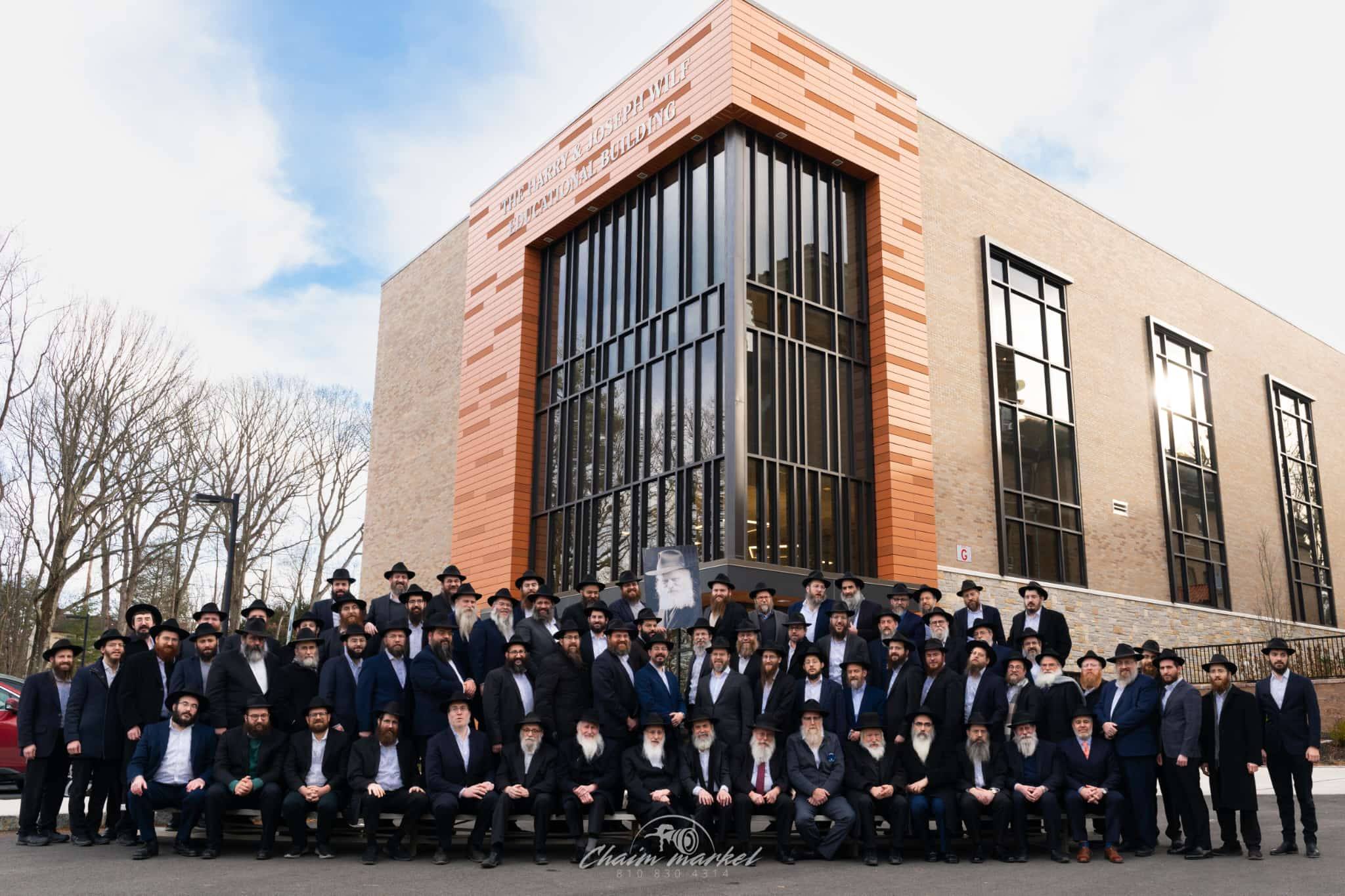
The Rabbinical College of America is not a typical liberal arts college; it is a singular, immersive institution dedicated exclusively to the intensive study of Talmudic and Rabbinical texts. Its campus in Morristown, New Jersey, is a world apart, where students spend up to 14 hours a day, five days a week, in a deeply focused, self-paced religious curriculum. With an acceptance rate of 95% and a graduation rate of 22%, it serves a specific, committed population on a path toward ordination, operating on a rhythm and purpose entirely its own.
Admission requirements
Test-blind — scores not considered
Required
- Letters of recommendation
- College-prep program
Considered (not required)
- High school transcript
- Grade point average
- Demonstrated competencies
Source: IPEDS Admissions survey (2022) via Urban Institute. Covers formal factors only — it does not reflect essays, extracurriculars, or other holistic criteria.
More details
- Undergrad enrollment
- 181
- In-state tuition
- $10,650
- Out-of-state tuition
- $10,650
- Graduation Rate
- 22%
- Daily Study Schedule
- 14 hours/day, 5 days/week
- First-Year Retention
- 75%
- Single Major Offered
- Talmudic and Rabbinical Studies
- Median Earnings (10yr)
- $34,990
Outcomes & value
Outcomes & value
- Median earnings (10 yr)
- $34,990
- Value (earnings ÷ net price)
- 2.2×
- Graduation rate
- 22%
- First-year retention
- 75%
- Pell (lower-income) share
- 44%
- First-gen share (among federal-aid recipients)
- 12%
Earnings = median of students working ~10 years after entry; debt = median of graduates. Value divides 10-yr earnings by one year’s net price — read it as earnings per dollar of annual cost, not a full lifetime ROI; it favors lower-cost schools. Source: U.S. Dept. of Education College Scorecard. Figures lag ~2 years and reflect all students, not your intended major.
Financial health
3.0 / 3.0Meets the federal financial-responsibility standard
U.S. Dept. of Education Financial Responsibility Composite Score (FY2022-23). Scale −1.0 to 3.0; ≥1.5 meets the standard. Reported for private nonprofit & for-profit institutions only — public universities are state-backed and not scored, so this is a stability signal, not a ranking.
Campus & location
Campus safety
- On-campus violent crimes (2024)
- 0
- Per 1,000 students
- 0.00
On-campus criminal offenses classed as violent (murder/non-negligent manslaughter, rape, robbery, aggravated assault) for the most recent reported year. Source: U.S. Dept. of Education Campus Safety and Security (Clery Act). Counts reflect what’s reported to the school, and urban campuses often report more partly due to non-student incidents nearby — read alongside campus size and setting, not as a standalone safety verdict.
Climate
- Pleasant days / yr
- 91
- Summer high
- 83°F
- Winter low
- 27°F
- Annual rain
- 53.3"
- Annual snow
- 24.6"
- Natural-hazard risk
- Relatively Moderate
Pleasant days counts days per year with a mean temperature of 55–75°F, a high at or below 90°F, a low at or above 45°F, and little precipitation — a transparent comfort measure, not a weighting we invented. Computed from Open-Meteo ERA5 daily history (2019–2023). Natural-hazard risk is the county’s composite rating from the FEMA National Risk Index.
Deep dive — research, future-scholar output & economic mobility
Research output
- Institutional h-index
- 6
- Scholarly works
- 17
Institutional research volume and impact from OpenAlex. The h-index reflects large research universities and will be low for teaching-focused liberal-arts colleges — not a measure of undergraduate quality.
Quick answers
- What is the acceptance rate at Rabbinical College of America?
- Rabbinical College of America's acceptance rate is approximately 95% (Morristown, NJ), based on the most recent figures we compiled from public and primary sources.
- How much does Rabbinical College of America cost?
- At Rabbinical College of America, the average net price (after aid) is about $15,628 per year. Actual cost varies with financial aid and residency.
- How many undergraduates attend Rabbinical College of America?
- Rabbinical College of America enrolls approximately 181 undergraduate students.
- Where is Rabbinical College of America located?
- Rabbinical College of America is located in Morristown, NJ.
Admissions
Admissions at the Rabbinical College of America are decidedly non-selective, reflecting its mission to welcome students committed to rabbinical studies. The process is straightforward, with a high school diploma required for entry. The college does not require submission of SAT or ACT scores for fall-term admission. With 103 applicants for a recent cycle, 98 were accepted, resulting in an of 95%. The process appears to lack the competitive hurdles of standardized testing or early decision programs common at other institutions.
Academics
Academic life is defined by an all-consuming, singular focus. The Rabbinical College of America offers only one major: Talmudic and Rabbinical Studies. The curriculum is designed to train students in "the skills required for understanding studying and mastering the Talmud and the considerable body of Jewish law and philosophy." The program is intensive and self-paced, with students advancing from one level to the next based on individual progress. Upon graduation, students will have acquired an extensive education in Talmud, Law, Torah, and Philosophy, preparing hundreds of its graduates to obtain ordination at advanced Rabbinical schools. The institution is small, with a total undergraduate population of 197 students out of 206 total students, and it awards the highest degree of a Master's.
Compare Rabbinical College of America
See colleges similar to Rabbinical College of America →Sources
- Common Data Set: Home
- Common Data Set | The City College of New York
- [PDF] 2024-2025 Common Data Set - Sarah Lawrence College
- Rabbinical College of America - IPEDS - Department of Education
- [PDF] Common Data Set 2023 – 2024 - Institutional Research and Analytics
- Rabbinical College of America - Morristown, NJ - Appily
- Rabbinical College of America Requirements for Admission
- Rabbinical College of America Tuition, Acceptance Rate, & Academics
- Rabbinical College of America - Tuition and Acceptance Rate
- Rabbinical College of America - Niche