Loading…
← All schools
Ranken Technical College
Saint Louis, MOprivate nonprofitwww.ranken.edu/
Avg net price
$18,795
Earnings (10 yr)
$55,955
Graduation rate
53%
Acceptance & SAT from Common Data Set / IPEDS; net price, earnings & graduation from the U.S. Dept. of Education College Scorecard. Figures lag ~1–2 years — verify with the school.
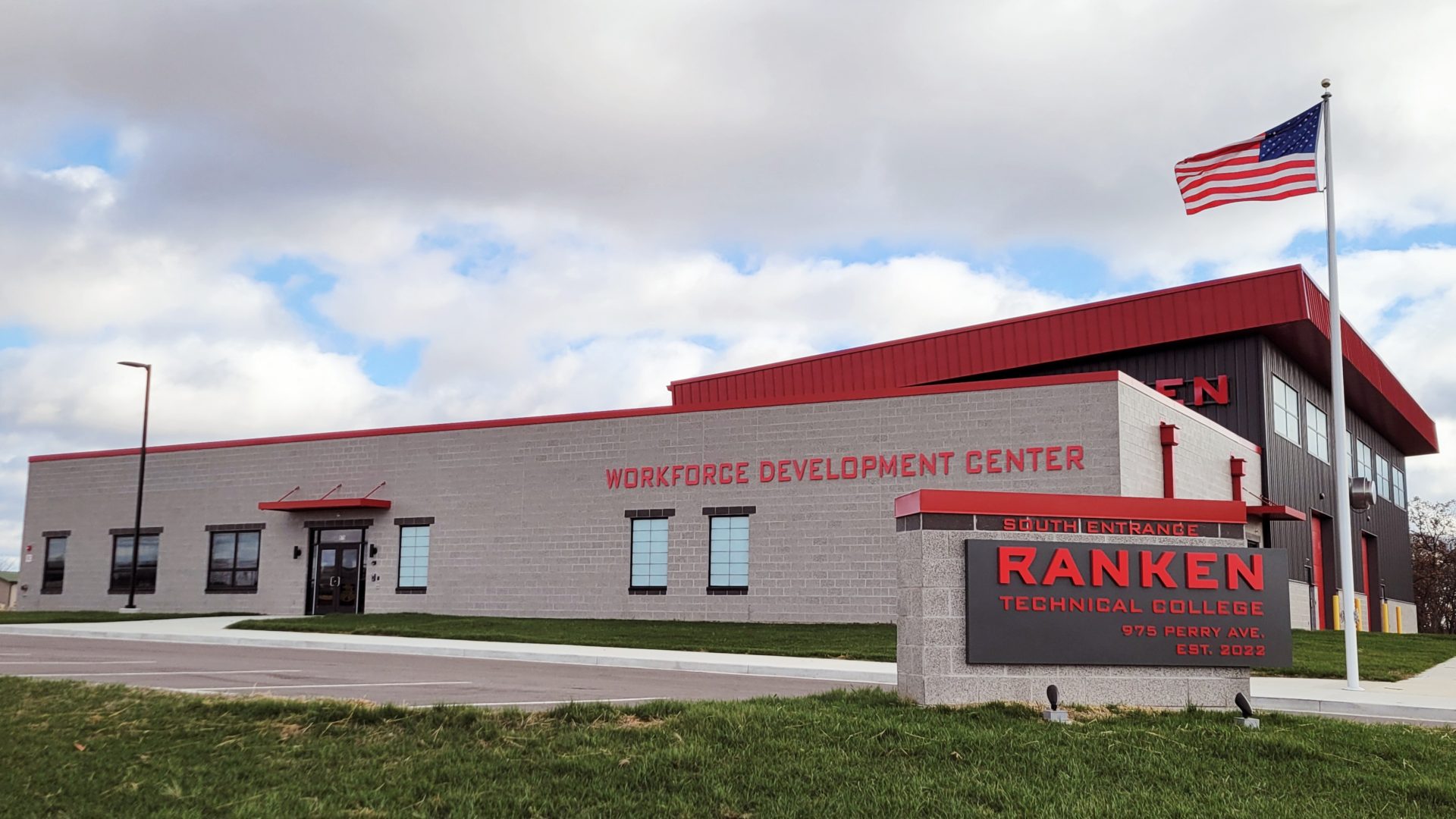
Ranken Technical College is a singular institution in American higher education: a private, non-profit technical college in St. Louis that operates with the intensity and focus of a trade school but with the residential community of a small college. Its identity is built entirely on a 'more hands-on training than anyone else' philosophy, forging direct pipelines into high-demand technical careers through deep industry partnerships. This isn't a place for theoretical exploration; it's a career-launching platform where the shop floor is the classroom and job placement is the ultimate metric of success.
More details
- Undergrad enrollment
- 1,780
- In-state tuition
- $18,008
- Out-of-state tuition
- $18,008
- Graduation Rate
- 53%
- Student-Faculty Ratio
- 11:1
- Median Earnings (10yr)
- $55,955
- Male Student Population
- 90.6%
- Campus Housing Available
- Yes
- Annual Campus Housing Cost
- $8,926
- Students Receiving Financial Aid
- ~74%
Outcomes & value
Outcomes & value
- Median earnings (10 yr)
- $55,955
- Value (earnings ÷ net price)
- 3.0×
- Median debt at graduation
- $12,000
- Graduation rate
- 53%
- First-year retention
- 100%
- Reducing loan balance (3 yr)
- 51%
- Pell (lower-income) share
- 47%
- First-gen share (among federal-aid recipients)
- 39%
Financial health
3.0 / 3.0Meets the federal financial-responsibility standard
U.S. Dept. of Education Financial Responsibility Composite Score (FY2022-23). Scale −1.0 to 3.0; ≥1.5 meets the standard. Reported for private nonprofit & for-profit institutions only — public universities are state-backed and not scored, so this is a stability signal, not a ranking.
Top-earning majors
Median earnings by field of study (highest credential), ~2 years after completion.
- Business Administration, Management and Operations$50,231
Source: U.S. Dept. of Education College Scorecard (field-of-study earnings). Figures cover graduates who received federal aid and lag ~2 years; not all programs report data.
Compare on earnings: best colleges for Business
Campus & location
Campus safety
- On-campus violent crimes (2024)
- 2
On-campus criminal offenses classed as violent (murder/non-negligent manslaughter, rape, robbery, aggravated assault) for the most recent reported year. Source: U.S. Dept. of Education Campus Safety and Security (Clery Act). Counts reflect what’s reported to the school, and urban campuses often report more partly due to non-student incidents nearby — read alongside campus size and setting, not as a standalone safety verdict.
Climate
- Pleasant days / yr
- 83
- Summer high
- 86°F
- Winter low
- 28°F
- Annual rain
- 41.2"
- Annual snow
- 13.6"
- Natural-hazard risk
- Relatively High
Pleasant days counts days per year with a mean temperature of 55–75°F, a high at or below 90°F, a low at or above 45°F, and little precipitation — a transparent comfort measure, not a weighting we invented. Computed from Open-Meteo ERA5 daily history (2019–2023). Natural-hazard risk is the county’s composite rating from the FEMA National Risk Index.
Deep dive — research, future-scholar output & economic mobility
Research output
- Institutional h-index
- 2
- Scholarly works
- 9
Institutional research volume and impact from OpenAlex. The h-index reflects large research universities and will be low for teaching-focused liberal-arts colleges — not a measure of undergraduate quality.
Economic mobility
- Mobility rate
- 1.0%
- Bottom → top quintile
- 14%
- From bottom quintile
- 7%
Mobility rate = the share of students who both start in the bottom household-income quintile and reach the top quintile; bottom → top is that chance conditional on starting at the bottom. Source: Opportunity Insights Mobility Report Cards (Chetty, Friedman, Saez, Turner & Yagan). Reflects 1980–82 birth cohorts, so it’s directional, not current.
Quick answers
- How much does Ranken Technical College cost?
- At Ranken Technical College, the average net price (after aid) is about $18,795 per year. Actual cost varies with financial aid and residency.
- How many undergraduates attend Ranken Technical College?
- Ranken Technical College enrolls approximately 1,780 undergraduate students.
- Where is Ranken Technical College located?
- Ranken Technical College is located in Saint Louis, MO.
Admissions
Ranken's admissions process is straightforward and focused on foundational readiness, not competitive selection. The college maintains an open admission policy, with multiple sources citing a 100% acceptance rate; the primary gatekeeper is proof of high school graduation or HiSET/GED completion. There is no mention of SAT or ACT requirements in the provided sources, aligning with a or test-blind policy typical of institutions prioritizing hands-on skill demonstration over standardized scores. The undergraduate enrollment is 1,696 students, with a heavily male-dominated gender distribution of 90.6% male to 9.4% female students. The process is designed for accessibility, asking applicants to confirm their fit for a rigorous, practical education rather than compete for a scarce seat.
Compare Ranken Technical College
See colleges similar to Ranken Technical College →Sources
- Ranken Technical College - DFR Report HTML
- Ranken Technical College Acceptance Rate
- Admissions
- Ranken Technical College
- Ranken Technical College - Profile, Rankings and Data
- Ranken Technical College Statistics
- Ranken Technical College SAT Scores, ACT Scores, Acceptance ...
- Ranken Technical College
- Ranken Technical College Admission, Acceptance Rate, SAT, ACT & GPA
- Ranken Technical College Tuition, Acceptance Rate, & Academics
- Ranken Technical College – The Leading Missouri Technical ...