Loading…
← All schools
Riverside City College
Riverside, CApublicwww.rcc.edu/
Avg net price
$8,377
Earnings (10 yr)
$41,091
Acceptance & SAT from Common Data Set / IPEDS; net price, earnings & graduation from the U.S. Dept. of Education College Scorecard. Figures lag ~1–2 years — verify with the school.
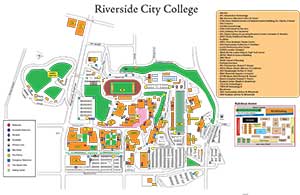
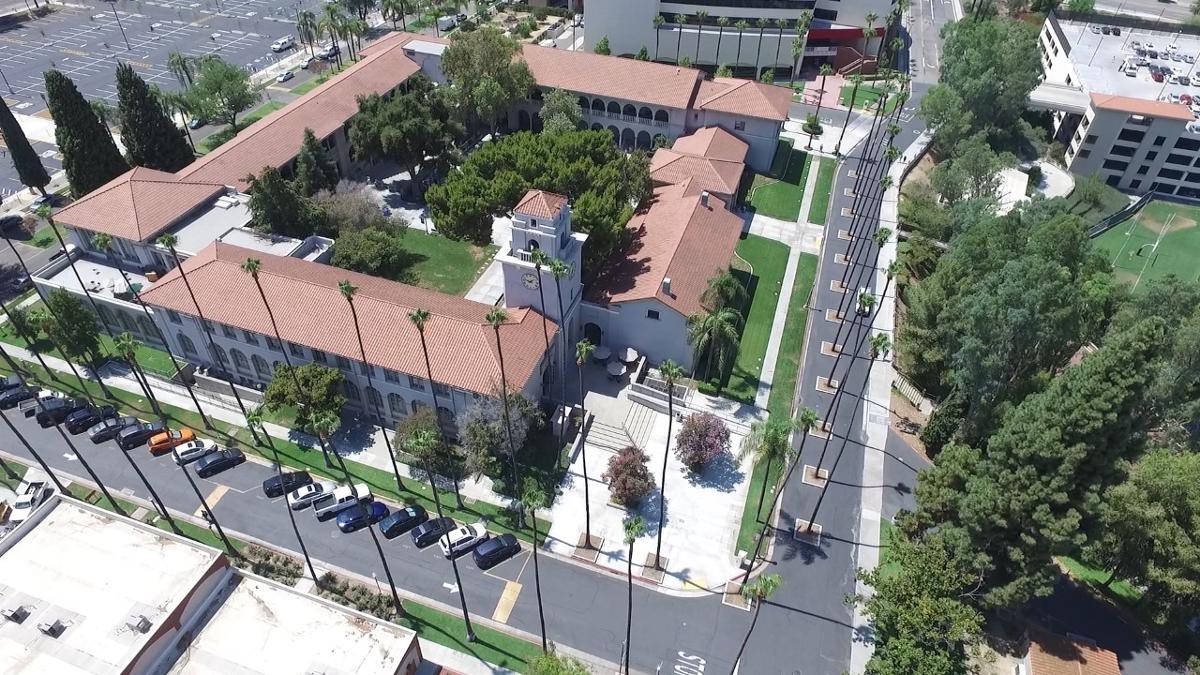
Riverside City College isn't just a community college; it's the sprawling, open-access engine of the Inland Empire, a place where over 21,000 students—many of them first-generation, low-income, and Latino—find their footing. With a 100% acceptance rate and a sprawling menu of over 250 programs, RCC operates as a vital academic launchpad, a low-cost proving ground for transfer to universities like UC Riverside, and a direct pipeline to careers in nursing, business, and the liberal arts. Its character is defined by pragmatic flexibility, a 'Culture of Care,' and a sprawling campus life that feels more like a bustling commuter city than a cloistered quad.
More details
- Undergrad enrollment
- 18,346
- In-state tuition
- $1,428
- Out-of-state tuition
- $12,498
- Programs Offered
- Over 250
- Student Body Size
- Over 21,000 students
- Most Popular Major
- Liberal Arts and Humanities
- Median Earnings (10yr)
- $41,091
- Graduation Rate (varies)
- 32% - 40%
- Full-time Students Receiving Aid
- 78%
Outcomes & value
Outcomes & value
- Median earnings (10 yr)
- $41,091
- Value (earnings ÷ net price)
- 4.9×
- Median debt at graduation
- $8,000
- Reducing loan balance (3 yr)
- 41%
- Pell (lower-income) share
- 34%
- First-gen share (among federal-aid recipients)
- 56%
Earnings = median of students working ~10 years after entry; debt = median of graduates. Value divides 10-yr earnings by one year’s net price — read it as earnings per dollar of annual cost, not a full lifetime ROI; it favors lower-cost schools. Source: U.S. Dept. of Education College Scorecard. Figures lag ~2 years and reflect all students, not your intended major.
Campus & location
Campus safety
- On-campus violent crimes (2024)
- 2
On-campus criminal offenses classed as violent (murder/non-negligent manslaughter, rape, robbery, aggravated assault) for the most recent reported year. Source: U.S. Dept. of Education Campus Safety and Security (Clery Act). Counts reflect what’s reported to the school, and urban campuses often report more partly due to non-student incidents nearby — read alongside campus size and setting, not as a standalone safety verdict.
Climate
- Pleasant days / yr
- 166
- Summer high
- 93°F
- Winter low
- 44°F
- Annual rain
- 16.6"
- Natural-hazard risk
- Very High
Pleasant days counts days per year with a mean temperature of 55–75°F, a high at or below 90°F, a low at or above 45°F, and little precipitation — a transparent comfort measure, not a weighting we invented. Computed from Open-Meteo ERA5 daily history (2019–2023). Natural-hazard risk is the county’s composite rating from the FEMA National Risk Index.
Deep dive — research, future-scholar output & economic mobility
Research output
- Institutional h-index
- 55
- Scholarly works
- 377
Institutional research volume and impact from OpenAlex. The h-index reflects large research universities and will be low for teaching-focused liberal-arts colleges — not a measure of undergraduate quality.
Quick answers
- How much does Riverside City College cost?
- At Riverside City College, the average net price (after aid) is about $8,377 per year. Actual cost varies with financial aid and residency.
- How many undergraduates attend Riverside City College?
- Riverside City College enrolls approximately 18,346 undergraduate students.
- Where is Riverside City College located?
- Riverside City College is located in Riverside, CA.
Admissions
Riverside City College is the definition of open access. With an of 100%, the college's mission is to serve its community, not to turn applicants away. The admissions process is designed to be a straightforward gateway, not a competitive filter. Students become Tigers simply by submitting the RCC admission application, which selects Riverside City College as their "HOME COLLEGE." There is no mention of Early Decision or binding early admission plans, which are uncommon at community colleges. The focus is on enabling enrollment for a vast and diverse student body, which includes over 21,000 students. The college serves a population where 68% of students identify as Hispanic/Latino, reflecting its deep roots in the surrounding community.
Academics
Think of RCC as an academic supermarket with over 250 programs on the shelves, from short-term certificates to Associate degrees designed for immediate career entry or seamless transfer. The college organizes its offerings into eight instructional pathways, providing a structured yet flexible framework for students to explore. The most popular majors are telling of its role: Liberal Arts and Humanities leads with over 1,000 graduates, serving as the primary transfer track, followed by Business, Natural Sciences, and Child Care Provider programs. The course catalog is extensive, supporting easier transfer and clearer degree planning. For many students, the ultimate academic benefit is the well-trodden path to the "fastest growing campus within the University of California system"—UC Riverside—with alumni frequently citing successful transfers there for majors like art, journalism, and sociology.
Compare Riverside City College
vs United States Air Force Academyvs North Carolina A & T State Universityvs University of North Georgiavs Eastern Kentucky University
See colleges similar to Riverside City College →Sources
- Common Data Set | The City College of New York
- Common Data Set: Home
- [PDF] University of California, Riverside - Common Data Set 2023-24
- Common Data Set - GradGPT
- Common Data Set - ccmrwithmsthrash
- Riverside City College - DFR Report HTML - Department of Education
- Riverside City College Admission, Acceptance Rate, SAT, ACT & GPA
- Riverside City College - Tuition and Acceptance Rate - Peterson's
- Riverside City College - Niche
- Riverside City College Admissions Statistics and Chances | Parchment