Loading…
← All schools
Robert Fiance Beauty Schools
Boynton Beach, FLprivate forprofitwww.robertfiance.edu/
Avg net price
$27,448
Earnings (10 yr)
$27,359
Acceptance & SAT from Common Data Set / IPEDS; net price, earnings & graduation from the U.S. Dept. of Education College Scorecard. Figures lag ~1–2 years — verify with the school.
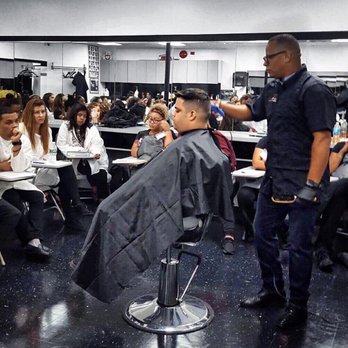
Robert Fiance Beauty Schools operates as a direct, vocational gateway into the beauty industry, a world away from the traditional liberal arts college experience. With campuses in New Jersey and Florida, it offers a 100% open-admissions model focused exclusively on state-licensed cosmetology and esthetics programs, where students spend their days in hands-on training salons rather than lecture halls. The school's identity is defined by practical skill acquisition, high graduation rates for the sector, and a clear-eyed focus on preparing students for licensure and immediate work in salons, spas, and medspas.
More details
- Undergrad enrollment
- 310
- Common Majors
- Cosmetology, Barbering, Esthetics, Nail Technician
- Licensure Rate
- 98.40% (self-reported)
- Placement Rate
- 72.13% (self-reported)
- Retention Rate
- 80%
- Graduation Rate
- 93.20% (self-reported for main campus)
- Student-Faculty Ratio
- 14 to 1
- Median Earnings (10yr)
- $27,359
Outcomes & value
Outcomes & value
- Median earnings (10 yr)
- $27,359
- Value (earnings ÷ net price)
- 1.0×
- Median debt at graduation
- $7,062
- Reducing loan balance (3 yr)
- 38%
- Pell (lower-income) share
- 42%
- First-gen share (among federal-aid recipients)
- 75%
Earnings = median of students working ~10 years after entry; debt = median of graduates. Value divides 10-yr earnings by one year’s net price — read it as earnings per dollar of annual cost, not a full lifetime ROI; it favors lower-cost schools. Source: U.S. Dept. of Education College Scorecard. Figures lag ~2 years and reflect all students, not your intended major.
Campus & location
Campus safety
- On-campus violent crimes (2024)
- 0
On-campus criminal offenses classed as violent (murder/non-negligent manslaughter, rape, robbery, aggravated assault) for the most recent reported year. Source: U.S. Dept. of Education Campus Safety and Security (Clery Act). Counts reflect what’s reported to the school, and urban campuses often report more partly due to non-student incidents nearby — read alongside campus size and setting, not as a standalone safety verdict.
Climate
- Pleasant days / yr
- 99
- Summer high
- 88°F
- Winter low
- 64°F
- Annual rain
- 49.5"
- Natural-hazard risk
- Relatively High
Pleasant days counts days per year with a mean temperature of 55–75°F, a high at or below 90°F, a low at or above 45°F, and little precipitation — a transparent comfort measure, not a weighting we invented. Computed from Open-Meteo ERA5 daily history (2019–2023). Natural-hazard risk is the county’s composite rating from the FEMA National Risk Index.
Quick answers
- How much does Robert Fiance Beauty Schools cost?
- At Robert Fiance Beauty Schools, the average net price (after aid) is about $27,448 per year. Actual cost varies with financial aid and residency.
- How many undergraduates attend Robert Fiance Beauty Schools?
- Robert Fiance Beauty Schools enrolls approximately 310 undergraduate students.
- Where is Robert Fiance Beauty Schools located?
- Robert Fiance Beauty Schools is located in Boynton Beach, FL.
Admissions
The admissions process at Robert Fiance Beauty Schools is characterized by its openness and accessibility, reflecting its mission as a vocational training center rather than a selective academic institution. The school reports a 100% , indicating that admission is essentially open to all applicants who meet the basic requirements. The primary gatekeepers are not GPA or test scores, but practical considerations: applicants must be at least 17 years old and possess a high school diploma or GED. The school's catalog explicitly states, "Admission is open to all people," underscoring its inclusive approach. There is no mention of standardized test scores (SAT/ACT) being required or considered, nor is there any indication of an Early Decision or Early Action application process—concepts that are irrelevant in this context. The focus is on readiness for a hands-on, clock-hour-based program, not on constructing a diverse, academically competitive freshman class.
Academics
Academics here are not about seminars or general education requirements; they are a focused, state-mandated apprenticeship in beauty trades. The curriculum is strictly vocational, centered on clock-hour completion for licensure. Popular and primary programs include Cosmetology/Cosmetologist, Barbering/Barber, Esthetician and Skin Care, and Nail Technician. The West New York campus highlights a "very unique and diverse program that covers up to 250 hours of practical and/or theory, in any subject of any program, that you feel you may need," suggesting a degree of customizable review or remedial training. Instruction is intensely hands-on, with students training in salon-like environments on campus. The school operates on a standard schedule of Monday through Friday, 9:30 AM to 4:00 PM, with evening classes available Monday through Thursday from 6:00 PM to 10:00 PM. It is accredited by the National Accrediting Commission of Career Arts & Sciences (NACCAS) and licensed by state boards, which validates its programs for federal financial aid and ensures they meet the practical standards of the industry.
Compare Robert Fiance Beauty Schools
vs Livingstone Collegevs United States Coast Guard Academyvs Dillard Universityvs Florida Polytechnic University
See colleges similar to Robert Fiance Beauty Schools →Sources
- Common Data Set 2022-2023 | University at Albany
- Common Data Set: Home
- [PDF] Common Data Set 2025-2026 - Calvin University
- Robert Fiance Beauty Schools - Institution Data Profile
- Common Data Set Ultimate Guide: Use It to Find the Right College
- [PDF] School Catalog
- Robert Fiance Beauty School - Perth Amboy
- Robert Fiance Beauty Schools — Acceptance Rate, Costs ...
- Robert Fiance Beauty Schools-West New York - Sallie
- Robert Fiance Beauty Schools-West New York
- Robert Fiance Beauty Schools-West New York