Loading…
← All schools
Roberto-Venn School of Luthiery
Phoenix, AZprivate forprofitwww.roberto-venn.com/
Avg net price
$24,680
Earnings (10 yr)
$35,209
Acceptance & SAT from Common Data Set / IPEDS; net price, earnings & graduation from the U.S. Dept. of Education College Scorecard. Figures lag ~1–2 years — verify with the school.
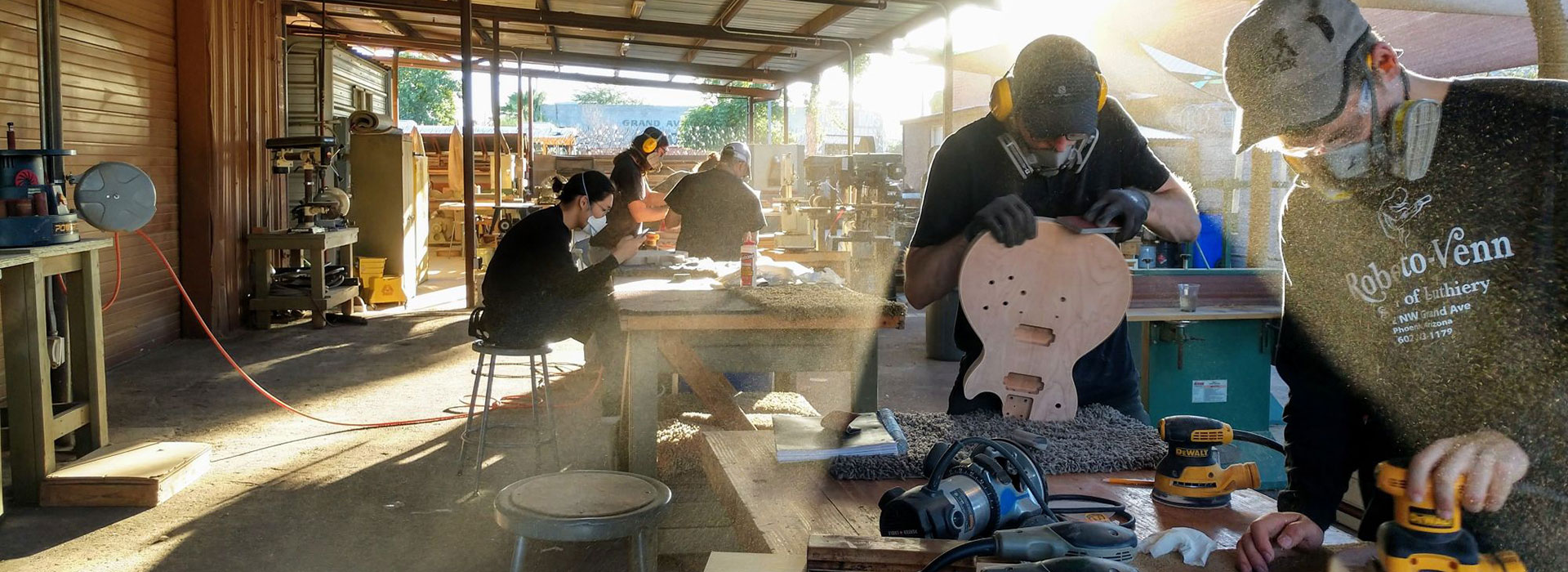
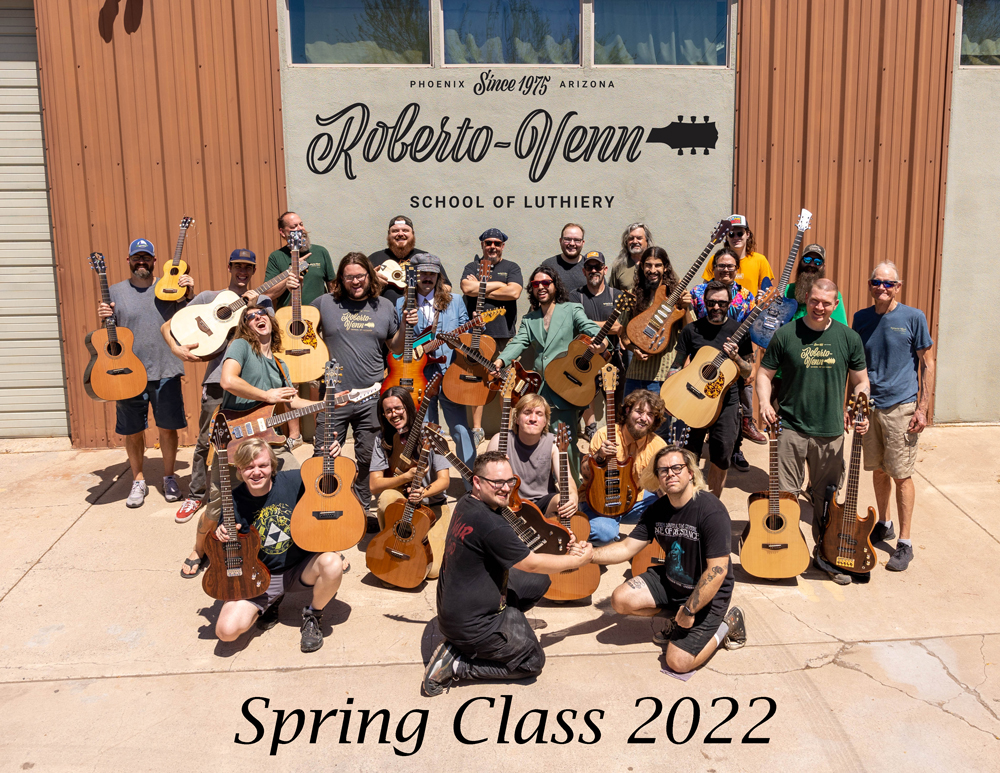
Roberto-Venn School of Luthiery isn't a college; it's a five-month, 880-hour bootcamp for the soul of a guitar maker. Founded in 1975, this Phoenix institution is the original, nationally accredited guitar-making school in North America, a place where students don't just learn a trade—they enter a craft lineage. The culture is that of a 'motorcycle club of the guitar making world,' intensely focused, hands-on, and dedicated to turning raw wood and passion into a viable, creative vocation.
More details
- Undergrad enrollment
- 21
- Founded
- 1975
- Program
- Guitar Making & Repair
- Location
- Phoenix, AZ
- Accreditation
- Nationally Accredited (ACCSC)
- Financial Aid
- Federal/State Grants & Loans Available
- Program Length
- 5 months, 880 hours
- Graduation Rate
- 100% (6-year)
- Median Earnings (10yr)
- $35,209
Outcomes & value
Outcomes & value
- Median earnings (10 yr)
- $35,209
- Value (earnings ÷ net price)
- 1.4×
- Reducing loan balance (3 yr)
- 58%
- Pell (lower-income) share
- 17%
Earnings = median of students working ~10 years after entry; debt = median of graduates. Value divides 10-yr earnings by one year’s net price — read it as earnings per dollar of annual cost, not a full lifetime ROI; it favors lower-cost schools. Source: U.S. Dept. of Education College Scorecard. Figures lag ~2 years and reflect all students, not your intended major.
Financial health
2.6 / 3.0Meets the federal financial-responsibility standard
U.S. Dept. of Education Financial Responsibility Composite Score (FY2022-23). Scale −1.0 to 3.0; ≥1.5 meets the standard. Reported for private nonprofit & for-profit institutions only — public universities are state-backed and not scored, so this is a stability signal, not a ranking.
Campus & location
Campus safety
- On-campus violent crimes (2024)
- 0
On-campus criminal offenses classed as violent (murder/non-negligent manslaughter, rape, robbery, aggravated assault) for the most recent reported year. Source: U.S. Dept. of Education Campus Safety and Security (Clery Act). Counts reflect what’s reported to the school, and urban campuses often report more partly due to non-student incidents nearby — read alongside campus size and setting, not as a standalone safety verdict.
Climate
- Pleasant days / yr
- 101
- Summer high
- 105°F
- Winter low
- 43°F
- Annual rain
- 13.7"
- Natural-hazard risk
- Very High
Pleasant days counts days per year with a mean temperature of 55–75°F, a high at or below 90°F, a low at or above 45°F, and little precipitation — a transparent comfort measure, not a weighting we invented. Computed from Open-Meteo ERA5 daily history (2019–2023). Natural-hazard risk is the county’s composite rating from the FEMA National Risk Index.
Deep dive — research, future-scholar output & economic mobility
Research output
- Institutional h-index
- 1
- Scholarly works
- 1
Institutional research volume and impact from OpenAlex. The h-index reflects large research universities and will be low for teaching-focused liberal-arts colleges — not a measure of undergraduate quality.
Quick answers
- How much does Roberto-Venn School of Luthiery cost?
- At Roberto-Venn School of Luthiery, the average net price (after aid) is about $24,680 per year. Actual cost varies with financial aid and residency.
- How many undergraduates attend Roberto-Venn School of Luthiery?
- Roberto-Venn School of Luthiery enrolls approximately 21 undergraduate students.
- Where is Roberto-Venn School of Luthiery located?
- Roberto-Venn School of Luthiery is located in Phoenix, AZ.
Admissions
Admissions at Roberto-Venn is a gateway to a craft, not a competition for academic prestige. The process is direct and vocational: an online application is the primary portal, with no mention of standardized test scores (SAT/ACT), high school GPA, or class rank as factors. data is notably elusive across multiple sources, suggesting the school's selectivity is defined more by applicant fit and capacity than by published statistics. The school does participate in federal student aid programs, and the application materials explicitly note that student aid and Veteran's benefits are available to those who qualify, indicating a process that considers financial accessibility alongside vocational readiness.
Academics
The academic offering is singular and total: the flagship Guitar Making & Repair program. This is a nationally accredited (ACCSC – Accrediting Commission of Career Schools and Colleges), five-month, 880-hour immersion. The curriculum is the school's ; since 1975, it has provided the 'real world skills and education' to start a career in luthiery. Instruction is intensely practical, focused on building a guitar 'from the centerline out,' ensuring students leave with the fundamental craft 'in-tact.' The faculty are not just academics but seasoned practitioners, described as having 'decades of knowledge and experience not just building and repairing and teching but also teaching the art and craft.' This is a program so specialized that the school itself notes its difficulty in matching with traditional scholarship categories.
Compare Roberto-Venn School of Luthiery
vs United States Coast Guard Academyvs United States Air Force Academyvs The College of Idahovs Converse University
See colleges similar to Roberto-Venn School of Luthiery →Sources
- [PDF] School Catalog VoLume No. 59 2025-2026 School Year
- Apply - Roberto-Venn School of Luthiery
- Roberto-Venn School of Luthiery - School Profile ... - EDsmart Data
- Common Data Set: Home
- Roberto-Venn School of Luthiery - Niche
- The Common Data Set: What It Is & How to Use It In College ...
- Roberto Venn School Of Luthiery Admission, Acceptance Rate, SAT ...
- Roberto-Venn School of Luthiery | Class of 2030 Community
- Home - Roberto-Venn School of Luthiery School of Luthiery
- I was accepted to attend the Roberto-Venn School of Luthiery this ...