Admit rate has ranged 64%–73% over the last 5 years — notably volatile. Source: IPEDS via Urban Institute.
Acceptance & SAT from Common Data Set / IPEDS; net price, earnings & graduation from the U.S. Dept. of Education College Scorecard. Figures lag ~1–2 years — verify with the school.
Rockhurst University is a small, Jesuit liberal arts college in Kansas City that operates like a professional launchpad. Its identity is split between a traditional, values-driven undergraduate core and a surprisingly robust set of graduate and professional programs, particularly in business and health sciences. The vibe is supportive and community-focused, with a strong emphasis on funneling graduates into the Kansas City job market, where they enjoy notable success.
Admission requirements
Test-optional — scores considered if submitted
Required
High school transcript
Grade point average
TOEFL (non-native English)
Considered (not required)
Class rank
Letters of recommendation
Test scores (SAT/ACT)
College-prep program
Demonstrated competencies
Source: IPEDS Admissions survey (2022) via Urban Institute. Covers formal factors only — it does not reflect essays, extracurriculars, or other holistic criteria.
More details
Undergrad enrollment
1,580
In-state tuition
$44,966
Out-of-state tuition
$44,966
Top Majors
Health Professions, Business
Graduation Rate
75%
Nursing Job Placement
100%
Median Earnings (10yr)
$67,102
Students Receiving Grant Aid
100%
Post-Grad Success Rate (6 months)
96.2%
Outcomes & value
Outcomes & value
Median earnings (10 yr)
$67,102
Value (earnings ÷ net price)
2.6×
Median debt at graduation
$18,250
Graduation rate
75%
First-year retention
79%
Reducing loan balance (3 yr)
74%
Pell (lower-income) share
20%
First-gen share (among federal-aid recipients)
21%
Financial health
1.9 / 3.0Meets the federal financial-responsibility standard
U.S. Dept. of Education Financial Responsibility Composite Score (FY2022-23). Scale −1.0 to 3.0; ≥1.5 meets the standard. Reported for private nonprofit & for-profit institutions only — public universities are state-backed and not scored, so this is a stability signal, not a ranking.
Top-earning majors
Median earnings by field of study (highest credential), ~2 years after completion.
Registered Nursing, Nursing Administration, Nursing Research and Clinical Nursing$60,213
Business/Commerce, General$43,957
Teacher Education and Professional Development, Specific Levels and Methods$35,060
English Language and Literature, General$32,925
Sports, Kinesiology, and Physical Education/Fitness$30,988
Biology, General
Campus & location
Campus safety
On-campus violent crimes (2024)
3
Per 1,000 students
1.05
On-campus criminal offenses classed as violent (murder/non-negligent manslaughter, rape, robbery, aggravated assault) for the most recent reported year. Source: U.S. Dept. of Education Campus Safety and Security (Clery Act). Counts reflect what’s reported to the school, and urban campuses often report more partly due to non-student incidents nearby — read alongside campus size and setting, not as a standalone safety verdict.
Climate
Pleasant days / yr
73
Summer high
88°F
Winter low
26°F
Annual rain
48.2"
Annual snow
18.9"
Natural-hazard risk
Relatively High
Pleasant days counts days per year with a mean temperature of 55–75°F, a high at or below 90°F, a low at or above 45°F, and little precipitation — a transparent comfort measure, not a weighting we invented. Computed from Open-Meteo ERA5 daily history (2019–2023). Natural-hazard risk is the county’s composite rating from the FEMA National Risk Index.
Deep dive — research, future-scholar output & economic mobility▾
Research output
Institutional h-index
59
Scholarly works
863
Institutional research volume and impact from OpenAlex. The h-index reflects large research universities and will be low for teaching-focused liberal-arts colleges — not a measure of undergraduate quality.
Economic mobility
Mobility rate
1.6%
Bottom → top quintile
38%
From bottom quintile
4%
Mobility rate = the share of students who both start in the bottom household-income quintile and reach the top quintile; bottom → top is that chance conditional on starting at the bottom. Source: Opportunity Insights Mobility Report Cards (Chetty, Friedman, Saez, Turner & Yagan). Reflects 1980–82 birth cohorts, so it’s directional, not current.
Quick answers
What is the acceptance rate at Rockhurst University?
Rockhurst University's acceptance rate is approximately 70% (Kansas City, MO), based on the most recent figures we compiled from public and primary sources.
How much does Rockhurst University cost?
At Rockhurst University, the average net price (after aid) is about $25,884 per year. Actual cost varies with financial aid and residency.
How many undergraduates attend Rockhurst University?
Rockhurst University enrolls approximately 1,580 undergraduate students.
Where is Rockhurst University located?
Rockhurst University is located in Kansas City, MO.
Admissions
Rockhurst's admissions process is accessible, designed to cast a wide net for students who fit its community-oriented, Jesuit mission. The university is , explicitly stating that applicants who choose not to submit ACT or SAT scores "will not be disadvantaged in any way in the admission process." The admitted freshman profile is solid but not ultra-competitive, with an average high school GPA of 3.69. While the university does not publish a directly, the consensus from external sources points to a rate—the percentage of admitted students who enroll—of around 19%. This suggests Rockhurst is often a safety or match school for many applicants. There is no mention of an Early Decision program binding admitted students to enroll, though the university does offer an Early Acceptance Program (ROKC-EAP) for pre-med tracks with Kansas City University, which has specific ACT and GPA requirements.
Earnings = median of students working ~10 years after entry; debt = median of graduates. Value divides 10-yr earnings by one year’s net price — read it as earnings per dollar of annual cost, not a full lifetime ROI; it favors lower-cost schools. Source: U.S. Dept. of Education College Scorecard. Figures lag ~2 years and reflect all students, not your intended major.
$30,119
Psychology, General$28,960
Romance Languages, Literatures, and Linguistics$28,212
Source: U.S. Dept. of Education College Scorecard (field-of-study earnings). Figures cover graduates who received federal aid and lag ~2 years; not all programs report data.
The academic experience at Rockhurst is defined by its Jesuit liberal arts foundation and a sharp, pragmatic focus on fields that lead directly to careers. The university offers more than 50 undergraduate majors, with the most popular clusters overwhelmingly in professional disciplines: Health Professions and Related Programs, and Business, Management, Marketing, and Related Support Services. This isn't a school for theoretical pondering; it's for students who want a degree that works. The curriculum is designed to enable a "personal academic experience," suggesting smaller class sizes and accessible faculty. Beyond the bachelor's level, Rockhurst's graduate programs, particularly in its College of Business and Technology, have earned national rankings, with two specialty business programs ranked among the top 30 in the nation. The Jesuit tradition is cited as encouraging "curiosity, critical thinking, and a commitment to service," providing an ethical framework for this career-focused education.
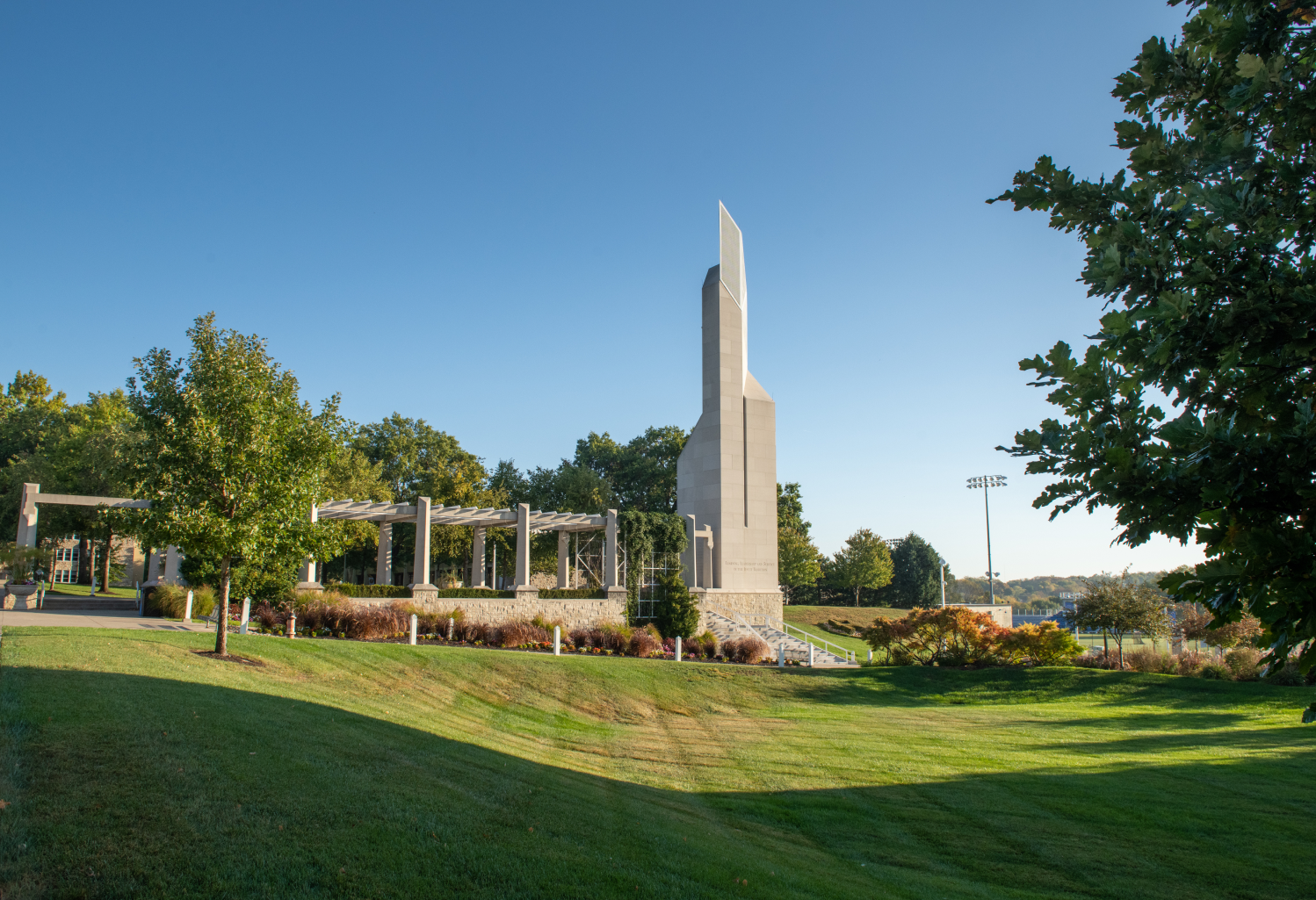
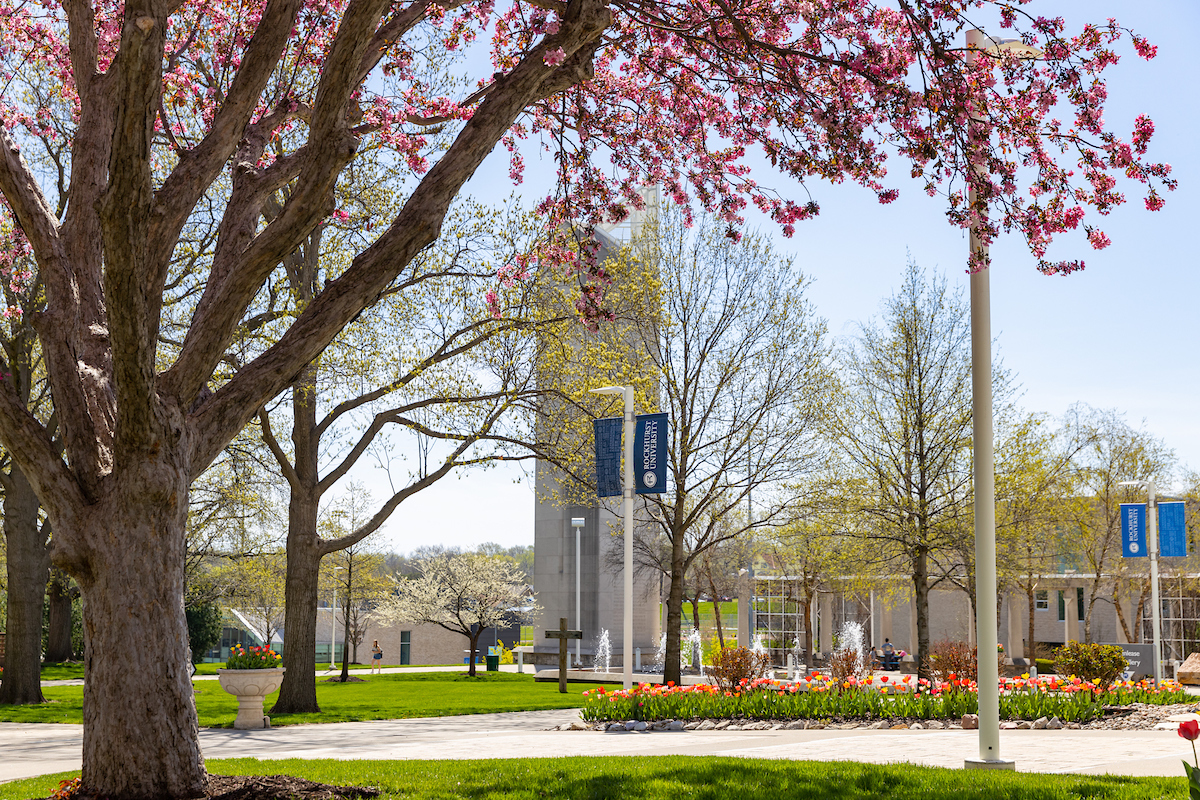
Life at Rockhurst revolves around a tight-knit, residential campus community in the heart of Kansas City. The university actively promotes an inclusive environment where "every person is a valued member of our community." Student life is organized and vibrant, managed through a dedicated Office of Student Life that oversees everything from Sorority and Fraternity Life to leadership programs. The university has invested in digital tools to boost engagement, onboarding an "Engagement Hub" to streamline event management and club involvement. Reviews of campus life highlight strong grades for social scene and diversity. While the provided sources don't detail specific traditions or a robust athletics culture, the emphasis is clearly on structured involvement, community building, and leveraging the urban setting of Kansas City for cultural and professional opportunities.
This is where Rockhurst's model pays dividends. The university excels at placing graduates into jobs or advanced study, with a remarkable 96.2% of graduates gaining employment or acceptance into graduate/professional programs within six months of graduation. This success is deeply rooted in the Kansas City area, where more than half of alumni remain. The outcomes are particularly strong in targeted fields: nursing graduates report a 100% job placement rate with a median salary of $70,000. The six-year graduation rate is a solid 75%, indicating good student support and retention. While earnings data varies by source, the university's focus on practical majors in high-demand fields like health and business translates into strong early-career traction for its graduates.
Rockhurst is a private institution with a published tuition and fees price tag of $44,650. However, the university is aggressive with financial support, investing more than $30 million per year in scholarships and grants. This aid is widespread: 100% of full-time beginning undergraduates receive grant or scholarship aid. The —the real cost after grants and scholarships—is where families should focus. The university provides a Net Price Calculator to help estimate this figure. While the sources do not indicate a "no-loan" policy for low-income families or a guarantee to meet 100% of demonstrated financial need, the substantial institutional investment suggests a commitment to making attendance feasible. Students are still expected to utilize federal loan programs, with both subsidized and unsubsidized loans available upon completion of the FAFSA.
Rockhurst carves out a distinctive niche by blending the formative, values-based education of a Jesuit liberal arts college with the practical urgency of a career institute. It doesn't try to be an elite national research university; instead, it focuses intensely on serving the Kansas City region. Its standout features are its exceptional postgraduate outcomes—a 96% placement rate is formidable—and its deep integration with the local professional ecosystem, especially in healthcare. The community is small and intentionally curated, offering a supportive environment for students who may not be academic superstars but are motivated, capable, and ready to work. For a student seeking a personalized undergraduate experience with a clear, no-nonsense path to a professional career in the Midwest, particularly in nursing or business, Rockhurst is a compelling and highly effective choice.
Rockhurst University seal · sourceRockhurst University | Lead with Courage • Live with Purpose · sourceRU at a Glance | Rockhurst University · sourceAbout Rockhurst University | Rockhurst University · source