Admit rate has ranged 69%–92% over the last 5 years — notably volatile. Source: IPEDS via Urban Institute.
Acceptance & SAT from Common Data Set / IPEDS; net price, earnings & graduation from the U.S. Dept. of Education College Scorecard. Figures lag ~1–2 years — verify with the school.
Rosemont College, a small Catholic liberal arts institution on Philadelphia's Main Line, is currently in a state of profound transition. Following a merger agreement with Villanova University, the college is no longer admitting new students, marking the end of an era for an institution that built its identity on intimate, discussion-based classes and a tight-knit campus community. Its legacy includes a practical, career-oriented academic approach and a student experience defined by familiar faces and close faculty connections.
Admission requirements
Test-optional — scores considered if submitted
Required
High school transcript
Grade point average
TOEFL (non-native English)
Considered (not required)
Class rank
Letters of recommendation
Test scores (SAT/ACT)
College-prep program
Demonstrated competencies
Source: IPEDS Admissions survey (2022) via Urban Institute. Covers formal factors only — it does not reflect essays, extracurriculars, or other holistic criteria.
More details
Undergrad enrollment
486
In-state tuition
$23,845
Out-of-state tuition
$23,845
Graduation Rate
57%
Most Popular Major
Business Administration & Management
Early Action Deadline
December 1
Median Earnings (10yr)
$48,555
Early Decision Deadline
February 1
Financial Aid Recipients
96% of first-year students
Outcomes & value
Outcomes & value
Median earnings (10 yr)
$48,555
Value (earnings ÷ net price)
2.4×
Median debt at graduation
$27,000
Graduation rate
57%
First-year retention
82%
Reducing loan balance (3 yr)
50%
Pell (lower-income) share
45%
First-gen share (among federal-aid recipients)
37%
Campus & location
Campus safety
On-campus violent crimes (2024)
0
Per 1,000 students
0.00
On-campus criminal offenses classed as violent (murder/non-negligent manslaughter, rape, robbery, aggravated assault) for the most recent reported year. Source: U.S. Dept. of Education Campus Safety and Security (Clery Act). Counts reflect what’s reported to the school, and urban campuses often report more partly due to non-student incidents nearby — read alongside campus size and setting, not as a standalone safety verdict.
Climate
Pleasant days / yr
90
Summer high
85°F
Winter low
30°F
Annual rain
51.3"
Annual snow
14.6"
Natural-hazard risk
Relatively High
Pleasant days counts days per year with a mean temperature of 55–75°F, a high at or below 90°F, a low at or above 45°F, and little precipitation — a transparent comfort measure, not a weighting we invented. Computed from Open-Meteo ERA5 daily history (2019–2023). Natural-hazard risk is the county’s composite rating from the FEMA National Risk Index.
Deep dive — research, future-scholar output & economic mobility▾
Research output
Institutional h-index
34
Scholarly works
451
Institutional research volume and impact from OpenAlex. The h-index reflects large research universities and will be low for teaching-focused liberal-arts colleges — not a measure of undergraduate quality.
Quick answers
What is the acceptance rate at Rosemont College?
Rosemont College's acceptance rate is approximately 76% (Rosemont, PA), based on the most recent figures we compiled from public and primary sources.
How much does Rosemont College cost?
At Rosemont College, the average net price (after aid) is about $20,150 per year. Actual cost varies with financial aid and residency.
How many undergraduates attend Rosemont College?
Rosemont College enrolls approximately 486 undergraduate students.
Where is Rosemont College located?
Rosemont College is located in Rosemont, PA.
Admissions
The admissions process at Rosemont College has ceased. According to the college's own consumer information page, "Per the merger agreement with Villanova University, Rosemont College is no longer admitting new students." This definitive statement closes the book on an admissions profile that was historically accessible. Prior to this change, Rosemont was consistently characterized as a "lightly selective" institution. Multiple sources reported clustering in the mid-70s, with figures of 74.5%, 76%, and 76.34% commonly cited for recent cycles. The college received a moderate volume of applications; one source notes 1,450 applications for a recent class, with 1,107 students accepted and 504 ultimately enrolling, resulting in a of approximately 36%. The admitted student profile was not defined by ultra-high standardized test scores, with the average high school GPA for incoming students reported as 3.20. The college offered both Early Action (with a December 1 deadline for a decision by December 15) and Early Decision (with a February 1 deadline) plans, though specific acceptance rates for these plans are not detailed in the provided sources.
Earnings = median of students working ~10 years after entry; debt = median of graduates. Value divides 10-yr earnings by one year’s net price — read it as earnings per dollar of annual cost, not a full lifetime ROI; it favors lower-cost schools. Source: U.S. Dept. of Education College Scorecard. Figures lag ~2 years and reflect all students, not your intended major.
Rosemont's academic offerings were rooted in the liberal arts tradition with a clear practical bent, marketed as part of "why Rosemont College is a Forbes rated best online college, and a best Main Line college." The undergraduate curriculum emphasized discussion-based, intimate classroom settings, as reflected in a student testimonial noting, "all my classes are discussion-based, allowing for deeper connections with professors." The college offered a range of undergraduate majors and minors through its Undergraduate College. While a comprehensive list of programs isn't detailed in the snippets, the most popular major was Business Administration and Management, General, with the institution awarding about 19 degrees in that field annually. The academic structure appears to have been designed to provide focused, personalized attention, aligning with the college's small size and community ethos.
Life at Rosemont was defined by its small scale and intentional community. Students frequently cited the desire for a "smaller college environment" as a key reason for attendance, with the benefit being that one could "walk around Rosemont's campus and see familiar faces." The Office of Student Life organized events, student organizations, and initiatives focused on wellness and work-life balance. Residence Life specifically aimed to "promote civility and positive citizenship, encouraging students to engage in behaviors that contribute to a harmonious living environment." While rooted in its Catholic heritage—"Rooted in Catholicism we welcome all faiths and beliefs"—the community explicitly welcomed students of all backgrounds. The overall vibe was one of a close, manageable community where students could easily connect with peers and faculty, a stark contrast to the large, anonymous university experience.
Outcomes data for Rosemont graduates shows a mixed picture, with a significant focus on career preparation as part of its academic mission. The most definitive figure is the median earnings ten years after entry, which is $48,555. Graduation rates, however, were a challenge. Sources report varying figures: a 39% rate from the College Scorecard, a 43% general rate from another source (with 46% for women and 37% for men), and a 49% rate from a third. One source notes a 45.1% five-year graduation rate and a 53.8% six-year rate. The college promoted its "outcomes" as a key selling point, linking them to its Forbes ratings, suggesting an institutional emphasis on post-graduate success despite the retention and completion challenges reflected in the data.
Rosemont College made financial aid a central part of its accessibility strategy. A remarkable 96% of full-time beginning undergraduates received grant or scholarship aid. The average grant award was substantial, reported as $22,313 by one source and $12,657 by another, indicating significant institutional discounting. The average after aid is $20,150. The college offered both merit and talent-based scholarships, alongside federal and state aid programs. There is no indication in the provided sources that Rosemont had a "no-loan" policy or a commitment to meet 100% of demonstrated financial need without loans; such policies are typically highlighted by institutions that have them, and the provided aid pages discuss standard grant, loan, and scholarship packages.
Rosemont College stood out precisely because it was not for everyone—it was a specific antidote to the large, impersonal university. Its value proposition was unequivocally centered on scale and community. For students who felt lost in a large high school, Rosemont offered a guaranteed small-college experience where every class was a discussion and no face on the winding campus paths was a stranger. It blended a liberal arts foundation with pragmatic, career-focused programs like its popular Business Administration major. While its graduation rates signaled challenges, it provided considerable financial support to make attendance feasible. In the end, its defining characteristic—its small, intimate, Catholic-inspired community on the Main Line—also likely contributed to its financial vulnerabilities, leading to the merger with Villanova and the end of its independent existence. It was a college that knew its niche and served it faithfully until broader economic forces in higher education made that model unsustainable.
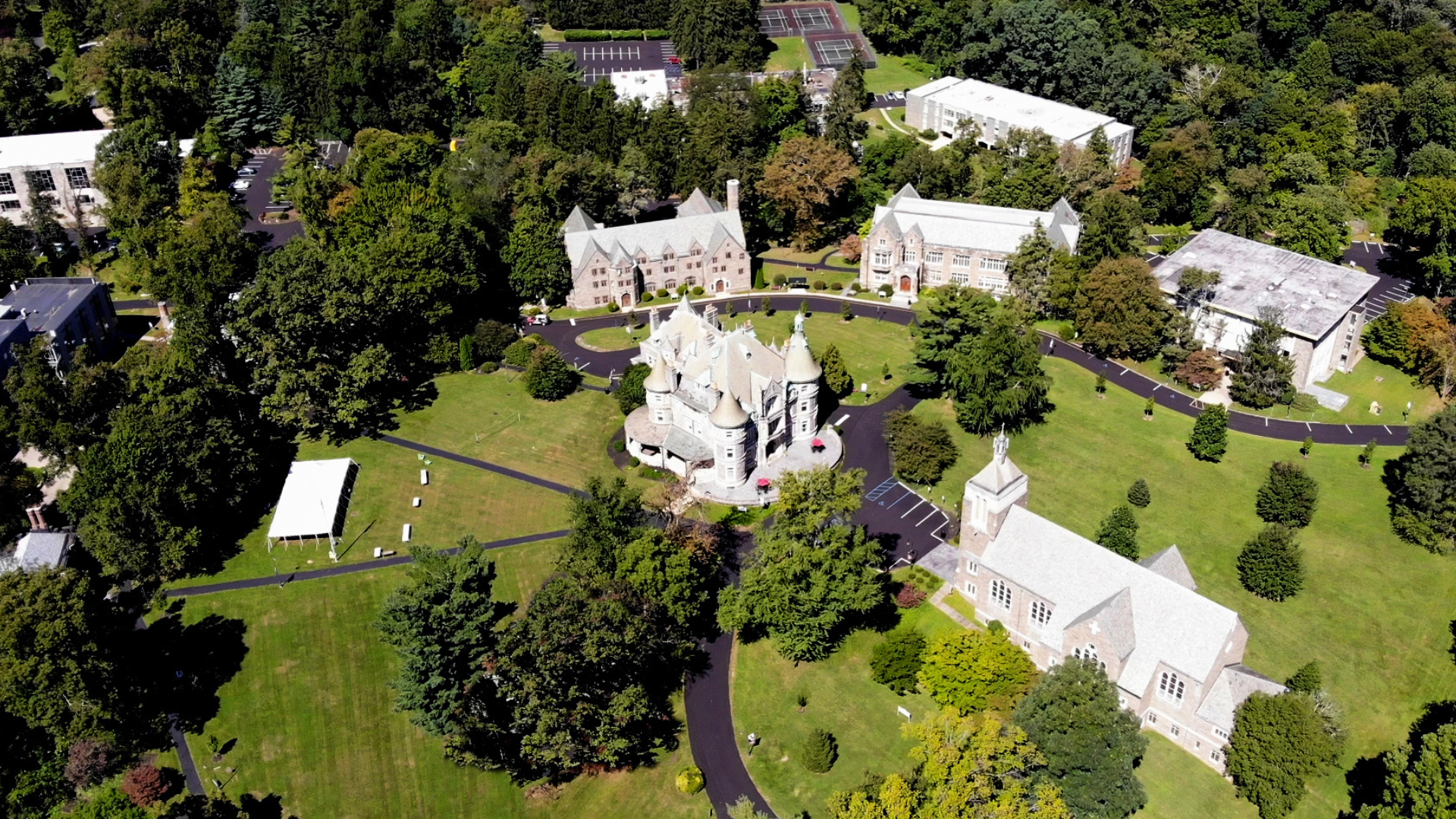
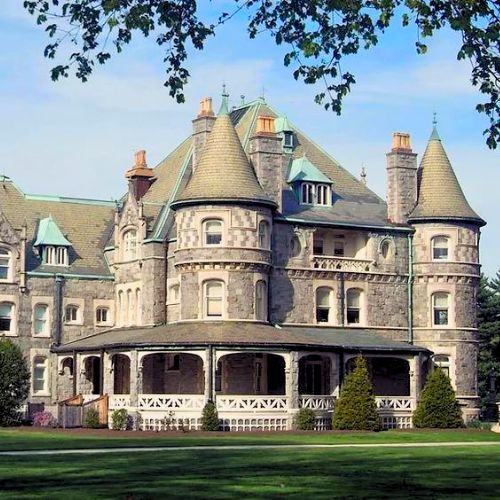
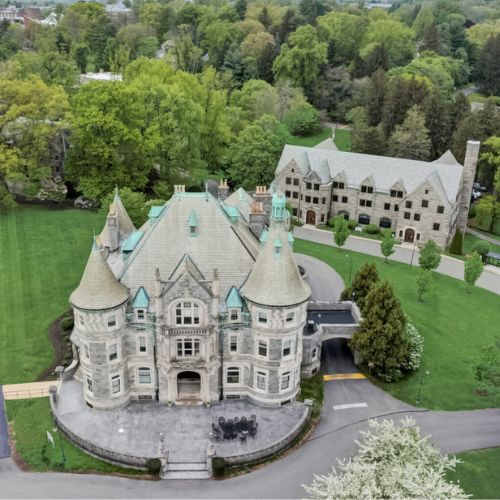
Rosemont College seal · sourceRosemont - Rosemont College · sourceRosemont - Rosemont College · sourceRosemont College Campus - Rosemont College · source