Loading…
← All schools
Ross Medical Education Center-Battle Creek
Battle Creek, MIprivate forprofitrosseducation.edu
Avg net price
$20,440
Earnings (10 yr)
$30,060
Acceptance & SAT from Common Data Set / IPEDS; net price, earnings & graduation from the U.S. Dept. of Education College Scorecard. Figures lag ~1–2 years — verify with the school.
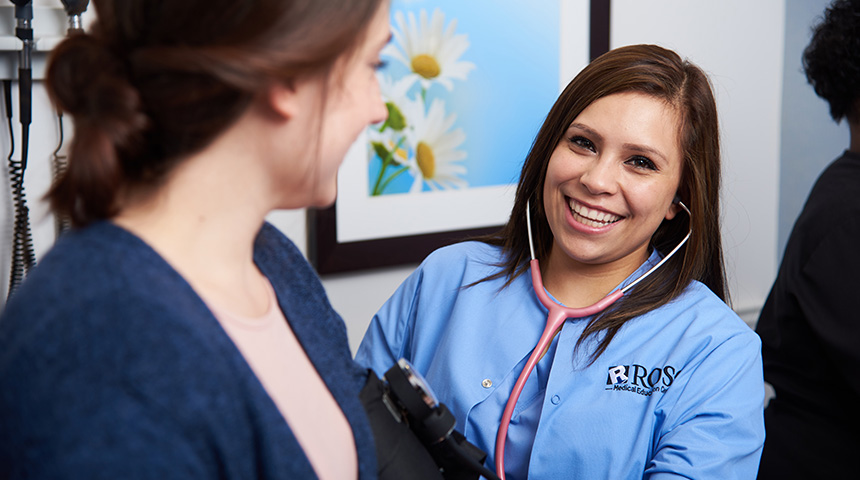
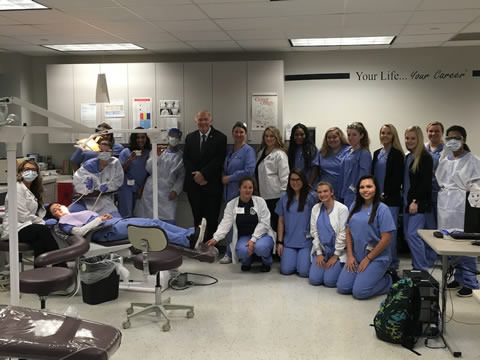
Ross Medical Education Center-Battle Creek is a singularly focused, career-driven institution that operates less like a traditional college and more like a vocational bootcamp for the allied health field. Its entire existence is oriented toward a single, pragmatic goal: training students for specific, entry-level medical support roles as quickly as possible. With an open-access admissions policy and a campus located in a suburban office park, it serves a local, non-traditional student body seeking a direct and accelerated path into the workforce.
More details
- Undergrad enrollment
- 50
- Top Major
- Allied Health and Medical Assisting Services
- Average Grant Award
- $4,814
- Student-Faculty Ratio
- 23:1
- Median Earnings (10yr)
- $30,060
- Graduation Rate (Recent)
- 64%
- Students Receiving Grant Aid
- 68%
Outcomes & value
Outcomes & value
- Median earnings (10 yr)
- $30,060
- Value (earnings ÷ net price)
- 1.5×
- Median debt at graduation
- $9,500
- Reducing loan balance (3 yr)
- 28%
- Pell (lower-income) share
- 60%
- First-gen share (among federal-aid recipients)
- 53%
Earnings = median of students working ~10 years after entry; debt = median of graduates. Value divides 10-yr earnings by one year’s net price — read it as earnings per dollar of annual cost, not a full lifetime ROI; it favors lower-cost schools. Source: U.S. Dept. of Education College Scorecard. Figures lag ~2 years and reflect all students, not your intended major.
Campus & location
Campus safety
- On-campus violent crimes (2024)
- 0
On-campus criminal offenses classed as violent (murder/non-negligent manslaughter, rape, robbery, aggravated assault) for the most recent reported year. Source: U.S. Dept. of Education Campus Safety and Security (Clery Act). Counts reflect what’s reported to the school, and urban campuses often report more partly due to non-student incidents nearby — read alongside campus size and setting, not as a standalone safety verdict.
Climate
- Pleasant days / yr
- 90
- Summer high
- 81°F
- Winter low
- 22°F
- Annual rain
- 40.6"
- Annual snow
- 34.9"
- Natural-hazard risk
- Relatively Low
Pleasant days counts days per year with a mean temperature of 55–75°F, a high at or below 90°F, a low at or above 45°F, and little precipitation — a transparent comfort measure, not a weighting we invented. Computed from Open-Meteo ERA5 daily history (2019–2023). Natural-hazard risk is the county’s composite rating from the FEMA National Risk Index.
Quick answers
- How much does Ross Medical Education Center-Battle Creek cost?
- At Ross Medical Education Center-Battle Creek, the average net price (after aid) is about $20,440 per year. Actual cost varies with financial aid and residency.
- How many undergraduates attend Ross Medical Education Center-Battle Creek?
- Ross Medical Education Center-Battle Creek enrolls approximately 50 undergraduate students.
- Where is Ross Medical Education Center-Battle Creek located?
- Ross Medical Education Center-Battle Creek is located in Battle Creek, MI.
Admissions
The admissions process at Ross Medical Education Center-Battle Creek is defined by open access, not selectivity. The institution reports a 100% , indicating its mission is to provide educational opportunities rather than to curate a competitive applicant pool. Prospective students are directed to the school's admissions guide for details on requirements, qualifications, and the enrollment process. The process is designed to be straightforward, with the campus encouraging prospective students to stop in for tours and to meet with staff to discuss their goals. There is no indication that standardized test scores like the SAT or ACT are a factor in admissions decisions for these career-focused programs.
Academics
Academics are laser-focused on practical, hands-on training for specific allied health careers. The school is known for its top major in Allied Health and Medical Assisting Services. The educational model is intensive and accelerated, with a student-faculty ratio of 23:1, suggesting a blend of direct instruction and practical lab work. Completion of an associate degree from Ross with a minimum GPA can satisfy admissions requirements for bachelor's-level programs at partner institutions, offering a potential pathway for further education. The graduation rate has shown significant fluctuation and improvement in recent years, with one source citing a rate as high as 76%, while a longitudinal analysis notes an average rate of about 41% over nine years, with the most recent year reaching 64%. This volatility may reflect the challenges and successes of its non-traditional student population in completing intensive programs.
Compare Ross Medical Education Center-Battle Creek
See colleges similar to Ross Medical Education Center-Battle Creek →Sources
- Ross
- Ross Stores
- Ross accelerates brick-and-mortar expansion with nearly 50 new ...
- University of Michigan's Ross School of Business: Michigan Ross
- Ross Dress for Less (@RossDressforLess)
- Ross Video
- Ross Medical Education Center - Davison
- Medical Career Training Programs in Battle Creek, MI
- Ross Medical Education Center
- Ross Medical Education Center - Battle Creek
- Ross Medical Education Center-Lansing (off-campus)
- Ross Medical Education Center-Battle Creek Stats - Vaia