Loading…
← All schools
Saint John's Seminary
Brighton, MAprivate nonprofitwww.sjs.edu/
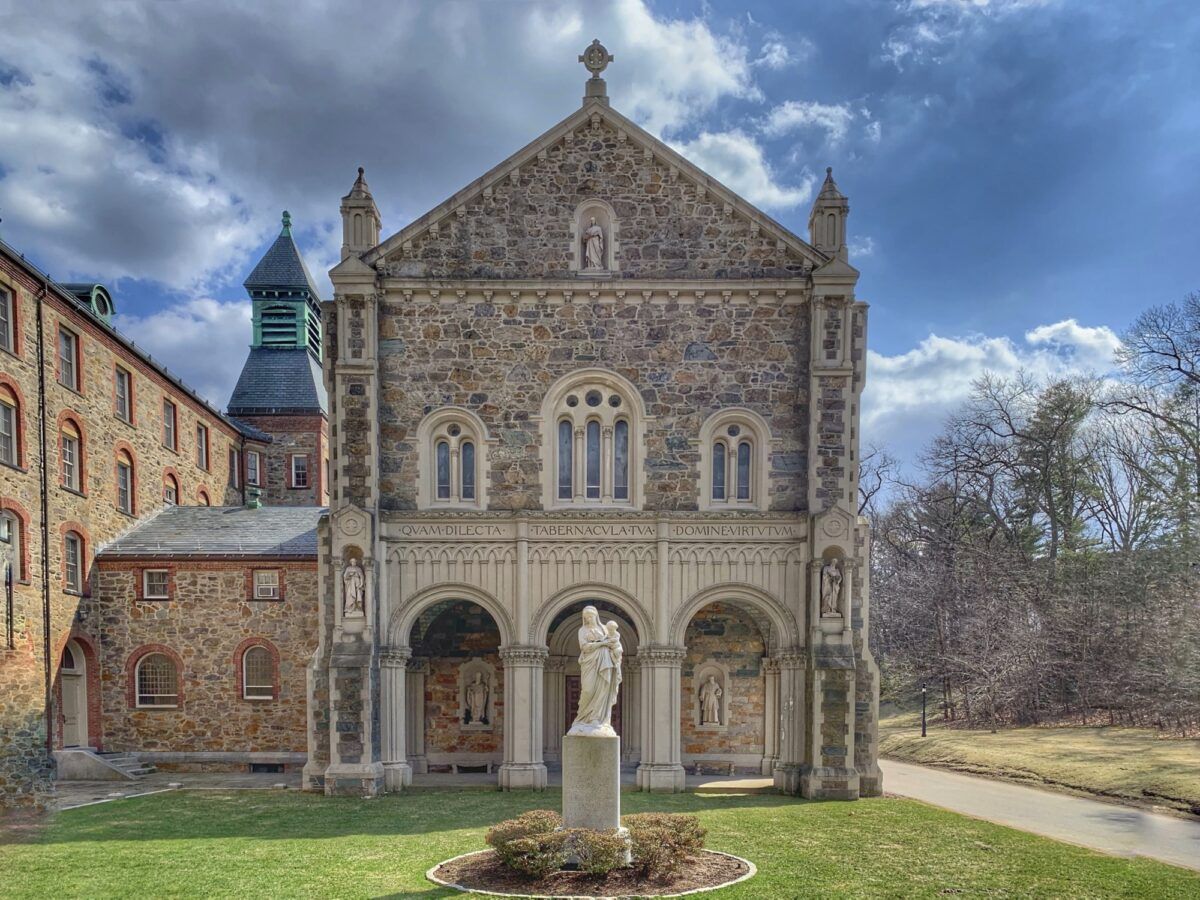
Saint John's Seminary in Brighton, Massachusetts, is not a typical undergraduate college. It is a deeply focused, Catholic seminary that forms men for the Roman Catholic priesthood, offering a cloistered, communal life centered on prayer, rigorous theological study, and pastoral preparation. Its identity is singular: a professional school for a sacred vocation, where the entire academic and residential experience is designed to discern and cultivate a life of ordained ministry.
More details
- Undergrad enrollment
- 7
Outcomes & value
Outcomes & value
- Pell (lower-income) share
- —
- Endowment / student
- $548,410
Earnings = median of students working ~10 years after entry; debt = median of graduates. Value divides 10-yr earnings by one year’s net price — read it as earnings per dollar of annual cost, not a full lifetime ROI; it favors lower-cost schools. Source: U.S. Dept. of Education College Scorecard. Figures lag ~2 years and reflect all students, not your intended major.
Financial health
2.2 / 3.0Meets the federal financial-responsibility standard
U.S. Dept. of Education Financial Responsibility Composite Score (FY2022-23). Scale −1.0 to 3.0; ≥1.5 meets the standard. Reported for private nonprofit & for-profit institutions only — public universities are state-backed and not scored, so this is a stability signal, not a ranking.
Campus & location
Campus safety
- On-campus violent crimes (2024)
- 0
- Per 1,000 students
- 0.00
On-campus criminal offenses classed as violent (murder/non-negligent manslaughter, rape, robbery, aggravated assault) for the most recent reported year. Source: U.S. Dept. of Education Campus Safety and Security (Clery Act). Counts reflect what’s reported to the school, and urban campuses often report more partly due to non-student incidents nearby — read alongside campus size and setting, not as a standalone safety verdict.
Climate
- Pleasant days / yr
- 96
- Summer high
- 81°F
- Winter low
- 25°F
- Annual rain
- 39.7"
- Annual snow
- 31.4"
- Natural-hazard risk
- Relatively Moderate
Pleasant days counts days per year with a mean temperature of 55–75°F, a high at or below 90°F, a low at or above 45°F, and little precipitation — a transparent comfort measure, not a weighting we invented. Computed from Open-Meteo ERA5 daily history (2019–2023). Natural-hazard risk is the county’s composite rating from the FEMA National Risk Index.
Deep dive — research, future-scholar output & economic mobility
Research output
- Institutional h-index
- 10
- Scholarly works
- 200
Institutional research volume and impact from OpenAlex. The h-index reflects large research universities and will be low for teaching-focused liberal-arts colleges — not a measure of undergraduate quality.
Quick answers
- How many undergraduates attend Saint John's Seminary?
- Saint John's Seminary enrolls approximately 7 undergraduate students.
- Where is Saint John's Seminary located?
- Saint John's Seminary is located in Brighton, MA.
Admissions
Admission to Saint John's Seminary is a unique and highly specialized process, distinct from secular undergraduate admissions. The seminary is "open to students without regard to race or national origin who are sponsored for the Roman Catholic priesthood." This sponsorship is the foundational requirement; applicants are typically sent by their diocese or religious order. The final admissions decision is made by the Seminary Admissions Board. While some sources reference general (one notes an 87.5% rate for 2023, and another a 55% rate for a similarly named but different institution), these figures are misleading for a seminary context where the primary gatekeeper is ecclesiastical sponsorship, not standardized test scores or GPA. The process is less about evaluating a high school transcript and more about discerning a vocation, with students "typically admitted throughout the year for the fall, spring, or summer" terms for its graduate programs.
Academics
The academic structure at Saint John's Seminary is exclusively theological and ministerial, designed to prepare men for priesthood. The core of its formation is a pre-theology bachelor's degree program and a dual-degree Master of Divinity (M.Div.) and Bachelor of Sacred Theology (S.T.B.) track. The curriculum is built around eleven core courses spanning Philosophy, Systematic Theology, Scripture, Church History, Sacramental Theology, and Moral Theology, supplemented by one elective. For those not on the priestly track, the seminary's Theological Institute offers two fully accredited graduate degree programs in Catholic theology for laity, religious, and deacons: a Master of Arts in Ministry (M.A.M.) and a Master of Theological Studies (M.T.S.). These programs introduce students to how "the Bible, history, theology, and practical theology can make a meaningful difference in their work." The Master of Arts is described as a "two-year full-time academic degree intended to recognize students who have demonstrated clear potential for sustained excellence." This is an environment of deep, focused study, where every class is in service to understanding and serving the Catholic faith.
Compare Saint John's Seminary
See colleges similar to Saint John's Seminary →Sources
- Common Data Set 2025-2026
- Common Data Set
- Common Data Set: Home
- Common Data Set
- St. John's College
- Common Data Set 2023 – 2024
- Saint John's Seminary - Massachusetts Admissions & Acceptance
- St. John's University Admissions - BigFuture College Search
- Saint John's Prep Fast Facts - College Prep Education for Grades 6-12
- St. John's College Admissions - U.S. News & World Report
- St John's Seminary [Ranking 2026 + Acceptance Rate] - EduRank