Admit rate has ranged 80%–90% over the last 5 years — notably volatile, though the latest figure above (77%) falls outside that window. Source: IPEDS via Urban Institute.
Acceptance & SAT from Common Data Set / IPEDS; net price, earnings & graduation from the U.S. Dept. of Education College Scorecard. Figures lag ~1–2 years — verify with the school.
Salem College is a small, private liberal arts college for women in Winston-Salem, North Carolina, with a character defined by its historic roots and recent, dramatic enrollment surge. It offers a tight-knit, almost exclusively female undergraduate community where popular paths like business, interior design, and the arts lead to modest early-career earnings. The school is in a moment of significant momentum, reporting record-breaking application growth and its largest incoming class in recent history.
Admission requirements
Test-optional — scores considered if submitted
Required
High school transcript
Grade point average
TOEFL (non-native English)
Considered (not required)
Class rank
Letters of recommendation
Test scores (SAT/ACT)
College-prep program
Source: IPEDS Admissions survey (2022) via Urban Institute. Covers formal factors only — it does not reflect essays, extracurriculars, or other holistic criteria.
More details
Undergrad enrollment
423
In-state tuition
$33,848
Out-of-state tuition
$33,848
Location
Winston-Salem, NC (downtown)
Female Students
99.6%
Graduation Rate
57%
Median Earnings (10yr)
$44,640
Outcomes & value
Outcomes & value
Median earnings (10 yr)
$44,640
Value (earnings ÷ net price)
2.4×
Median debt at graduation
$26,649
Graduation rate
57%
First-year retention
68%
Reducing loan balance (3 yr)
54%
Pell (lower-income) share
55%
First-gen share (among federal-aid recipients)
33%
Financial health
2.4 / 3.0Meets the federal financial-responsibility standard
U.S. Dept. of Education Financial Responsibility Composite Score (FY2022-23). Scale −1.0 to 3.0; ≥1.5 meets the standard. Reported for private nonprofit & for-profit institutions only — public universities are state-backed and not scored, so this is a stability signal, not a ranking.
Top-earning majors
Median earnings by field of study (highest credential), ~2 years after completion.
Business Administration, Management and Operations$32,925
Education, General$29,685
Source: U.S. Dept. of Education College Scorecard (field-of-study earnings). Figures cover graduates who received federal aid and lag ~2 years; not all programs report data.
On-campus criminal offenses classed as violent (murder/non-negligent manslaughter, rape, robbery, aggravated assault) for the most recent reported year. Source: U.S. Dept. of Education Campus Safety and Security (Clery Act). Counts reflect what’s reported to the school, and urban campuses often report more partly due to non-student incidents nearby — read alongside campus size and setting, not as a standalone safety verdict.
Climate
Pleasant days / yr
99
Summer high
87°F
Winter low
34°F
Annual rain
45.5"
Annual snow
4.9"
Natural-hazard risk
Relatively Moderate
Pleasant days counts days per year with a mean temperature of 55–75°F, a high at or below 90°F, a low at or above 45°F, and little precipitation — a transparent comfort measure, not a weighting we invented. Computed from Open-Meteo ERA5 daily history (2019–2023). Natural-hazard risk is the county’s composite rating from the FEMA National Risk Index.
Deep dive — research, future-scholar output & economic mobility▾
Research output
Institutional h-index
65
Scholarly works
1,714
Institutional research volume and impact from OpenAlex. The h-index reflects large research universities and will be low for teaching-focused liberal-arts colleges — not a measure of undergraduate quality.
Economic mobility
Mobility rate
0.8%
Bottom → top quintile
14%
From bottom quintile
6%
Mobility rate = the share of students who both start in the bottom household-income quintile and reach the top quintile; bottom → top is that chance conditional on starting at the bottom. Source: Opportunity Insights Mobility Report Cards (Chetty, Friedman, Saez, Turner & Yagan). Reflects 1980–82 birth cohorts, so it’s directional, not current.
Quick answers
What is the acceptance rate at Salem College?
Salem College's acceptance rate is approximately 77% (Winston-Salem, NC), based on the most recent figures we compiled from public and primary sources.
What SAT score do you need for Salem College?
Admitted students at Salem College typically score 1066–1243 on the SAT (the middle-50% range). Scores outside this band are still admitted, especially with strong applications.
How much does Salem College cost?
At Salem College, the average net price (after aid) is about $18,277 per year. Actual cost varies with financial aid and residency.
How many undergraduates attend Salem College?
Salem College enrolls approximately 423 undergraduate students.
Where is Salem College located?
Salem College is located in Winston-Salem, NC.
Admissions
Salem College is a less selective institution where admission is not treated as a long shot, with a published of 77%. The middle 50% SAT range for admitted students is 1066–1243. The college is experiencing remarkable growth; for the Fall 2025 term, it reported a 19% increase in total undergraduate enrollment and a 27% increase in new undergraduate students (222 students), marking its fifth-largest incoming class in history. This surge was fueled by a 43% increase in applications for the Class of 2029 compared to the previous year, representing a staggering 454% increase in applications since May 2021. Notably, only a small fraction of admitted students submit standardized test scores—about 6% provide SAT results and 7% provide ACT scores. The rate (the percentage of admitted students who enroll) is reported to be around 7%.
Earnings = median of students working ~10 years after entry; debt = median of graduates. Value divides 10-yr earnings by one year’s net price — read it as earnings per dollar of annual cost, not a full lifetime ROI; it favors lower-cost schools. Source: U.S. Dept. of Education College Scorecard. Figures lag ~2 years and reflect all students, not your intended major.
Salem offers a traditional bachelor of arts degree with a set of majors that reflect a blend of practical, creative, and humanistic studies. According to popularity rankings, the most sought-after majors include Business Administration and Management, General; Interior Design; Psychology, General; and Fine/Studio Arts. The college provides a Health Science major for students interested in the natural sciences and interdisciplinary perspectives on health. In the visual and performing arts, students can pursue a BA with concentrations in art history, studio art, pre-art therapy, and music. A distinctive interdisciplinary program is the Teaching, Schools, and Society major, which blends broad areas of study to prepare students for educational fields.
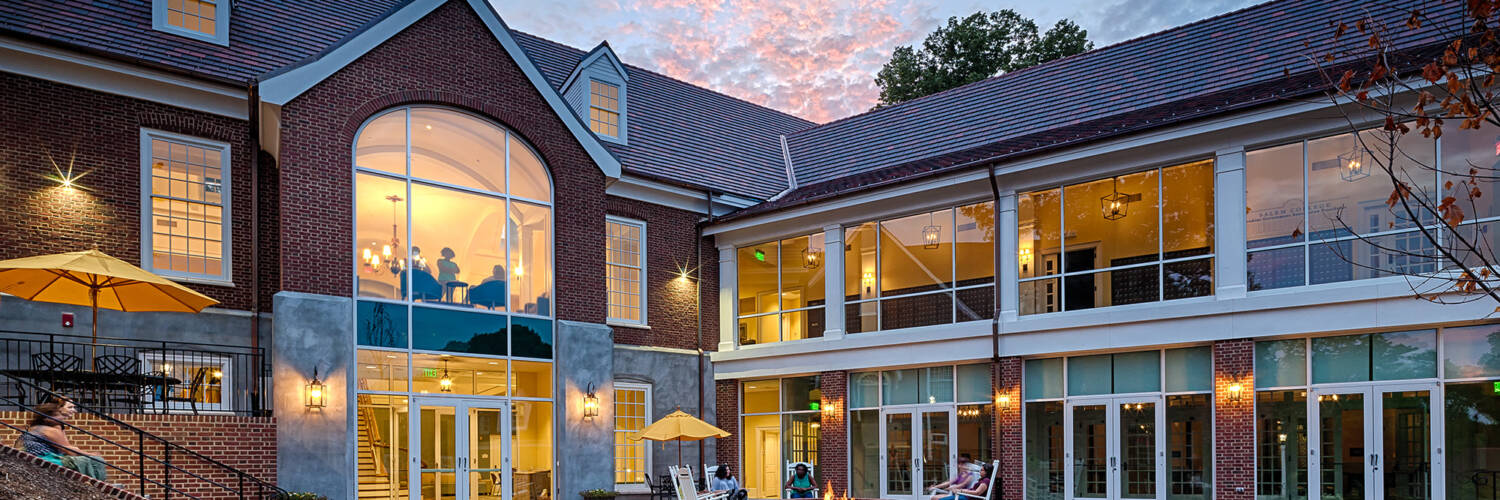
Life at Salem is defined by its small, overwhelmingly female undergraduate population (99.6% of students) and its location nestled in the heart of downtown Winston-Salem. Students have access to the city's thriving arts and cultural scene, vibrant music, and community events. Campus life is supported by a Center for Campus Culture and Care, which offers educational workshops to foster cultural competence, empathy, and communication. The college promotes a vibrant, active campus with various clubs, organizations, and residence life opportunities. With a total undergraduate enrollment of 464, the environment is inherently close-knit.
Salem College's graduation rate is a central metric, with the institution reporting that 75% of full-time first-year students will graduate within six years and that 65% of Pell Grant recipients will graduate within six years. Other sources list an overall graduation rate of 56% and a federal scorecard rate of 62%. Early-career earnings for graduates are modest; one source reports average earnings of about $30,000 in the early career, while another lists average earnings after six years at $28,900 per year, rising to $32,800 after nine years. The typical monthly loan payment for graduates is reported as $283, with a 4% loan default rate. The college is ranked #143 out of 207 National Liberal Arts Colleges by U.S. News, with outcomes factoring heavily into its score.
The published average after aid is $18,277. Salem College offers financial aid through institutional scholarships, federal Pell Grants, state aid (like the NC Need-Based Scholarship), and institutional grants. The college encourages students to stack these with outside scholarships. To apply for federal aid, students must list Salem's Title IV school code (002960) on the FAFSA. Eligibility for aid requires U.S. citizenship or eligible non-citizen status, a high school diploma or GED, and registration with Selective Service (if applicable). The college provides a Net Price Calculator for families to estimate their cost.
Salem College stands out for its unique position as a small women's college experiencing explosive growth in an era when many similar institutions are struggling. The 454% increase in applications since 2021 and the arrival of its fifth-largest incoming class ever signal a remarkable turnaround and growing appeal. Its identity is a specific blend: a historic liberal arts campus for women located in a dynamic downtown (Winston-Salem), offering pragmatic majors like business and interior design alongside arts and interdisciplinary studies like Teaching, Schools, and Society. The community is intensely focused, with a 99.6% female undergraduate population fostering a distinctive environment. While post-graduate earnings are not its primary selling point, the college emphasizes support through its Center for Campus Culture and Care and reports strong graduation goals for both its general and Pell-eligible populations.
Salem College seal · sourceOur Campus - Salem College · sourceSalem College - Profile, Rankings and Data | US News Best Colleges · sourceSalem College Administration Building - Wikipedia · source