Admit rate has ranged 70%–75% over the last 5 years, though the latest figure above (68%) falls outside that window. Source: IPEDS via Urban Institute.
Acceptance & SAT from Common Data Set / IPEDS; net price, earnings & graduation from the U.S. Dept. of Education College Scorecard. Figures lag ~1–2 years — verify with the school.
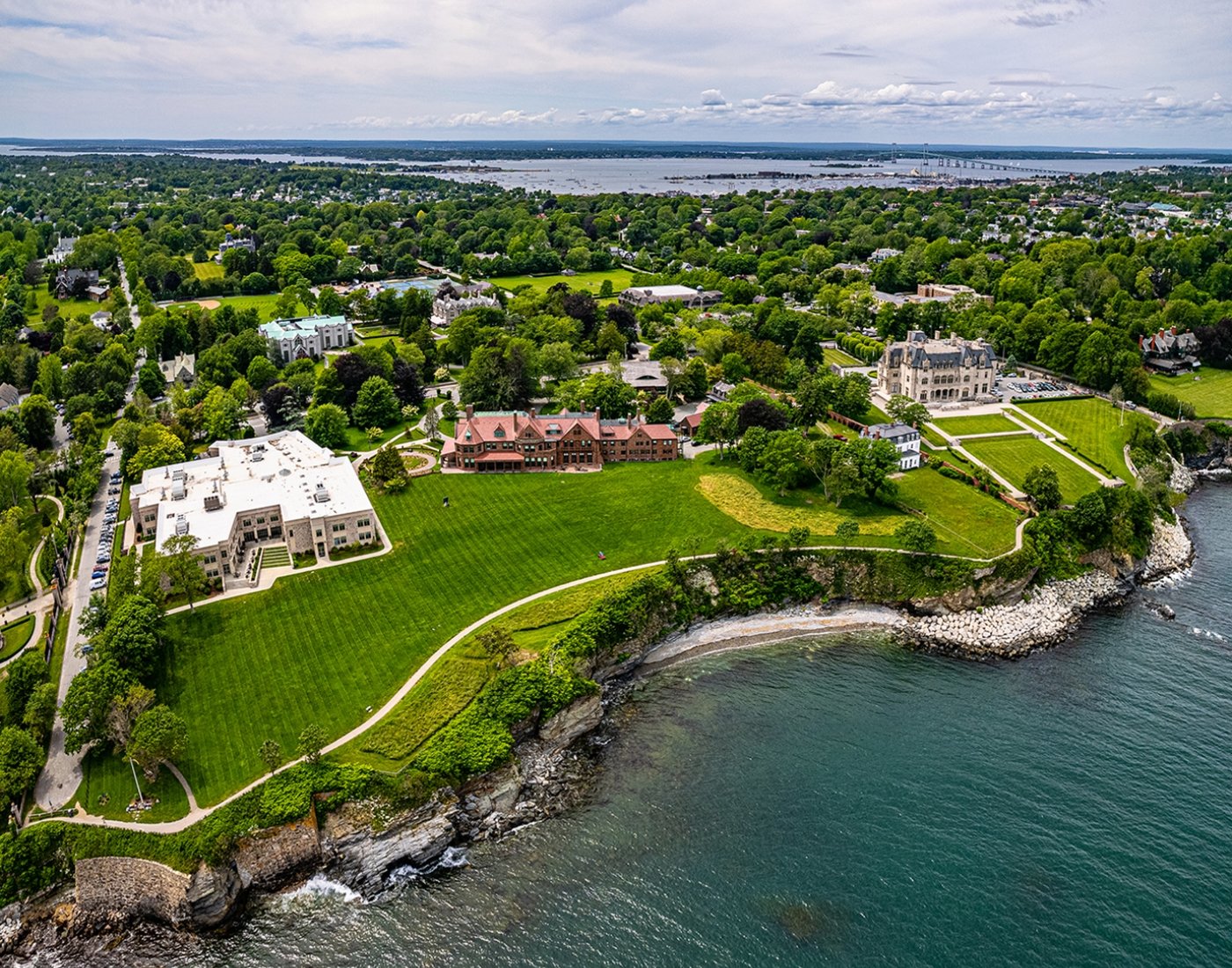
Salve Regina University is a Catholic liberal arts institution perched on the historic Gilded Age estates of Newport, Rhode Island, where the Atlantic Ocean serves as a campus backdrop. It’s a school of distinct contrasts: a mission-driven, Mercy-focused community that emphasizes kindness and dignity, yet is dominated in enrollment by pragmatic, career-oriented majors like nursing and business. The experience is defined by a stunning, walkable campus of mansions and ocean views, a moderately selective admissions process, and a strong emphasis on professional outcomes.
Admission requirements
Test-optional — scores considered if submitted
Required
High school transcript
Grade point average
Letters of recommendation
College-prep program
TOEFL (non-native English)
Considered (not required)
Class rank
Test scores (SAT/ACT)
Demonstrated competencies
Source: IPEDS Admissions survey (2022) via Urban Institute. Covers formal factors only — it does not reflect essays, extracurriculars, or other holistic criteria.
More details
Undergrad enrollment
2,121
In-state tuition
$50,100
Out-of-state tuition
$50,100
No-Loan Policy
No
Meets Full Need
No
Demonstrated Interest
Considered
6-Year Graduation Rate
78%
Median Earnings (10yr)
$72,975
Regular Decision Deadline
February 1
Average Financial Aid Package
$36,143
First-Year Students Receiving Aid
100%
Outcomes & value
Outcomes & value
Median earnings (10 yr)
$72,975
Value (earnings ÷ net price)
2.0×
Median debt at graduation
$27,000
Graduation rate
77%
First-year retention
83%
Reducing loan balance (3 yr)
81%
Pell (lower-income) share
15%
First-gen share (among federal-aid recipients)
19%
Top-earning majors
Median earnings by field of study (highest credential), ~2 years after completion.
Registered Nursing, Nursing Administration, Nursing Research and Clinical Nursing$69,477
Accounting and Related Services$63,997
Economics$48,432
Marketing$45,500
Special Education and Teaching$43,426
Teacher Education and Professional Development, Specific Levels and Methods
Campus & location
Campus safety
On-campus violent crimes (2024)
5
Per 1,000 students
1.80
On-campus criminal offenses classed as violent (murder/non-negligent manslaughter, rape, robbery, aggravated assault) for the most recent reported year. Source: U.S. Dept. of Education Campus Safety and Security (Clery Act). Counts reflect what’s reported to the school, and urban campuses often report more partly due to non-student incidents nearby — read alongside campus size and setting, not as a standalone safety verdict.
Climate
Pleasant days / yr
110
Summer high
76°F
Winter low
30°F
Annual rain
53.2"
Annual snow
21.3"
Natural-hazard risk
Very Low
Pleasant days counts days per year with a mean temperature of 55–75°F, a high at or below 90°F, a low at or above 45°F, and little precipitation — a transparent comfort measure, not a weighting we invented. Computed from Open-Meteo ERA5 daily history (2019–2023). Natural-hazard risk is the county’s composite rating from the FEMA National Risk Index.
Deep dive — research, future-scholar output & economic mobility▾
Research output
Institutional h-index
49
Scholarly works
1,098
Institutional research volume and impact from OpenAlex. The h-index reflects large research universities and will be low for teaching-focused liberal-arts colleges — not a measure of undergraduate quality.
Economic mobility
Mobility rate
1.7%
Bottom → top quintile
44%
From bottom quintile
4%
Mobility rate = the share of students who both start in the bottom household-income quintile and reach the top quintile; bottom → top is that chance conditional on starting at the bottom. Source: Opportunity Insights Mobility Report Cards (Chetty, Friedman, Saez, Turner & Yagan). Reflects 1980–82 birth cohorts, so it’s directional, not current.
Quick answers
What is the acceptance rate at Salve Regina University?
Salve Regina University's acceptance rate is approximately 68% (Newport, RI), based on the most recent figures we compiled from public and primary sources.
What SAT score do you need for Salve Regina University?
Admitted students at Salve Regina University typically score 1160–1330 on the SAT (the middle-50% range). Scores outside this band are still admitted, especially with strong applications.
How much does Salve Regina University cost?
At Salve Regina University, the average net price (after aid) is about $36,967 per year. Actual cost varies with financial aid and residency.
How many undergraduates attend Salve Regina University?
Salve Regina University enrolls approximately 2,121 undergraduate students.
Where is Salve Regina University located?
Salve Regina University is located in Newport, RI.
Admissions
Salve Regina operates as a moderately selective institution, where the majority of applicants are admitted. Over the past three years, the has averaged 69%, with the most recent rate at 68.2% (4,228 admissions from 6,202 applications). The admissions process shows a notable advantage for early applicants; the early acceptance rate is 76.2%, significantly higher than the regular decision pool. The university is but reports that the median and average SAT score for admitted students is 1270, with the middle 50% range spanning 1160–1330. The median and average ACT composite is 30. Academic preparation is a key factor, with over half of admitted students presenting a high school GPA of 3.75 or higher. Demonstrated interest is a formal part of the evaluation, as indicated by its inclusion in the (section C7). The rate—the percentage of admitted students who enroll—has averaged 11.81% over a recent ten-year period, reflecting the competitive landscape for student commitment.
Earnings = median of students working ~10 years after entry; debt = median of graduates. Value divides 10-yr earnings by one year’s net price — read it as earnings per dollar of annual cost, not a full lifetime ROI; it favors lower-cost schools. Source: U.S. Dept. of Education College Scorecard. Figures lag ~2 years and reflect all students, not your intended major.
$41,119
Communication and Media Studies$37,568
Business Administration, Management and Operations$36,042
Source: U.S. Dept. of Education College Scorecard (field-of-study earnings). Figures cover graduates who received federal aid and lag ~2 years; not all programs report data.
The academic structure at Salve Regina is built on a strong liberal arts Core Curriculum designed to develop technical and critical thinking abilities, upon which students layer their professional majors. The intellectual culture is heavily vocational; the most popular majors cluster in Business, Management, Marketing, and Related Support Services and the Health Professions. Nursing is a particularly dominant and well-known program, a fact noted even in informal parent discussions where it's observed that 'most people attend that.' Beyond these flagship programs, the university offers a range of majors including Accounting, Biochemistry, Biology, Criminal Justice, and studio arts like Acting. This creates a distinct campus dynamic: a foundation in the Mercy tradition's focus on service and ethical reasoning supports a student body largely intent on direct career preparation in high-demand fields.
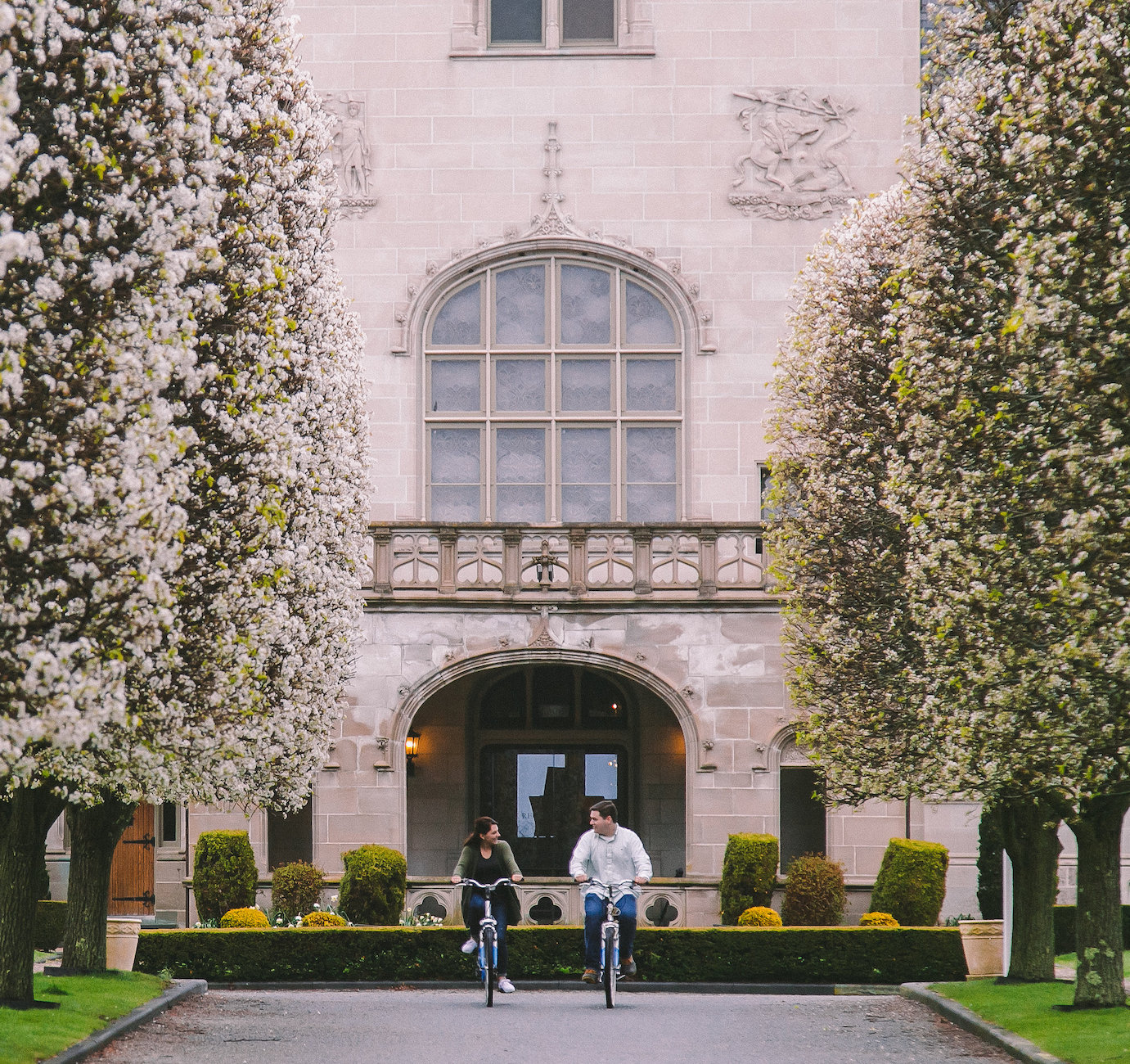
Life at Salve Regina is inextricably linked to its extraordinary physical setting. The campus is consistently described as 'absolutely outstanding' and 'beautiful,' comprising historic mansions and landscapes that make the study environment uniquely enjoyable. The university actively cultivates a specific community ethos, stating that every student will experience being part of an inclusive community that embraces all with kindness, dignity, and respect. This mission is operationalized through offices like Multicultural Programs, which fosters an understanding of difference and celebrates diversity. The Office of Student Engagement promises a 'vibrant community' where students build lifelong friendships and explore interests. From fitness enthusiasts to social butterflies and bookworms, the university promotes a balanced lifestyle. The pervasive vibe is one of a close-knit, mission-oriented campus where the stunning Newport location—with the ocean ever-present—is a central character in daily life.
Salve Regina graduates see solid returns on their investment, particularly as their careers progress. The university reports a strong graduation rate, with a 4-year rate of 73% and a 6-year rate of 78%. Early career earnings are respectable, with graduates earning about $46,000 on average initially. Salary growth is notable; earnings five years after graduation rise to an average of $69,695. The long-term financial outcome is robust, with a reported 10-year salary earnings potential of $667,840. This trajectory suggests the career-oriented majors, especially in health and business, provide a stable foundation for increasing earning power. The outcomes data supports the university's practical, professional focus, demonstrating a clear pathway from its scenic campus to sustainable employment.
Attending Salve Regina requires a significant financial commitment, though the university works to offset the sticker price with aid. The comprehensive is high, with one source listing tuition and fees at $77,716. However, the university states that 100% of full-time beginning undergraduates receive grant or scholarship aid, with 63.42% of all students receiving financial aid. The average aid package is reported to be $36,143. This aid reduces the considerably. It's important to note that Salve Regina's financial aid policy is not a 'no-loan' policy that meets full need for all students. The university explicitly states that federal and institutional aid dollars are limited and that it 'does not guarantee to meet your full financial need.' packages typically include a mix of grants, scholarships, and loans, with federal direct loan limits of $3,500 for first-year students. Prospective students are strongly encouraged to use the university's Net Price Calculator for a personalized estimate.
Salve Regina University is singular for its breathtaking fusion of place and purpose. It's not merely a college in a pretty town; it's a university where the campus itself—a collection of Gilded Age mansions and landscapes overlooking the Atlantic—is an active pedagogical and community space. This creates an undergraduate experience that feels both privileged and purposeful. The university leverages this inspiring setting to foster its core Mercy mission of an inclusive, kind, and respectful community. Yet, it avoids being purely idyllic or theoretical. The academic heartbeat is intensely practical, driven by powerhouse programs in nursing and business that attract a majority of the student body and lead to strong, growing career outcomes. This combination is its unique signature: a values-based, liberal arts foundation delivered within an awe-inspiring historic landscape, all in service of preparing students for immediate and meaningful professional work. It's for the student who wants the character-building and community of a mission-driven school, but also desires a clear, direct runway to a career.
Salve Regina University seal · sourceVisit Campus | Salve Regina University · sourceVisit Campus | Salve Regina University · sourceHome | Salve Regina University · source