Loading…
← All schools
San Joaquin Valley College-Trades Education Center
Fresno, CAprivate forprofitwww.sjvc.edu/
Avg net price
$27,887
Earnings (10 yr)
$38,317
Acceptance & SAT from Common Data Set / IPEDS; net price, earnings & graduation from the U.S. Dept. of Education College Scorecard. Figures lag ~1–2 years — verify with the school.
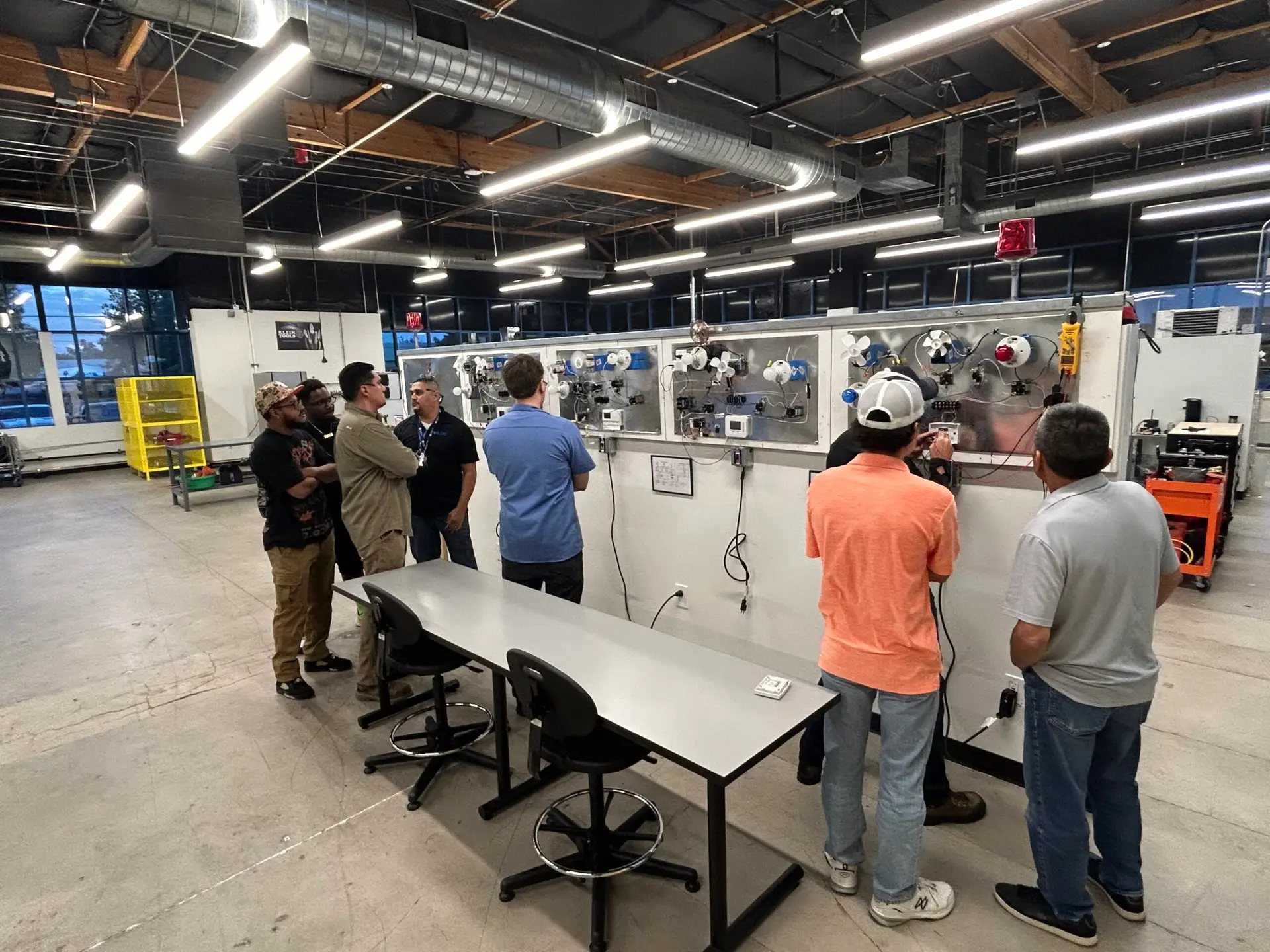
San Joaquin Valley College's Trades Education Center in Fresno is a no-frills, high-access gateway to the skilled trades. This is not a place for theoretical debates or sprawling quads; it's a focused, hands-on training ground where students come to learn a specific, in-demand craft—from electrical work to HVAC—and get out into the workforce, fast. With an open admissions policy and a practical, career-first ethos, it serves a critical role in California's Central Valley, offering a direct, if costly, path to a technical career.
More details
- Undergrad enrollment
- 364
- Testing Policy
- Not required
- Graduation Rate
- 65%
- Most Popular Majors
- Electrician; HVAC
- Median Earnings (10yr)
- $38,317
- Annual Scholarship Awards
- Up to $40,000
- Average Total Aid Awarded
- $5,303 per year
Outcomes & value
Outcomes & value
- Median earnings (10 yr)
- $38,317
- Value (earnings ÷ net price)
- 1.4×
- Median debt at graduation
- $10,674
- Reducing loan balance (3 yr)
- 30%
- Pell (lower-income) share
- 60%
- First-gen share (among federal-aid recipients)
- 59%
Earnings = median of students working ~10 years after entry; debt = median of graduates. Value divides 10-yr earnings by one year’s net price — read it as earnings per dollar of annual cost, not a full lifetime ROI; it favors lower-cost schools. Source: U.S. Dept. of Education College Scorecard. Figures lag ~2 years and reflect all students, not your intended major.
Campus & location
Campus safety
- On-campus violent crimes (2024)
- 0
On-campus criminal offenses classed as violent (murder/non-negligent manslaughter, rape, robbery, aggravated assault) for the most recent reported year. Source: U.S. Dept. of Education Campus Safety and Security (Clery Act). Counts reflect what’s reported to the school, and urban campuses often report more partly due to non-student incidents nearby — read alongside campus size and setting, not as a standalone safety verdict.
Climate
- Pleasant days / yr
- 91
- Summer high
- 100°F
- Winter low
- 38°F
- Annual rain
- 14.7"
- Annual snow
- 0.6"
- Natural-hazard risk
- Relatively High
Pleasant days counts days per year with a mean temperature of 55–75°F, a high at or below 90°F, a low at or above 45°F, and little precipitation — a transparent comfort measure, not a weighting we invented. Computed from Open-Meteo ERA5 daily history (2019–2023). Natural-hazard risk is the county’s composite rating from the FEMA National Risk Index.
Quick answers
- How much does San Joaquin Valley College-Trades Education Center cost?
- At San Joaquin Valley College-Trades Education Center, the average net price (after aid) is about $27,887 per year. Actual cost varies with financial aid and residency.
- How many undergraduates attend San Joaquin Valley College-Trades Education Center?
- San Joaquin Valley College-Trades Education Center enrolls approximately 364 undergraduate students.
- Where is San Joaquin Valley College-Trades Education Center located?
- San Joaquin Valley College-Trades Education Center is located in Fresno, CA.
Admissions
Admissions at the Trades Education Center is defined by accessibility, not selectivity. The institution operates with an open admission policy, reflected in its reported 100% . This means the primary barrier to entry isn't a competitive application but meeting the basic requirements for the specific certificate or degree program. The process is straightforward: prospective students explore programs, request information, and apply with support from the admissions team. Standardized test scores (SAT/ACT) are not required for admission, aligning with the school's focus on practical skills over traditional academic metrics. The admissions office maintains extended hours during the week (7:00 AM to 10:30 PM) to accommodate working students, underscoring its mission to serve non-traditional learners seeking career change or advancement.
Academics
The academic model is singularly focused on career training through hands-on learning. The Trades Education Center offers certificate and degree programs squarely within the industrial and skilled trades sector. The most popular undergraduate majors are Electrician and Heating, Air Conditioning, Ventilation and Refrigeration Maintenance Technology/Technician (HVAC). The curriculum is designed to be practical and accelerated, preparing graduates to enter the workforce with specific, job-ready qualifications. Instruction emphasizes retention, academic performance, and direct application of skills, with the explicit goal of producing "highly qualified and motivated" tradespeople. The center is part of a broader SJVC network that promotes this career-focused, hands-on approach across its campuses.
Compare San Joaquin Valley College-Trades Education Center
vs Northwest Nazarene Universityvs The College of Idahovs United States Coast Guard Academyvs Dean College
See colleges similar to San Joaquin Valley College-Trades Education Center →Sources
- SJVC Fresno Trades Education Center
- Admissions & Financial Aid
- San Joaquin Valley College - Trades Education Center
- SJVC Consumer Information & Regulatory Reporting
- San Joaquin Valley College, Inc. - 2019 Annual Report - BPPE
- Trade School Programs | Skilled Trades Training | SJVC
- San Joaquin Valley College-Trades Education Center SAT Scores, ACT ...
- San Joaquin Valley College-Trades Education Center
- San Joaquin Valley College Acceptance Rate, SAT, GPA & ACT ...
- San Joaquin Valley College: Career Training & Degree Programs