Loading…
← All schools
School of Professional Horticulture New York Botanical Garden
Bronx, NYprivate nonprofitwww.nybg.org/edu/soph/
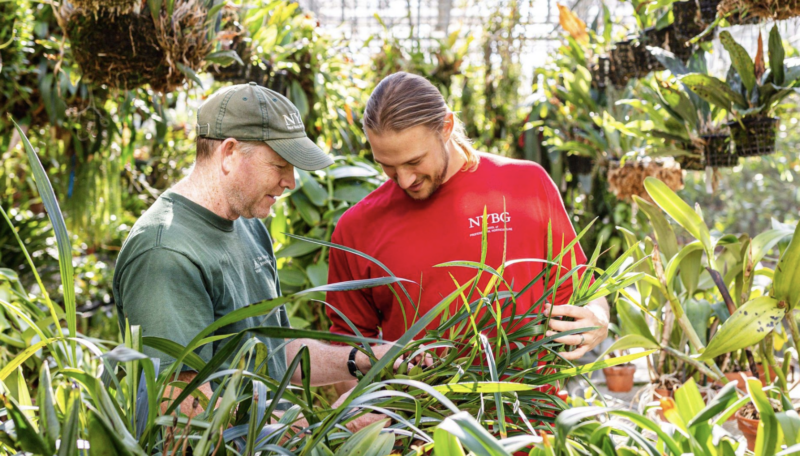
The School of Professional Horticulture at the New York Botanical Garden is not a traditional college—it's a two-year, immersive trade school for plantspeople, operating within one of the world's premier botanical institutions. This is a program for those who want dirt under their nails and a deep, practical mastery of horticulture, taught by working professionals across the Garden's 250-acre living laboratory. It's intensely selective in spirit if not in raw numbers, seeking applicants with proven hands-on experience and a clear vocational calling, and it produces graduates who are immediately employable in elite public gardens, estates, and conservatories.
Admission requirements
Test-blind — scores not considered
Required
- High school transcript
- Letters of recommendation
- TOEFL (non-native English)
Source: IPEDS Admissions survey (2022) via Urban Institute. Covers formal factors only — it does not reflect essays, extracurriculars, or other holistic criteria.
More details
- Undergrad enrollment
- 14
- In-state tuition
- $8,750
- Out-of-state tuition
- $8,750
Outcomes & value
Outcomes & value
- Pell (lower-income) share
- —
Earnings = median of students working ~10 years after entry; debt = median of graduates. Value divides 10-yr earnings by one year’s net price — read it as earnings per dollar of annual cost, not a full lifetime ROI; it favors lower-cost schools. Source: U.S. Dept. of Education College Scorecard. Figures lag ~2 years and reflect all students, not your intended major.
Campus & location
Campus safety
- On-campus violent crimes (2024)
- 0
On-campus criminal offenses classed as violent (murder/non-negligent manslaughter, rape, robbery, aggravated assault) for the most recent reported year. Source: U.S. Dept. of Education Campus Safety and Security (Clery Act). Counts reflect what’s reported to the school, and urban campuses often report more partly due to non-student incidents nearby — read alongside campus size and setting, not as a standalone safety verdict.
Climate
- Pleasant days / yr
- 91
- Summer high
- 82°F
- Winter low
- 29°F
- Annual rain
- 54.3"
- Annual snow
- 19.6"
- Natural-hazard risk
- Relatively High
Pleasant days counts days per year with a mean temperature of 55–75°F, a high at or below 90°F, a low at or above 45°F, and little precipitation — a transparent comfort measure, not a weighting we invented. Computed from Open-Meteo ERA5 daily history (2019–2023). Natural-hazard risk is the county’s composite rating from the FEMA National Risk Index.
Quick answers
- How many undergraduates attend School of Professional Horticulture New York Botanical Garden?
- School of Professional Horticulture New York Botanical Garden enrolls approximately 14 undergraduate students.
- Where is School of Professional Horticulture New York Botanical Garden located?
- School of Professional Horticulture New York Botanical Garden is located in Bronx, NY.
Admissions
Admission is framed as selective, based on a combination of academic achievement, practical experience, and a demonstrated commitment to the field of horticulture. The process seems to weigh qualitative factors—like proven passion and readiness for intensive hands-on work—heavily. Published present a confusing picture, with sources citing figures as divergent as 0% (based on 3 applications in 2024) and 75%, suggesting the applicant pool is small and self-selecting, and the school's evaluation is holistic rather than formulaic. The application deadline is September 1. There is no available to clarify the weight of factors like essays, interviews, or demonstrated interest in the process.
Academics
Compare School of Professional Horticulture New York Botanical Garden
See colleges similar to School of Professional Horticulture New York Botanical Garden →Sources
- [PDF] School of Professional Horticulture | New York Botanical Garden
- School of Professional Horticulture, New York Botanical Garden
- [PDF] 90 Years of Excellence - New York Botanical Garden
- School of Professional Horticulture New York Botanical Garden
- School of Professional Horticulture New York Botanical Garden
- School of Professional Horticulture, New York Botanical Garden
- School Of Professional Horticulture New York Botanical Garden
- School of Professional Horticulture | New York Botanical Garden
- School of Professional Horticulture at the New York Botanical Garden