Loading…
← All schools
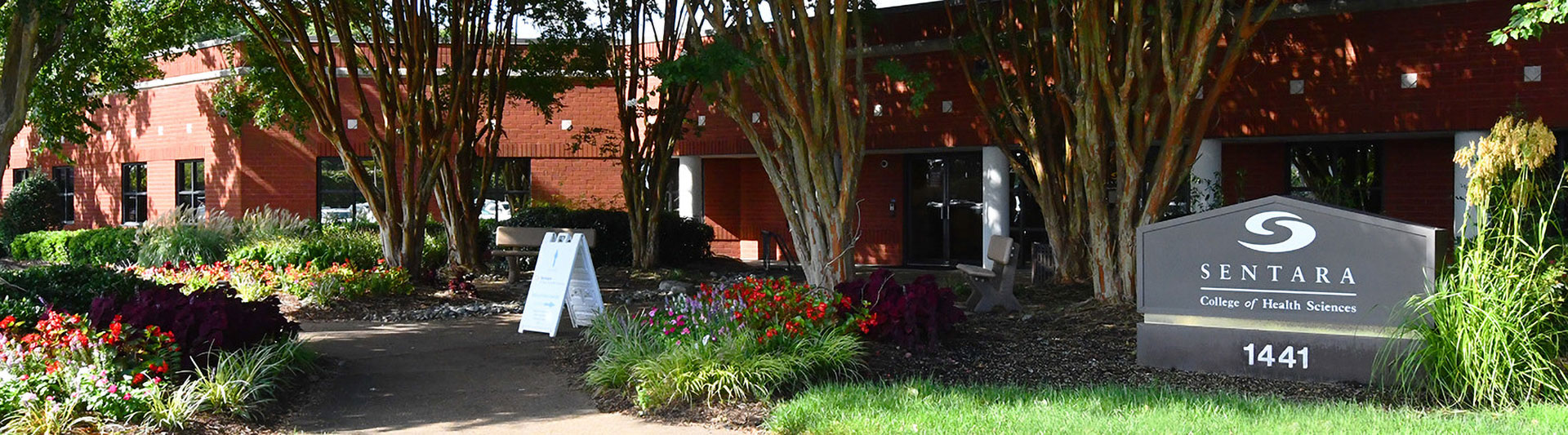
Sentara College of Health Sciences
Chesapeake, VAprivate nonprofitwww.sentara.edu/
Sentara College of Health Sciences is a specialized, career-focused institution that operates more like a direct pipeline into the Virginia healthcare system than a traditional liberal arts college. With a history spanning over 130 years, it is currently in a state of transition, having paused admissions to its core degree programs while continuing select certificate offerings. The environment is intensely practical, built around 'hands-on hours in classrooms, skills labs, simulators, and real-life Sentara facilities,' and it produces graduates—particularly nurses with a stellar 98% NCLEX pass rate—who are immediately ready for clinical work.
More details
- Undergrad enrollment
- 242
- Campus Housing
- None
- Varsity Sports
- None
- Median Earnings (10yr)
- $77,821
- NCLEX Pass Rate (2023)
- 98%
- Student-to-Faculty Ratio
- 7:1
Outcomes & value
Outcomes & value
- Median earnings (10 yr)
- $77,821
- Median debt at graduation
- $19,450
- Reducing loan balance (3 yr)
- 75%
- Pell (lower-income) share
- 35%
- First-gen share (among federal-aid recipients)
- 37%
Earnings = median of students working ~10 years after entry; debt = median of graduates. Value divides 10-yr earnings by one year’s net price — read it as earnings per dollar of annual cost, not a full lifetime ROI; it favors lower-cost schools. Source: U.S. Dept. of Education College Scorecard. Figures lag ~2 years and reflect all students, not your intended major.
Financial health
2.5 / 3.0Meets the federal financial-responsibility standard
U.S. Dept. of Education Financial Responsibility Composite Score (FY2022-23). Scale −1.0 to 3.0; ≥1.5 meets the standard. Reported for private nonprofit & for-profit institutions only — public universities are state-backed and not scored, so this is a stability signal, not a ranking.
Top-earning majors
Median earnings by field of study (highest credential), ~2 years after completion.
- Registered Nursing, Nursing Administration, Nursing Research and Clinical Nursing$60,987
Source: U.S. Dept. of Education College Scorecard (field-of-study earnings). Figures cover graduates who received federal aid and lag ~2 years; not all programs report data.
Compare on earnings: best colleges for Nursing
Campus & location
Campus safety
- On-campus violent crimes (2024)
- 0
- Per 1,000 students
- 0.00
On-campus criminal offenses classed as violent (murder/non-negligent manslaughter, rape, robbery, aggravated assault) for the most recent reported year. Source: U.S. Dept. of Education Campus Safety and Security (Clery Act). Counts reflect what’s reported to the school, and urban campuses often report more partly due to non-student incidents nearby — read alongside campus size and setting, not as a standalone safety verdict.
Climate
- Pleasant days / yr
- 119
- Summer high
- 86°F
- Winter low
- 38°F
- Annual rain
- 35.2"
- Annual snow
- 3.2"
- Natural-hazard risk
- Relatively Low
Pleasant days counts days per year with a mean temperature of 55–75°F, a high at or below 90°F, a low at or above 45°F, and little precipitation — a transparent comfort measure, not a weighting we invented. Computed from Open-Meteo ERA5 daily history (2019–2023). Natural-hazard risk is the county’s composite rating from the FEMA National Risk Index.
Deep dive — research, future-scholar output & economic mobility
Research output
- Institutional h-index
- 12
- Scholarly works
- 68
Institutional research volume and impact from OpenAlex. The h-index reflects large research universities and will be low for teaching-focused liberal-arts colleges — not a measure of undergraduate quality.
Quick answers
- How many undergraduates attend Sentara College of Health Sciences?
- Sentara College of Health Sciences enrolls approximately 242 undergraduate students.
- Where is Sentara College of Health Sciences located?
- Sentara College of Health Sciences is located in Chesapeake, VA.
Admissions
The admissions landscape at Sentara College is currently defined by a significant, recent shift. As of 2024, the college has paused admissions into new degree-granting programs during a transition period, though select certificate programs continue. This means the traditional application cycle for its associate and bachelor's degrees is on hold. Historically, the college was accessible, with reported ranging from about 65% to 80.5%. One source indicates that in a recent cycle, 3,598 students applied, 2,897 were accepted, and 251 enrolled, suggesting a historical rate around 8.7%. The college does not require SAT or ACT scores for admission, focusing instead on other qualifications. For the programs that were active, the college offered a unique early admission option for high school students into its BSN program, touting itself as the only institution in the region with such a pathway. The total enrollment is small, with 312 students in 2024, 301 of whom were full-time. The admissions philosophy, as described by the college, seeks students with 'the calling' to be healthcare professionals.
Compare Sentara College of Health Sciences
vs Emory University-Oxford Collegevs Hampden-Sydney Collegevs The University of the Southvs Wofford College
See colleges similar to Sentara College of Health Sciences →Sources
- Search Results | Sentara College of Health ...
- Applying To Associate Degree Programs - Sentara College
- Sentara College of Health Sciences
- Sentara College of Health Sciences - Profile, Rankings and Data
- Sentara College of Health Sciences - Tuition and Acceptance Rate
- Sentara College to suspend degree-granting programs; new admissions ...
- Sentara College of Health Sciences - Chesapeake, VA
- Admissions & Aid
- Sentara College of Health Sciences Chances Calculator