Loading…
← All schools
Shasta Bible College and Graduate School
Redding, CAprivate nonprofitwww.shasta.edu/
Acceptance
100%
Avg net price
$30,437
Earnings (10 yr)
$28,891
Graduation rate
100%
Admit rate has held near 100% across the last 5 years. Source: IPEDS via Urban Institute.
Acceptance & SAT from Common Data Set / IPEDS; net price, earnings & graduation from the U.S. Dept. of Education College Scorecard. Figures lag ~1–2 years — verify with the school.
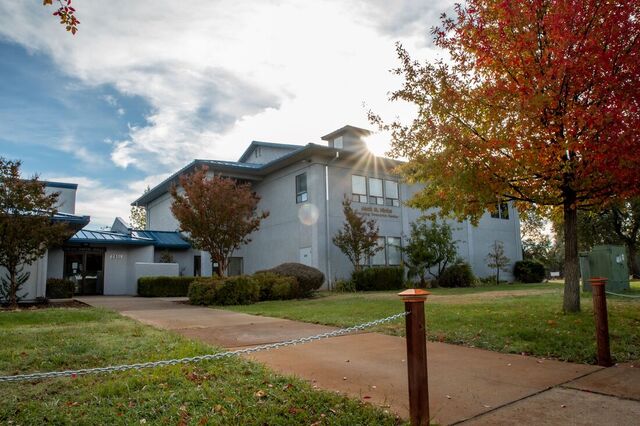
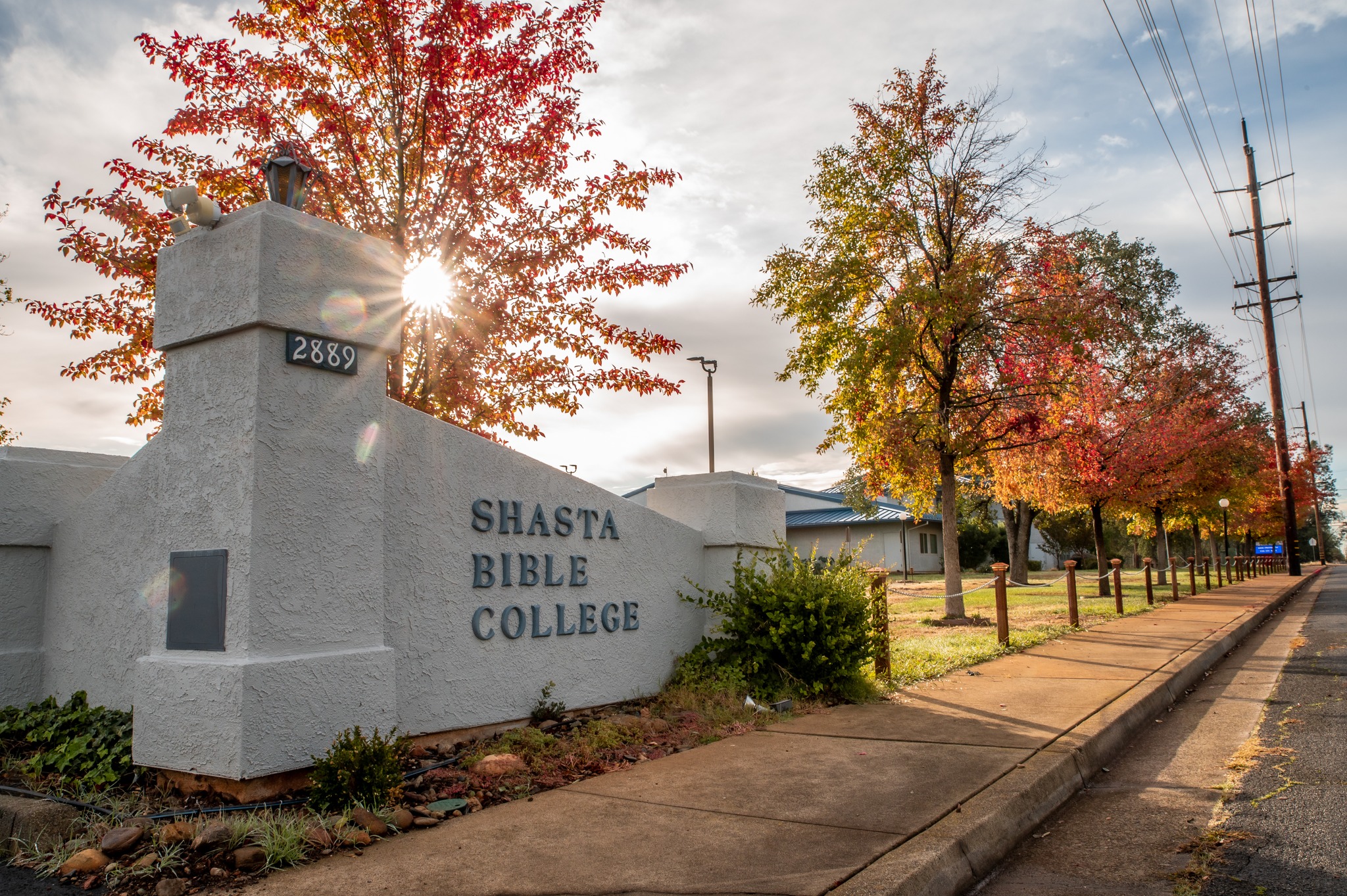
Shasta Bible College and Graduate School is a tiny, fiercely focused institution where theological training is the singular mission. With a student body that could fit in a large living room and a 100% acceptance rate, it operates more like a dedicated seminary community than a traditional college, offering intensive, one-on-one mentorship in Biblical studies. This is a place for those with a clear vocational calling, where the academic and spiritual are inseparable, and the scale ensures a uniquely personal, family-like environment.
Admission requirements
Test-blind — scores not considered
Required
- High school transcript
- Grade point average
- Letters of recommendation
- TOEFL (non-native English)
Source: IPEDS Admissions survey (2022) via Urban Institute. Covers formal factors only — it does not reflect essays, extracurriculars, or other holistic criteria.
More details
- Undergrad enrollment
- 21
- In-state tuition
- $14,535
- Out-of-state tuition
- $14,535
- Graduation Rate
- 100%
- Student-Faculty Ratio
- 3:1
- Median Earnings (10yr)
- $28,891
Outcomes & value
Outcomes & value
- Median earnings (10 yr)
- $28,891
- Value (earnings ÷ net price)
- 0.9×
- Graduation rate
- 100%
- Pell (lower-income) share
- 62%
- Endowment / student
- $1,905
Earnings = median of students working ~10 years after entry; debt = median of graduates. Value divides 10-yr earnings by one year’s net price — read it as earnings per dollar of annual cost, not a full lifetime ROI; it favors lower-cost schools. Source: U.S. Dept. of Education College Scorecard. Figures lag ~2 years and reflect all students, not your intended major.
Financial health
2.2 / 3.0Meets the federal financial-responsibility standard
U.S. Dept. of Education Financial Responsibility Composite Score (FY2022-23). Scale −1.0 to 3.0; ≥1.5 meets the standard. Reported for private nonprofit & for-profit institutions only — public universities are state-backed and not scored, so this is a stability signal, not a ranking.
Campus & location
Campus safety
- On-campus violent crimes (2024)
- 0
- Per 1,000 students
- 0.00
On-campus criminal offenses classed as violent (murder/non-negligent manslaughter, rape, robbery, aggravated assault) for the most recent reported year. Source: U.S. Dept. of Education Campus Safety and Security (Clery Act). Counts reflect what’s reported to the school, and urban campuses often report more partly due to non-student incidents nearby — read alongside campus size and setting, not as a standalone safety verdict.
Climate
- Pleasant days / yr
- 94
- Summer high
- 100°F
- Winter low
- 41°F
- Annual rain
- 35.1"
- Annual snow
- 8.5"
- Natural-hazard risk
- Relatively Moderate
Pleasant days counts days per year with a mean temperature of 55–75°F, a high at or below 90°F, a low at or above 45°F, and little precipitation — a transparent comfort measure, not a weighting we invented. Computed from Open-Meteo ERA5 daily history (2019–2023). Natural-hazard risk is the county’s composite rating from the FEMA National Risk Index.
Deep dive — research, future-scholar output & economic mobility
Research output
- Institutional h-index
- 3
- Scholarly works
- 19
Institutional research volume and impact from OpenAlex. The h-index reflects large research universities and will be low for teaching-focused liberal-arts colleges — not a measure of undergraduate quality.
Quick answers
- What is the acceptance rate at Shasta Bible College and Graduate School?
- Shasta Bible College and Graduate School's acceptance rate is approximately 100% (Redding, CA), based on the most recent figures we compiled from public and primary sources.
- How much does Shasta Bible College and Graduate School cost?
- At Shasta Bible College and Graduate School, the average net price (after aid) is about $30,437 per year. Actual cost varies with financial aid and residency.
- How many undergraduates attend Shasta Bible College and Graduate School?
- Shasta Bible College and Graduate School enrolls approximately 21 undergraduate students.
- Where is Shasta Bible College and Graduate School located?
- Shasta Bible College and Graduate School is located in Redding, CA.
Admissions
Admissions at Shasta Bible College is defined by its open-door policy for those aligned with its mission, not by competitive selectivity. The undergraduate is 100%, with sources reporting 12 admissions from 12 applications in 2024. The college states it "admits qualified students" who meet its standards, which appear to center on a commitment to its Biblical education purpose rather than standardized test scores or GPA hurdles; the institution is SAT/ACT optional, and sources note a lack of available SAT range data. The rate—the percentage of admitted students who enroll—is reported at 60%, suggesting that while the door is open, the intensely specialized nature of the school leads a significant portion of admits to choose other paths. There is no mention of an Early Decision program or that demonstrated interest is a formal factor in admissions decisions.
Compare Shasta Bible College and Graduate School
See colleges similar to Shasta Bible College and Graduate School →Sources
- [PDF] catalog - Shasta Bible College
- Shasta Bible College and Graduate School | Data USA
- Common Data Set: Home
- [PDF] Common Data Set 2024-2025 - Swarthmore College
- [PDF] catalog - Shasta Bible College
- How To Use a Common Data Set - The College Solution
- Shasta Bible College and Graduate School Admission Requirements
- Shasta Bible College and Graduate School - Peterson's
- Shasta Bible College and Graduate School - Sallie