Admit rate has ranged 66%–84% over the last 5 years — notably volatile. Source: IPEDS via Urban Institute.
Acceptance & SAT from Common Data Set / IPEDS; net price, earnings & graduation from the U.S. Dept. of Education College Scorecard. Figures lag ~1–2 years — verify with the school.
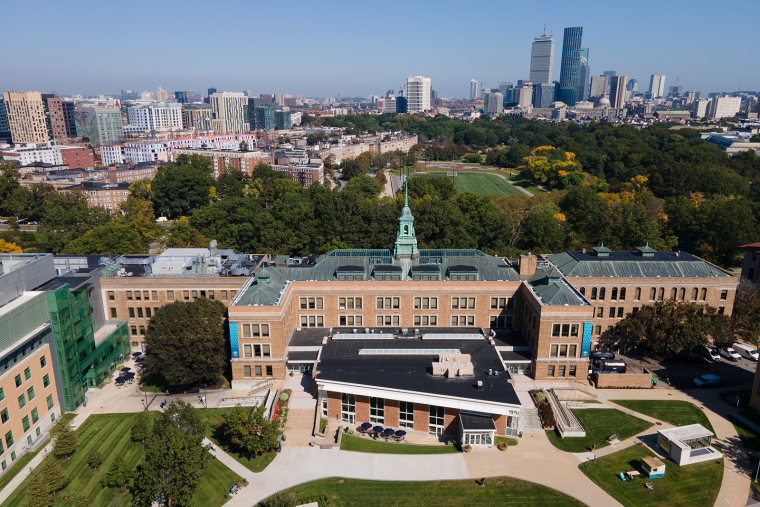
Simmons University carves out a distinctive niche in Boston's crowded higher-ed landscape as a small, women-centered undergraduate institution that leans hard into practical, care-oriented professions. Its identity is defined by a tight-knit, supportive campus community that feels like a refuge in the city, paired with a fiercely pragmatic academic focus where nursing, social work, and psychology aren't just majors—they're the dominant culture. The vibe is less about rah-rah school spirit and more about preparing for a paycheck, with career outcomes that reliably launch graduates into stable, meaningful work.
Admission requirements
Test-optional — scores considered if submitted
Required
High school transcript
Grade point average
Letters of recommendation
College-prep program
TOEFL (non-native English)
Considered (not required)
Class rank
Test scores (SAT/ACT)
Source: IPEDS Admissions survey (2022) via Urban Institute. Covers formal factors only — it does not reflect essays, extracurriculars, or other holistic criteria.
More details
Undergrad enrollment
1,670
In-state tuition
$46,874
Out-of-state tuition
$46,874
Graduation Rate
72%
Most Popular Major
Health Professions (34%)
Demonstrated Interest
Considered
Median Earnings (10yr)
$63,494
Student-to-Faculty Ratio
8:1
First-Year Retention Rate
85%
Outcomes & value
Outcomes & value
Median earnings (10 yr)
$63,494
Value (earnings ÷ net price)
2.5×
Median debt at graduation
$24,840
Graduation rate
72%
First-year retention
85%
Reducing loan balance (3 yr)
77%
Pell (lower-income) share
33%
First-gen share (among federal-aid recipients)
20%
Financial health
2.4 / 3.0Meets the federal financial-responsibility standard
U.S. Dept. of Education Financial Responsibility Composite Score (FY2022-23). Scale −1.0 to 3.0; ≥1.5 meets the standard. Reported for private nonprofit & for-profit institutions only — public universities are state-backed and not scored, so this is a stability signal, not a ranking.
Top-earning majors
Median earnings by field of study (highest credential), ~2 years after completion.
Finance and Financial Management Services$71,643
Registered Nursing, Nursing Administration, Nursing Research and Clinical Nursing$67,789
Business Administration, Management and Operations$55,286
Marketing$50,439
Economics$49,323
Psychology, General
Campus & location
Campus safety
On-campus violent crimes (2024)
0
Per 1,000 students
0.00
On-campus criminal offenses classed as violent (murder/non-negligent manslaughter, rape, robbery, aggravated assault) for the most recent reported year. Source: U.S. Dept. of Education Campus Safety and Security (Clery Act). Counts reflect what’s reported to the school, and urban campuses often report more partly due to non-student incidents nearby — read alongside campus size and setting, not as a standalone safety verdict.
Climate
Pleasant days / yr
91
Summer high
81°F
Winter low
25°F
Annual rain
49"
Annual snow
31.4"
Natural-hazard risk
Relatively Moderate
Pleasant days counts days per year with a mean temperature of 55–75°F, a high at or below 90°F, a low at or above 45°F, and little precipitation — a transparent comfort measure, not a weighting we invented. Computed from Open-Meteo ERA5 daily history (2019–2023). Natural-hazard risk is the county’s composite rating from the FEMA National Risk Index.
Deep dive — research, future-scholar output & economic mobility▾
Research output
Institutional h-index
219
Scholarly works
5,154
Institutional research volume and impact from OpenAlex. The h-index reflects large research universities and will be low for teaching-focused liberal-arts colleges — not a measure of undergraduate quality.
Quick answers
What is the acceptance rate at Simmons University?
Simmons University's acceptance rate is approximately 70% (Boston, MA), based on the most recent figures we compiled from public and primary sources.
What SAT score do you need for Simmons University?
Admitted students at Simmons University typically score 1220–1390 on the SAT (the middle-50% range). Scores outside this band are still admitted, especially with strong applications.
How much does Simmons University cost?
At Simmons University, the average net price (after aid) is about $25,265 per year. Actual cost varies with financial aid and residency.
How many undergraduates attend Simmons University?
Simmons University enrolls approximately 1,670 undergraduate students.
Where is Simmons University located?
Simmons University is located in Boston, MA.
Admissions
Simmons operates with a policy and accepts the Common Application, positioning itself as accessible within the competitive Boston market. The admissions process is notably less selective than many of its neighbors, with an early significantly higher than the regular decision pool. While the university does offer an Early Decision plan, the most striking statistic is the rate—the percentage of admitted students who enroll—which reportedly rose from less than 15% to over 22% for a recent class, indicating a successful effort to convert acceptances into commitments. Demonstrated interest is a factor admissions officers consider, according to the framework.
The academic profile of Simmons is overwhelmingly dominated by health, wellness, and human services. For the 2024 graduating class, a full 34% of degrees were conferred in Health Professions and Related Programs. Psychology (9%) and Public Administration and Social Service Professions also ranked among the top three most popular majors. This creates a campus culture intensely focused on applied, care-oriented fields. The university offers more than 35 majors, including accelerated master's degree programs, and promotes hands-on learning designed to build market-ready skills. With a student-to-faculty ratio of 8:1, the environment supports close mentorship. Simmons' academic quality and net cost earned it a #33 ranking for Best Value Schools from U.S. News & World Report.
Earnings = median of students working ~10 years after entry; debt = median of graduates. Value divides 10-yr earnings by one year’s net price — read it as earnings per dollar of annual cost, not a full lifetime ROI; it favors lower-cost schools. Source: U.S. Dept. of Education College Scorecard. Figures lag ~2 years and reflect all students, not your intended major.
$41,007
Political Science and Government$39,009
Sociology$38,289
Source: U.S. Dept. of Education College Scorecard (field-of-study earnings). Figures cover graduates who received federal aid and lag ~2 years; not all programs report data.
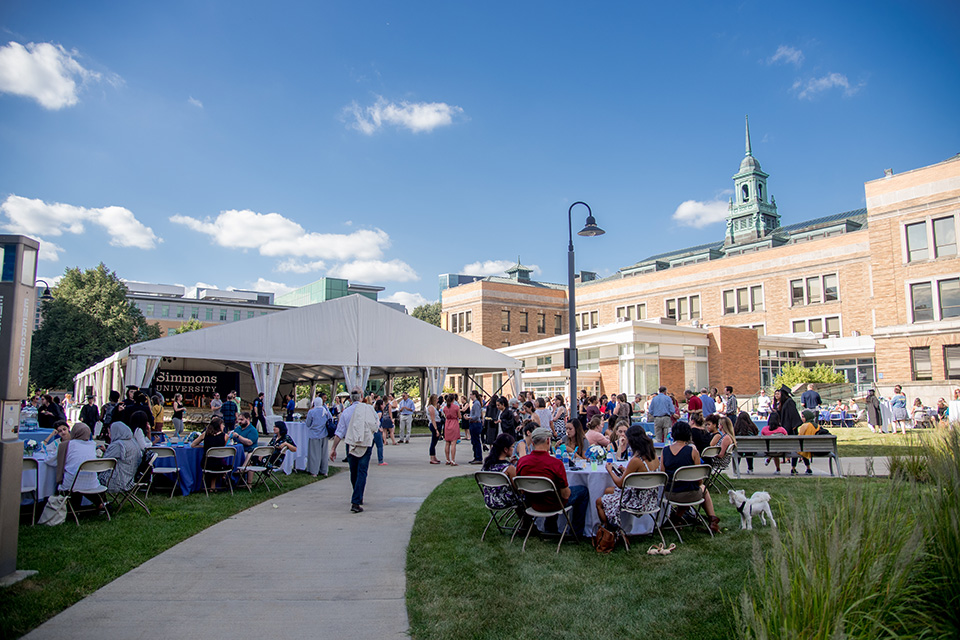
Life at Simmons is characterized by a pronounced duality: a small, women-centered, and supportive on-campus community exists within the sprawling, opportunity-rich backdrop of Boston. The university promotes this combination, highlighting a "tight-knit campus feel with big-city internships, diverse student clubs, and faculty who" mentor closely. However, student reviews suggest the social scene can feel limited and cliquey, with little traditional school spirit. The experience is often described as close-knit but insular, a self-contained refuge rather than a typical collegiate party school. The focus is palpably on academics, career preparation, and leveraging the city for professional development rather than on-campus social events.
Simmons' career-focused education delivers strong, tangible results for graduates. According to its own career development data, 85% of employed graduates were in full-time positions related to their major, with an average salary of $61,053. Other university data points to a 97% employment rate within 12 months of graduation for a specific graduate program cohort (with a 17.7% response rate). The six-year graduation rate is a solid 71%, placing Simmons in the top 25% of comparable institutions. This combination of a strong graduation rate and high job placement in-field underscores the institution's practical mission: students come for a profession-oriented education and leave with the credentials and network to secure it.
Simmons is a private institution with a significant tuition price, but it counters this with robust financial aid. The university reports that 74.21% of students receive financial aid, with an average aid package of $46,353. This aid brings the average —the cost after grants and scholarships—down substantially. Need-based federal loans, such as Direct Subsidized Loans, are available to eligible undergraduate students who demonstrate financial need, with annual maximums of $3,500 for first-years and $4,500 for sophomores. The university also states that 72% of students receive some sort of need-based funding and that 100% of students receive some form of financial aid. There is no indication in the provided sources of a universal "no-loan" policy for low-income students.
Simmons University stands out for its unwavering commitment to a specific, powerful educational model: a small, women-centered undergraduate college laser-focused on high-demand, helping professions, dropped into the heart of a major city. It's not trying to be a liberal arts college or a research university. It's a professional launchpad. This clarity of purpose is reflected everywhere—from the student body, where over a third study health professions, to the outcomes, where the vast majority of grads land jobs in their field. The culture is supportive and close-knit by design, offering a sanctuary for focused study, even if that comes at the expense of a vibrant traditional social scene. For a student who knows they want to be a nurse, a social worker, a psychologist, or a public health advocate, Simmons offers a direct, practical, and highly effective path, wrapped in a community that understands that mission intimately.
Simmons University seal · sourceSimmons University Homepage | Simmons University · sourceCampus Maps | Simmons University · sourceVisit | Simmons University · source