Loading…
← All schools
Sinte Gleska University
Mission, SDpublicwww.sintegleska.edu/
Avg net price
$12,768
Earnings (10 yr)
$20,948
Graduation rate
15%
Acceptance & SAT from Common Data Set / IPEDS; net price, earnings & graduation from the U.S. Dept. of Education College Scorecard. Figures lag ~1–2 years — verify with the school.
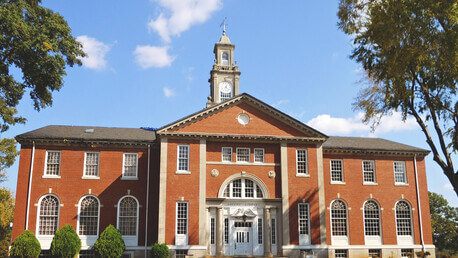
Sinte Gleska University is not just a college; it is a vital institution of the Sicangu Oyate (Rosebud Sioux Tribe), a public tribal land-grant university built on the principle of Wolakota—a Lakota concept of peace, balance, and relationality. Its mission is explicitly nation-building, offering a deeply accessible, open-door education that serves as a lifeline and a launchpad for its community, with a focus on practical fields like education, business, and human services. The campus itself is a physical manifestation of this purpose, with architecture reflecting Native American culture and a student body that is overwhelmingly female, creating a unique and supportive environment for lifelong learning.
More details
- Undergrad enrollment
- 487
- In-state tuition
- $4,714
- Out-of-state tuition
- $4,714
- Majors Offered
- 59
- Graduation Rate
- 15%
- Application Deadline
- Rolling
- Median Earnings (10yr)
- $20,948
- Student-to-Faculty Ratio
- 16:1
- First-Year Retention Rate
- 100%
Outcomes & value
Outcomes & value
- Median earnings (10 yr)
- $20,948
- Value (earnings ÷ net price)
- 1.6×
- Graduation rate
- 15%
- First-year retention
- 100%
- Pell (lower-income) share
- 59%
- First-gen share (among federal-aid recipients)
- 44%
- Endowment / student
- $12,595
Earnings = median of students working ~10 years after entry; debt = median of graduates. Value divides 10-yr earnings by one year’s net price — read it as earnings per dollar of annual cost, not a full lifetime ROI; it favors lower-cost schools. Source: U.S. Dept. of Education College Scorecard. Figures lag ~2 years and reflect all students, not your intended major.
Campus & location
Campus safety
- On-campus violent crimes (2024)
- 0
- Per 1,000 students
- 0.00
On-campus criminal offenses classed as violent (murder/non-negligent manslaughter, rape, robbery, aggravated assault) for the most recent reported year. Source: U.S. Dept. of Education Campus Safety and Security (Clery Act). Counts reflect what’s reported to the school, and urban campuses often report more partly due to non-student incidents nearby — read alongside campus size and setting, not as a standalone safety verdict.
Climate
- Pleasant days / yr
- 87
- Summer high
- 84°F
- Winter low
- 18°F
- Annual rain
- 19.3"
- Annual snow
- 42.1"
- Natural-hazard risk
- Very Low
Pleasant days counts days per year with a mean temperature of 55–75°F, a high at or below 90°F, a low at or above 45°F, and little precipitation — a transparent comfort measure, not a weighting we invented. Computed from Open-Meteo ERA5 daily history (2019–2023). Natural-hazard risk is the county’s composite rating from the FEMA National Risk Index.
Deep dive — research, future-scholar output & economic mobility
Research output
- Institutional h-index
- 14
- Scholarly works
- 90
Institutional research volume and impact from OpenAlex. The h-index reflects large research universities and will be low for teaching-focused liberal-arts colleges — not a measure of undergraduate quality.
Quick answers
- How much does Sinte Gleska University cost?
- At Sinte Gleska University, the average net price (after aid) is about $12,768 per year. Actual cost varies with financial aid and residency.
- How many undergraduates attend Sinte Gleska University?
- Sinte Gleska University enrolls approximately 487 undergraduate students.
- Where is Sinte Gleska University located?
- Sinte Gleska University is located in Mission, SD.
Admissions
Sinte Gleska University operates on an open-access, rolling admissions model that embodies its foundational mission of providing educational opportunity. The process is decidedly non-selective, with sources reporting of 98.7% and 100%. One source indicates that for a recent cycle, 5,808 students applied and all 5,808 were accepted, with 515 enrolling. The university does not appear to publish or emphasize standardized test score ranges for admitted students; multiple sources state that SAT and ACT ranges are "Not Available." There is no indication of an Early Decision or Early Action plan, aligning with its open-door philosophy. The application deadline is listed as rolling, emphasizing flexibility and ongoing access.
Academics
Compare Sinte Gleska University
vs Chicago State Universityvs Florida Polytechnic Universityvs United States Coast Guard Academyvs University of Puerto Rico-Carolina
See colleges similar to Sinte Gleska University →Sources
- Common Data Set: Home
- Common Data Set 2024-2025
- The Common Data Set: What It Is & How to Use It In ...
- Common Data Set Repository
- Where to find Common Data Set (CDS) for college ...
- Common Data Set 2025-26
- Sinte Gleska University Requirements for Admission
- Sinte Gleska University Admissions & Acceptance
- Sinte Gleska University - Tuition and Acceptance Rate
- Sinte Gleska University - Profile, Rankings and Data
- Sinte Gleska University Admissions - BigFuture College Search